

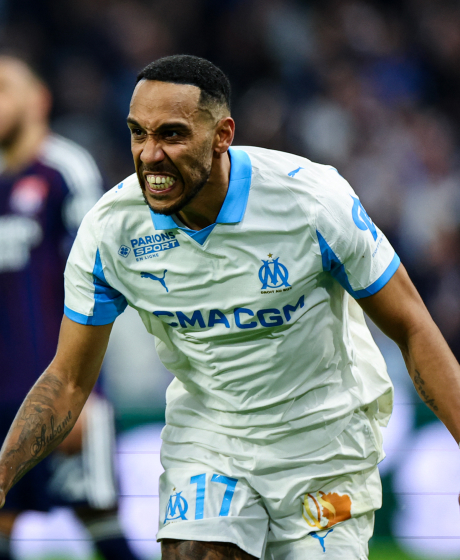
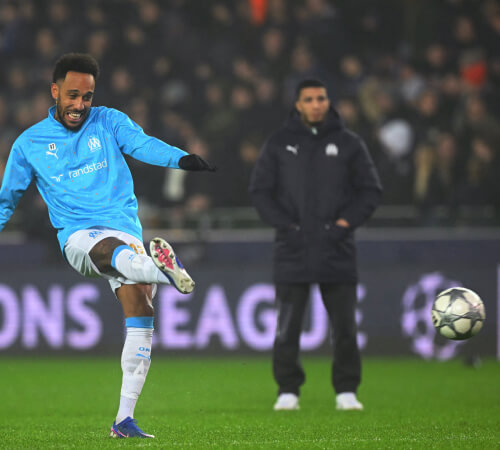
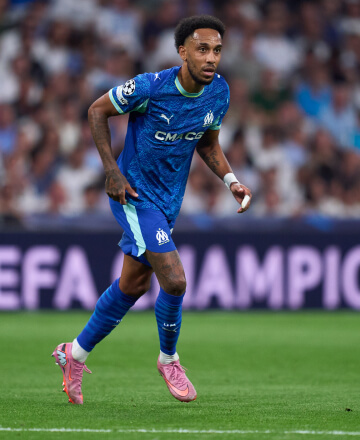
As captain, do you feel you have to set an example on the pitch?
Yes, of course – I’ve always played like this. When my team-mates see me putting in effort, particularly as a striker, it has a direct impact on the entire team, especially now I’m 36. People are like, “If he’s doing this at 36, I think we’re able to do it too. We have to do it.” I know my role is important because of that. I’m not used to talking much during the game: I let my actions speak for themselves, like tracking back. As I said when I arrived, I’m ready to make sacrifices for the team, and I know it will serve as a signal for my team-mates.
Someone once said that when you’re at your best, it’s like you “walk on water”. Do you feel that?
Yes. At St-Étienne, we had a very good group and we won the club’s first trophy in years [the French League Cup in 2013]. I was playing in a carefree way, but I’d also just had a child, so I redoubled my efforts, working twice as hard. It taught me responsibility. You need to play in a carefree way, but you also need to have something pushing you every day, and I think having a child really helped me. Then, at Borussia Dortmund and Arsenal, I kind of walked on water. When everything clicks, when you’re in great shape, on fire, that’s how it feels. You can’t really explain it. At Dortmund, I even knew how many goals I would score before a game – Thomas Tuchel can back me up! I remember I scored three goals in a Europa League away match. We were meant to play Augsburg the following weekend, and he asked if I wanted to rest. I said, “No, I’m going to score three goals again.” He said, “If you score three goals, I will take you out to a restaurant.” I scored a hat-trick.