Cities

Marseille: Home from home

For one football-mad Argentinian in Marseille, nothing could beat a trip to the Vélodrome – until three of his compatriots in the OM squad popped in to his deli for a cookery lesson

INTERVIEW Jérôme Vitoux | PHOTOGRAPHY Romain Spaccesi

Goalkeeper Gerónimo Rulli is encouraging his Olympique Marseille team-mates. “Believe in yourself, I trust you.”

“Brother, understand that I have to concentrate,” Facundo Medina replies. “We’re in a competition here. Once you enter this mode… I want to beat him, I want to win.” But the 26-year-old’s confidence starts to waver: “Uh-oh. I’m starting to get nervous.”

Club captain Leonardo Balerdi refuses to let his defensive partner’s head drop, joining the supporting chorus. “Keep going, it’s not that bad,” he implores. “It’s hard, but keep going!”

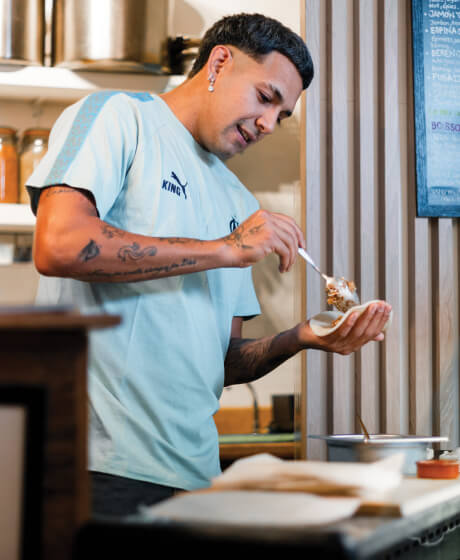
At last, it’s over. It was a full-blooded battle, but through teamwork and determination these Marseille stars have come away with three hard-earned… empanadas. “I’m going to be very honest now. I’m my own worst critic and, in my opinion, I’m in last place,” Medina says, surveying the finished pastries, fresh out of the oven. “In my opinion it was Gero, Leo, then me.”

“Geró’s was the best, it most looked like a proper empanada”

It tells you all you need to know about an elite footballer’s competitive side that even the morning after a 6-2 win over Le Havre, Rulli, Medina and Balerdi still have the energy to turn up the heat in a cookery class.

The trio of Albiceleste stars have been invited to Rincón Argentino, a deli on Marseille’s central Rue des Bergers, for this particular fixture. You’d think it would be the perfect way to unwind, three friends chilling over maté and empanadas, but they can’t suppress that competitive streak for long.

For Esteban Lima Fabiani, the shop’s owner and chef, having three Argentinian international footballers crimping empanadas at his deli is, he admits, quite literally “a dream come true”, describing his shop as “like a mini-Argentinian embassy in Marseille”. At times, though, it can feel more like a second home for Esteban’s fellow expats, such as today when it plays host to three compatriots, here to make empanadas and discuss the importance of food in Argentinian culture.

Argentina and OM actually have a curiously long history – and it’s not just to do with the playing colours. In fact, 25 Argentinian players have represented Marseille over the years, and there’s a great reason for that. “I’d say there’s nowhere more similar to Argentina in Europe than here,” says goalkeeper-turned-chef Rulli. “It’s because of how they experience football and how we Argentinians experience football.”

Here, deli owner Esteban discusses his two great loves – food and football – and the similarities between his old home and his adopted one.

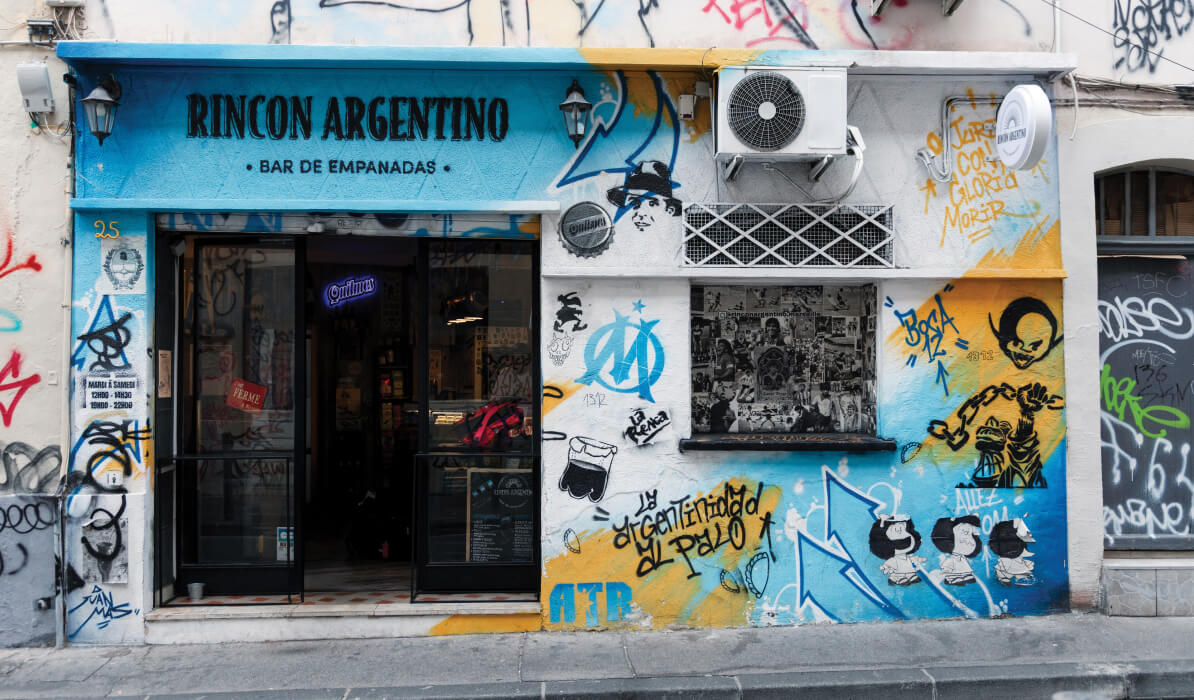
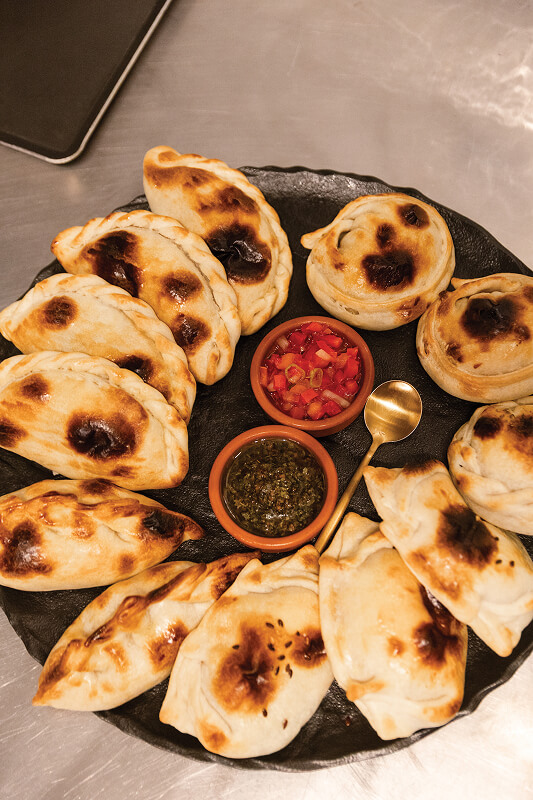
“We opened our shop to introduce people in Marseille to the Argentinian empanada. There were empanadas already, but none with the taste of Argentina. The idea seems to have worked: people come once, then they come back, they bring friends, we share a good time and the French practise their Spanish. It’s a bit like a mini-Argentinian embassy in Marseille – a little parcel of Argentinian territory. It’s 15m² of Argentina on the Cours Julien.

“My wife and I moved to Marseille in 2017. We wanted to experience Europe but we came here almost by chance. I hadn’t chosen Marseille when I left: I ended up here. But I don’t know where I’d be if I wasn’t in Marseille. This city fits me perfectly.

“Having three Marseille players come into Rincón Argentino on the same day, making empanadas and having fun was brilliant, a dream come true. Beyond the fact that I already had contact with Leonardo Balerdi – he’d often asked me for empanadas – I also met Joaquín Correa when he was here. And Facundo Medina messaged me asking for empanadas two weeks after he arrived in Marseille.

“We rated the empanadas they each made and I think Geró’s was the best – the one that looked most like a proper empanada. Next, it was Leo’s. As for Facu’s… Well, we laughed a lot. His had a rough time: a little open, a little closed. But it’s something you learn. Even for me at the start, the first ones didn’t look great. Seeing the players in that situation was very amusing. Normally they would order their empanadas to be delivered, because we’re in a very busy neighbourhood and you can’t pull up and park right out front.

“The food that represents us Argentinians most is meat – asado. It’s very distinctive because it’s not just about cooking meat. It’s the time it takes to build the fire, season the meat, put it on the grill. We cook meat differently than in Europe or the US: much longer, to a different doneness. The quality helps too – well cooked yet tender. The taste changes with the animals’ diet and breed. It’s a whole ritual that represents us and is tied to sharing: you sit down, light the fire with a maté in hand and talk

“There’s nowhere more similar to Argentina in Europe than Marseille”

“We often say in Argentina: ‘Don’t just come to eat the asado. Get there an hour and a half early. Otherwise, don’t come.’ Because the asado starts when you light the fire, not at mealtime. That, I think, represents us most: meat, asado, fire.

“Our herbal tea maté is also very ‘us’. In moments like that, we gather together, heat the water and drink a maté while chatting… Time goes by. It’s very Argentinian. For the guys, it’s also a way to decompress, to relax. It sparks conversation, jokes – it’s a companion. Even when you’re alone, maté keeps you company. That’s how we experience it as Argentinians. That’s why we always have a thermos under one arm and a maté gourd in the other.

“Beyond the drink itself, it’s a ritual, a shared moment. You pass it from person to person as it cools down. Everyone has their way of preparing maté and drinking it. An Argentinian get-together without maté is weird. In any home in Argentina, there’s always someone who drinks it – and someone waiting to sit you down, hand you a maté and chat. It’s part of our culture. It represents who we are.

“I’ve always been a football fan. A big Boca Juniors supporter and, since I’ve been in France, an OM fan too. I feel a huge connection here, beyond the colours. On matchdays, the city stops. People expect a lot from the club; the pressure on the club and the players is tangible, like it is back home. The players say it too: the Vélodrome is like a mirror. You can have the best match of your life, but if you lose the next weekend, you’re the worst. There’s a love-hate thing that really reminds me of Argentina. The passion in the stands, the way of singing.

“I’ve been to two or three matches elsewhere in France – those stadiums were nothing like the Vélodrome. As an Argentinian who spent 12 years in Buenos Aires and often went to see Boca, I get that same feeling – goosebumps, everyone singing together, the way people live the game. I feel a total connection between Marseille and Argentina. And players who’ve been here say the same: the stadium is unique, the supporters too, and you feel at home. It’s real.

“Buenos Aires is a city where you breathe football, you live football. On every street corner. Whatever the neighbourhood. People feel very represented by football. There’s a shared vibe between the Bombonera and the Vélodrome – the atmosphere, what the stadium creates. Here, the whole day is dedicated to those 90 minutes, and you start preparing when you wake up: which jersey to wear, which hoodie, who you’re going with, where you’ll grab a beer before going in. It’s a ritual.

“That’s what happens in Argentina too: you arrive two hours early, eat a choripán [sandwich] at the gate, drink a Fernet and Coke. Living here reminds me of the Bombonera – especially La Boca, where the stadium is located. The whole neighbourhood lives the game, not just the stadium. Here, it’s not just a neighbourhood, it’s the whole city.”

Goalkeeper Gerónimo Rulli is encouraging his Olympique Marseille team-mates. “Believe in yourself, I trust you.”

“Brother, understand that I have to concentrate,” Facundo Medina replies. “We’re in a competition here. Once you enter this mode… I want to beat him, I want to win.” But the 26-year-old’s confidence starts to waver: “Uh-oh. I’m starting to get nervous.”

Club captain Leonardo Balerdi refuses to let his defensive partner’s head drop, joining the supporting chorus. “Keep going, it’s not that bad,” he implores. “It’s hard, but keep going!”

At last, it’s over. It was a full-blooded battle, but through teamwork and determination these Marseille stars have come away with three hard-earned… empanadas. “I’m going to be very honest now. I’m my own worst critic and, in my opinion, I’m in last place,” Medina says, surveying the finished pastries, fresh out of the oven. “In my opinion it was Gero, Leo, then me.”

“Geró’s was the best, it most looked like a proper empanada”

It tells you all you need to know about an elite footballer’s competitive side that even the morning after a 6-2 win over Le Havre, Rulli, Medina and Balerdi still have the energy to turn up the heat in a cookery class.

The trio of Albiceleste stars have been invited to Rincón Argentino, a deli on Marseille’s central Rue des Bergers, for this particular fixture. You’d think it would be the perfect way to unwind, three friends chilling over maté and empanadas, but they can’t suppress that competitive streak for long.

For Esteban Lima Fabiani, the shop’s owner and chef, having three Argentinian international footballers crimping empanadas at his deli is, he admits, quite literally “a dream come true”, describing his shop as “like a mini-Argentinian embassy in Marseille”. At times, though, it can feel more like a second home for Esteban’s fellow expats, such as today when it plays host to three compatriots, here to make empanadas and discuss the importance of food in Argentinian culture.

Read the full story
Sign up now – or sign in – to read the rest of this feature and access all articles for free. Once you have signed up you will also be able to enter exclusive competitions and win great prizes.

Argentina and OM actually have a curiously long history – and it’s not just to do with the playing colours. In fact, 25 Argentinian players have represented Marseille over the years, and there’s a great reason for that. “I’d say there’s nowhere more similar to Argentina in Europe than here,” says goalkeeper-turned-chef Rulli. “It’s because of how they experience football and how we Argentinians experience football.”

Here, deli owner Esteban discusses his two great loves – food and football – and the similarities between his old home and his adopted one.

“We opened our shop to introduce people in Marseille to the Argentinian empanada. There were empanadas already, but none with the taste of Argentina. The idea seems to have worked: people come once, then they come back, they bring friends, we share a good time and the French practise their Spanish. It’s a bit like a mini-Argentinian embassy in Marseille – a little parcel of Argentinian territory. It’s 15m² of Argentina on the Cours Julien.

“My wife and I moved to Marseille in 2017. We wanted to experience Europe but we came here almost by chance. I hadn’t chosen Marseille when I left: I ended up here. But I don’t know where I’d be if I wasn’t in Marseille. This city fits me perfectly.

“Having three Marseille players come into Rincón Argentino on the same day, making empanadas and having fun was brilliant, a dream come true. Beyond the fact that I already had contact with Leonardo Balerdi – he’d often asked me for empanadas – I also met Joaquín Correa when he was here. And Facundo Medina messaged me asking for empanadas two weeks after he arrived in Marseille.

“We rated the empanadas they each made and I think Geró’s was the best – the one that looked most like a proper empanada. Next, it was Leo’s. As for Facu’s… Well, we laughed a lot. His had a rough time: a little open, a little closed. But it’s something you learn. Even for me at the start, the first ones didn’t look great. Seeing the players in that situation was very amusing. Normally they would order their empanadas to be delivered, because we’re in a very busy neighbourhood and you can’t pull up and park right out front.

“The food that represents us Argentinians most is meat – asado. It’s very distinctive because it’s not just about cooking meat. It’s the time it takes to build the fire, season the meat, put it on the grill. We cook meat differently than in Europe or the US: much longer, to a different doneness. The quality helps too – well cooked yet tender. The taste changes with the animals’ diet and breed. It’s a whole ritual that represents us and is tied to sharing: you sit down, light the fire with a maté in hand and talk

“There’s nowhere more similar to Argentina in Europe than Marseille”

“We often say in Argentina: ‘Don’t just come to eat the asado. Get there an hour and a half early. Otherwise, don’t come.’ Because the asado starts when you light the fire, not at mealtime. That, I think, represents us most: meat, asado, fire.

“Our herbal tea maté is also very ‘us’. In moments like that, we gather together, heat the water and drink a maté while chatting… Time goes by. It’s very Argentinian. For the guys, it’s also a way to decompress, to relax. It sparks conversation, jokes – it’s a companion. Even when you’re alone, maté keeps you company. That’s how we experience it as Argentinians. That’s why we always have a thermos under one arm and a maté gourd in the other.

“Beyond the drink itself, it’s a ritual, a shared moment. You pass it from person to person as it cools down. Everyone has their way of preparing maté and drinking it. An Argentinian get-together without maté is weird. In any home in Argentina, there’s always someone who drinks it – and someone waiting to sit you down, hand you a maté and chat. It’s part of our culture. It represents who we are.

“I’ve always been a football fan. A big Boca Juniors supporter and, since I’ve been in France, an OM fan too. I feel a huge connection here, beyond the colours. On matchdays, the city stops. People expect a lot from the club; the pressure on the club and the players is tangible, like it is back home. The players say it too: the Vélodrome is like a mirror. You can have the best match of your life, but if you lose the next weekend, you’re the worst. There’s a love-hate thing that really reminds me of Argentina. The passion in the stands, the way of singing.

“I’ve been to two or three matches elsewhere in France – those stadiums were nothing like the Vélodrome. As an Argentinian who spent 12 years in Buenos Aires and often went to see Boca, I get that same feeling – goosebumps, everyone singing together, the way people live the game. I feel a total connection between Marseille and Argentina. And players who’ve been here say the same: the stadium is unique, the supporters too, and you feel at home. It’s real.

“Buenos Aires is a city where you breathe football, you live football. On every street corner. Whatever the neighbourhood. People feel very represented by football. There’s a shared vibe between the Bombonera and the Vélodrome – the atmosphere, what the stadium creates. Here, the whole day is dedicated to those 90 minutes, and you start preparing when you wake up: which jersey to wear, which hoodie, who you’re going with, where you’ll grab a beer before going in. It’s a ritual.

“That’s what happens in Argentina too: you arrive two hours early, eat a choripán [sandwich] at the gate, drink a Fernet and Coke. Living here reminds me of the Bombonera – especially La Boca, where the stadium is located. The whole neighbourhood lives the game, not just the stadium. Here, it’s not just a neighbourhood, it’s the whole city.”

Goalkeeper Gerónimo Rulli is encouraging his Olympique Marseille team-mates. “Believe in yourself, I trust you.”

“Brother, understand that I have to concentrate,” Facundo Medina replies. “We’re in a competition here. Once you enter this mode… I want to beat him, I want to win.” But the 26-year-old’s confidence starts to waver: “Uh-oh. I’m starting to get nervous.”

Club captain Leonardo Balerdi refuses to let his defensive partner’s head drop, joining the supporting chorus. “Keep going, it’s not that bad,” he implores. “It’s hard, but keep going!”

At last, it’s over. It was a full-blooded battle, but through teamwork and determination these Marseille stars have come away with three hard-earned… empanadas. “I’m going to be very honest now. I’m my own worst critic and, in my opinion, I’m in last place,” Medina says, surveying the finished pastries, fresh out of the oven. “In my opinion it was Gero, Leo, then me.”

“Geró’s was the best, it most looked like a proper empanada”

It tells you all you need to know about an elite footballer’s competitive side that even the morning after a 6-2 win over Le Havre, Rulli, Medina and Balerdi still have the energy to turn up the heat in a cookery class.

The trio of Albiceleste stars have been invited to Rincón Argentino, a deli on Marseille’s central Rue des Bergers, for this particular fixture. You’d think it would be the perfect way to unwind, three friends chilling over maté and empanadas, but they can’t suppress that competitive streak for long.

For Esteban Lima Fabiani, the shop’s owner and chef, having three Argentinian international footballers crimping empanadas at his deli is, he admits, quite literally “a dream come true”, describing his shop as “like a mini-Argentinian embassy in Marseille”. At times, though, it can feel more like a second home for Esteban’s fellow expats, such as today when it plays host to three compatriots, here to make empanadas and discuss the importance of food in Argentinian culture.

Argentina and OM actually have a curiously long history – and it’s not just to do with the playing colours. In fact, 25 Argentinian players have represented Marseille over the years, and there’s a great reason for that. “I’d say there’s nowhere more similar to Argentina in Europe than here,” says goalkeeper-turned-chef Rulli. “It’s because of how they experience football and how we Argentinians experience football.”

Here, deli owner Esteban discusses his two great loves – food and football – and the similarities between his old home and his adopted one.

“We opened our shop to introduce people in Marseille to the Argentinian empanada. There were empanadas already, but none with the taste of Argentina. The idea seems to have worked: people come once, then they come back, they bring friends, we share a good time and the French practise their Spanish. It’s a bit like a mini-Argentinian embassy in Marseille – a little parcel of Argentinian territory. It’s 15m² of Argentina on the Cours Julien.

“My wife and I moved to Marseille in 2017. We wanted to experience Europe but we came here almost by chance. I hadn’t chosen Marseille when I left: I ended up here. But I don’t know where I’d be if I wasn’t in Marseille. This city fits me perfectly.

“Having three Marseille players come into Rincón Argentino on the same day, making empanadas and having fun was brilliant, a dream come true. Beyond the fact that I already had contact with Leonardo Balerdi – he’d often asked me for empanadas – I also met Joaquín Correa when he was here. And Facundo Medina messaged me asking for empanadas two weeks after he arrived in Marseille.

“We rated the empanadas they each made and I think Geró’s was the best – the one that looked most like a proper empanada. Next, it was Leo’s. As for Facu’s… Well, we laughed a lot. His had a rough time: a little open, a little closed. But it’s something you learn. Even for me at the start, the first ones didn’t look great. Seeing the players in that situation was very amusing. Normally they would order their empanadas to be delivered, because we’re in a very busy neighbourhood and you can’t pull up and park right out front.

“The food that represents us Argentinians most is meat – asado. It’s very distinctive because it’s not just about cooking meat. It’s the time it takes to build the fire, season the meat, put it on the grill. We cook meat differently than in Europe or the US: much longer, to a different doneness. The quality helps too – well cooked yet tender. The taste changes with the animals’ diet and breed. It’s a whole ritual that represents us and is tied to sharing: you sit down, light the fire with a maté in hand and talk

“There’s nowhere more similar to Argentina in Europe than Marseille”

“We often say in Argentina: ‘Don’t just come to eat the asado. Get there an hour and a half early. Otherwise, don’t come.’ Because the asado starts when you light the fire, not at mealtime. That, I think, represents us most: meat, asado, fire.

“Our herbal tea maté is also very ‘us’. In moments like that, we gather together, heat the water and drink a maté while chatting… Time goes by. It’s very Argentinian. For the guys, it’s also a way to decompress, to relax. It sparks conversation, jokes – it’s a companion. Even when you’re alone, maté keeps you company. That’s how we experience it as Argentinians. That’s why we always have a thermos under one arm and a maté gourd in the other.

“Beyond the drink itself, it’s a ritual, a shared moment. You pass it from person to person as it cools down. Everyone has their way of preparing maté and drinking it. An Argentinian get-together without maté is weird. In any home in Argentina, there’s always someone who drinks it – and someone waiting to sit you down, hand you a maté and chat. It’s part of our culture. It represents who we are.

“I’ve always been a football fan. A big Boca Juniors supporter and, since I’ve been in France, an OM fan too. I feel a huge connection here, beyond the colours. On matchdays, the city stops. People expect a lot from the club; the pressure on the club and the players is tangible, like it is back home. The players say it too: the Vélodrome is like a mirror. You can have the best match of your life, but if you lose the next weekend, you’re the worst. There’s a love-hate thing that really reminds me of Argentina. The passion in the stands, the way of singing.

“I’ve been to two or three matches elsewhere in France – those stadiums were nothing like the Vélodrome. As an Argentinian who spent 12 years in Buenos Aires and often went to see Boca, I get that same feeling – goosebumps, everyone singing together, the way people live the game. I feel a total connection between Marseille and Argentina. And players who’ve been here say the same: the stadium is unique, the supporters too, and you feel at home. It’s real.

“Buenos Aires is a city where you breathe football, you live football. On every street corner. Whatever the neighbourhood. People feel very represented by football. There’s a shared vibe between the Bombonera and the Vélodrome – the atmosphere, what the stadium creates. Here, the whole day is dedicated to those 90 minutes, and you start preparing when you wake up: which jersey to wear, which hoodie, who you’re going with, where you’ll grab a beer before going in. It’s a ritual.

“That’s what happens in Argentina too: you arrive two hours early, eat a choripán [sandwich] at the gate, drink a Fernet and Coke. Living here reminds me of the Bombonera – especially La Boca, where the stadium is located. The whole neighbourhood lives the game, not just the stadium. Here, it’s not just a neighbourhood, it’s the whole city.”

Tribute
'A little Chapel'

Esteban’s tribute to Diego Maradona on the walls of Marseille has become a draw for fans of the Argentinian legend

“The deli is on a street that gets tagged every night. So, we designed the facade with that in mind: we didn’t want to repaint it only to get it scribbled on again. We decided to use a mix of colours, phrases, images of bands. And there was this little window that used to be a serving window to the street. From day one, that spot got tagged constantly. Then we thought, ‘What better than a small tribute to Maradona in that nook?’ We started with one photo, then two, then five. Maradona has that [aura]: in Argentina, there’s even a Church of Maradona.

“People are very devout, and it’s incredible: it’s been a year and four months since we put that tribute up. We’ve had tags on the walls, the shutter, but that corner? No one has ever touched it. Not a pen mark, nothing. When they see that, instead of tagging, they take a photo and keep it as a souvenir because it’s kind of unique. I’ve even found candles there in the morning. Someone left them during the night, like a little chapel. I don’t know if people actually pray there, but I’ve found candles. It’s wild.”

Tribute
'A little Chapel'

Esteban’s tribute to Diego Maradona on the walls of Marseille has become a draw for fans of the Argentinian legend

“The deli is on a street that gets tagged every night. So, we designed the facade with that in mind: we didn’t want to repaint it only to get it scribbled on again. We decided to use a mix of colours, phrases, images of bands. And there was this little window that used to be a serving window to the street. From day one, that spot got tagged constantly. Then we thought, ‘What better than a small tribute to Maradona in that nook?’ We started with one photo, then two, then five. Maradona has that [aura]: in Argentina, there’s even a Church of Maradona.

“People are very devout, and it’s incredible: it’s been a year and four months since we put that tribute up. We’ve had tags on the walls, the shutter, but that corner? No one has ever touched it. Not a pen mark, nothing. When they see that, instead of tagging, they take a photo and keep it as a souvenir because it’s kind of unique. I’ve even found candles there in the morning. Someone left them during the night, like a little chapel. I don’t know if people actually pray there, but I’ve found candles. It’s wild.”

Tribute
'A little Chapel'

Esteban’s tribute to Diego Maradona on the walls of Marseille has become a draw for fans of the Argentinian legend

“The deli is on a street that gets tagged every night. So, we designed the facade with that in mind: we didn’t want to repaint it only to get it scribbled on again. We decided to use a mix of colours, phrases, images of bands. And there was this little window that used to be a serving window to the street. From day one, that spot got tagged constantly. Then we thought, ‘What better than a small tribute to Maradona in that nook?’ We started with one photo, then two, then five. Maradona has that [aura]: in Argentina, there’s even a Church of Maradona.

“People are very devout, and it’s incredible: it’s been a year and four months since we put that tribute up. We’ve had tags on the walls, the shutter, but that corner? No one has ever touched it. Not a pen mark, nothing. When they see that, instead of tagging, they take a photo and keep it as a souvenir because it’s kind of unique. I’ve even found candles there in the morning. Someone left them during the night, like a little chapel. I don’t know if people actually pray there, but I’ve found candles. It’s wild.”

close
To access this article, as well as all CJ+ content and competitions, you will need a subscription to Champions Journal.
Already a subscriber? Sign in
END OF JANUARY SALE
christmas offer
Christmas CHEER
Up to 40% off
Start shopping
50% off!
Win two tickets to the UEFA Champions League final
And receive a free Champions Travel
eSIM when you enter
enter now
0
Days
0
Hrs
0
Mins
0
Secs
This element will display when the countdown is finished.