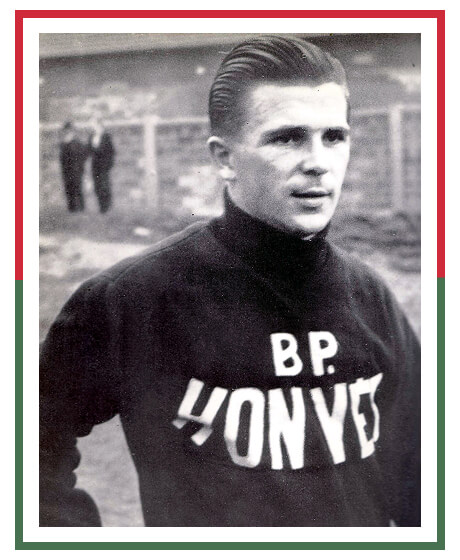
Call it the Big Bang of the Champions League – the game that began everything. Long before the huge stakes and global audiences of today, the seeds for the competition were sown in a friendly match at Molineux on 13 December 1954, when mere bragging rights were the prize as English champions Wolverhampton Wanderers welcomed their Hungarian counterparts Budapest Honvéd.
Wolves had been showing off their new floodlights in a series of prestige friendlies, beating all-comers, aside from a 0-0 draw with First Vienna. Honvéd were a different proposition, however. And everyone knew it, even in an era when the internet was barely a fever dream. Here was a line-up featuring several of the Mighty Magyars who had reached the 1954 World Cup final, losing narrowly to West Germany in a shock result. More worryingly for Wolves, they had also terrorised England twice in recent memory, the likes of Ferenc Puskás, Sándor Kocsis and Zoltán Czibor masterminding Hungary’s 6-3 victory at Wembley and a humbling 7-1 demolition in Budapest.
Few were stunned when Honvéd raced into a 2-0 lead, which prompted Wolves manager Stan Cullis to order a half-time watering of the pitch to clog up their passing game. The ploy worked. “Their tricks got stuck in the mud,” said then Wolves trainee and future Manchester United boss Ron Atkinson, who watched as the hosts made hay with long-ball tactics to triumph 3-2. “There’s no doubt in my mind that, had Cullis not ordered me and my mates to water the pitch, Honvéd would have won by about 10-0.”
The English press were not so humble, and the Daily Mail declared Wolves “champions of the world”. Over in France, this was too much hubris for L’Équipe journalist Gabriel Hanot. “Before we declare that Wolverhampton are invincible,” he wrote, “let them go to Moscow and Budapest. And there are other internationally renowned clubs: Milan and Real Madrid to name but two. A club world championship, or at least a European one … should be launched.”
“He is not only world class, he belongs to the realm of dreams”
With UEFA embracing the idea, the European Cup was up and running by September 1955. The football landscape had been transformed, and Honvéd looked as well equipped as anyone to emerge as an early force. For Puskás, Kocsis and Czibor, this new competition was about to change their lives – though not in a way any of them could have predicted.
Just over a year later, Honvéd were in Bilbao for a European Cup tie against Athletic Club, a seemingly innocuous occasion aside from the 3-2 loss that left them requiring a comeback in Budapest. But that home encounter would never happen – not in Budapest, anyway. While Honvéd were on their travels, a revolution broke out across Hungary as its people rose up against a government beholden to the Soviet Union, their bid for freedom ultimately crushed by Soviet tanks.
The turmoil back home forced Honvéd to hold their return leg against Athletic in Brussels, where Puskás and Kocsis opened their European Cup accounts in a 3-3 draw that spelled elimination. Defeat left the club’s players stranded and with a decision to make. First, they organised an international fundraising tour, but that merely delayed the big question. What next? While some returned to Hungary, the likes of Puskás, Kocsis and Czibor refused, preferring exile in Western Europe, despite the threat of lengthy international bans.
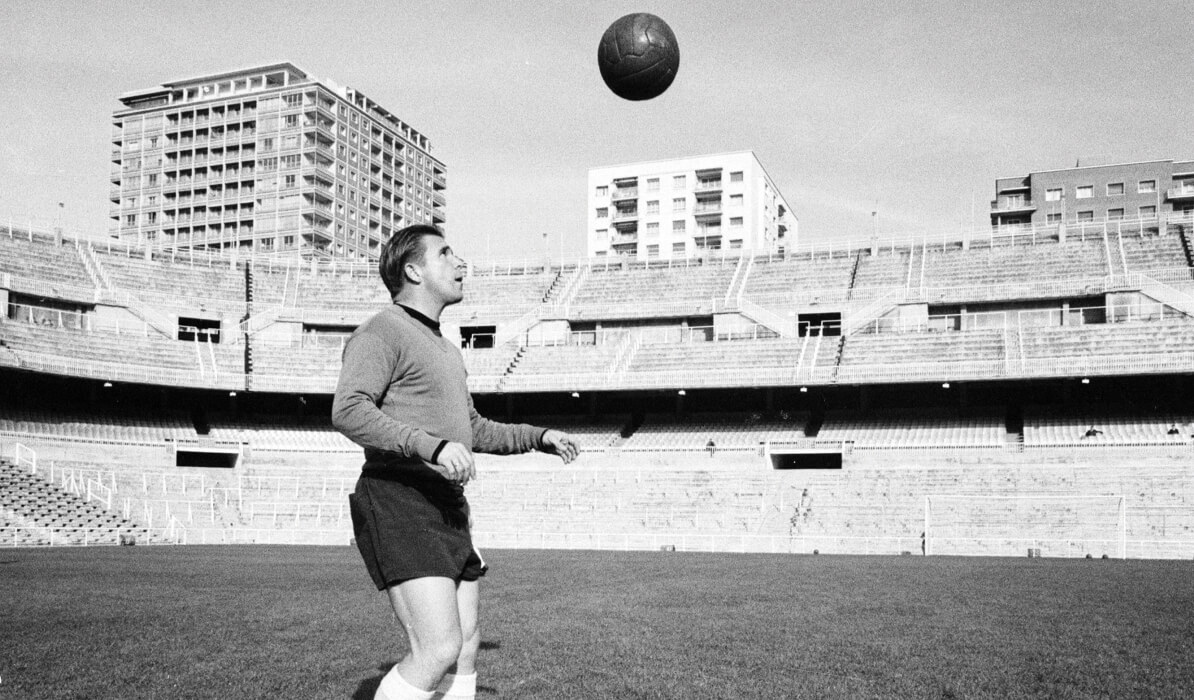
Puskás himself was suspended for two years, and by the time he was free to play again, he was 31 and, by his own admission, “too fat” for elite football. The man dubbed the Galloping Major in his Honvéd days was galloping no more, but while various Italian clubs gave him one look and turned him down, Real Madrid president Santiago Bernabéu opted to take a gamble.
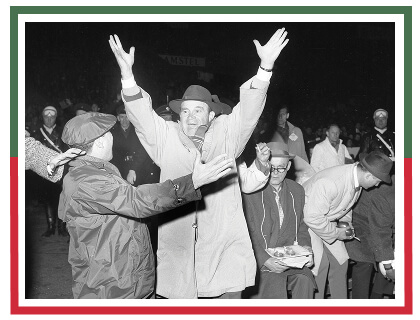
Anyone with a passing knowledge of European football knows already that his gamble paid off. Puskás may have plundered over 350 league goals for Honvéd, he may even have reshaped international football with Hungary, but it was at Madrid that he truly entered the pantheon. And he was quick to impress, racking up four La Liga hat-tricks in his first season as he forged a devastating partnership with Alfredo Di Stéfano, his Argentinian team-mate offering a mobile menace and Puskás hovering closer to goal, that dynamite left foot of his always ready to ignite.
Nicknamed Pancho in Madrid, Puskás snared five consecutive Spanish league titles and won the Pichichi Trophy as top scorer four times. His greatest feat of all, however, he saved for the European Cup. A year after missing the 1959 final through injury, Puskás was the star of the show in one of the most unforgettable games in history at Hampden Park, where 127,621 spectators were dazzled by Madrid’s 7-3 showpiece defeat of Eintracht Frankfurt. Haunted by doubt beforehand and now 33 years of age, Puskás nabbed four of those goals himself (his compañero Di Stéfano netting the other three) as Madrid, he later said, “almost achieved some sort of footballing perfection”.
Still to this day, no player has matched Puskás’ feat of a four-goal salvo in club football’s biggest game. Nor has anyone else hit a hat-trick in a European Cup final and finished on the losing side, as Puskás did in Madrid’s 5-3 loss to Benfica in 1962. He snaffled a third continental crown in 1965/66, and though he missed the final, he left the club with a haul of 242 goals in 262 appearances, his legacy assured as one of the all-time greats. “He is not only world class,” as his former Honvéd team-mate Gyula Grosics put it, “he belongs to the realm of dreams.”
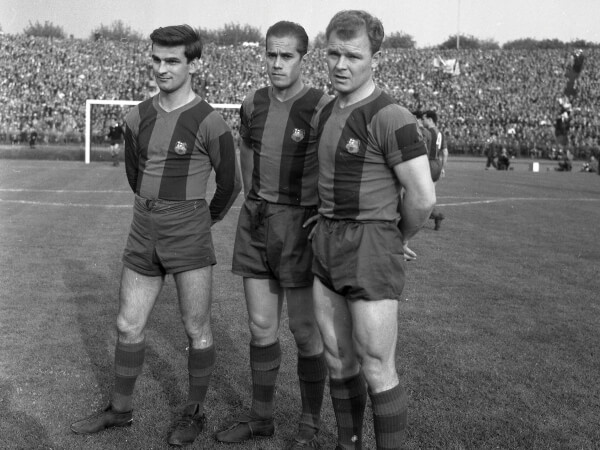
For all his exploits, though, Puskás was not the first Magyar maestro to take Spain by storm. Indeed, when Barcelona fans got to vote for the club’s best-ever player during their centenary celebrations in 1999, they overlooked a long list of glittering names – from Johan Cruyff and Diego Maradona to Romário and Hristo Stoichkov. Instead, the Barça faithful plumped for a man whose 1950s heyday was long gone but not forgotten: László Kubala.
Kubala’s route to stardom began in the back of a truck. With Hungary a communist satellite state after the Second World War, the powerful and inventive forward fled to Austria in 1949, carrying fake documents and disguised as a Russian soldier. A year later, he signed for Barcelona, initially only appearing in friendlies as he served a one-year international ban.
Those friendly outings were enough to create a buzz, and Kubala hit the ground running in his debut season, notably racking up a record seven goals in one league match against Sporting Gijón. Incredibly, his coach was left wanting more. “Kubala scored goals today, but he didn’t have a great game,” complained Ferdinand Daučik, who also happened to be Kubala’s brother-in-law.
The fans were mesmerised nonetheless, so much so that Barça moved to the Camp Nou in 1957 partly to cope with the demand spurred by his popularity. And Kubala’s transformative impact continued the following year, when he persuaded Puskás’ fellow Honvéd exiles Kocsis and Czibor to join him in Catalonia. Together, the attacking trio clinched two league titles and reached the 1961 European Cup final against Benfica.

Having earlier become the first side to eliminate Madrid in Europe, Barcelona looked poised to take their arch-rivals’ crown at the Stadion Wankdorf in Bern. For Kocsis and Czibor, however, this was cursed territory – the same ground where they had lost the 1954 World Cup final. The pair refused to set foot in the dressing room and changed in the corridor, and although both went on to score, the brilliant side they had infused with Hungarian flair ultimately lost 3-2.
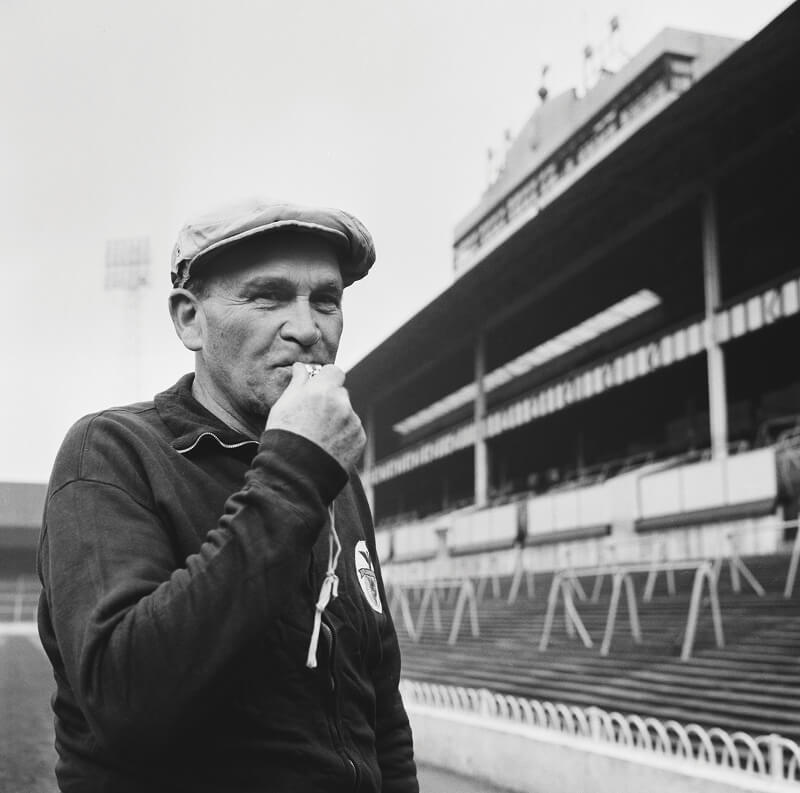
Even so, the 1961 European Cup final was not a total write-off for Hungary’s finest. While Kubala, Kocsis and Czibor lamented their defeat, Benfica’s charismatic coach celebrated the greatest victory of his career to date. This was Béla Guttmann’s triumph, and it wouldn’t be his last.
Born in the last year of the 19th century, Guttmann had already lived a remarkable life before he wound up in Portugal. A former dance instructor, his talents as a centre-back took him to Vienna and New York, where he invested in a Prohibition-era speakeasy and lost heavily in the 1929 Wall Street Crash. His conversion to management then led him back to Hungary on the eve of the Second World War, during which he was sent to a Nazi labour camp, escaping shortly before he was due to be sent to Auschwitz.
By the time he joined Benfica in 1959, Guttmann had coached a long list of teams in nine different countries, earning a reputation as a restless manager who knew his worth and spoke his mind. Fresh from claiming the Portuguese title with Porto, he sacked around 20 of Benfica’s senior players, promoted the youngsters and promptly won the league again. His team repeated that success the season after too, while also lifting the European Cup.
With that, Benfica became the first team other than Madrid to land the prize, and they did it again the following year, this time by downing Madrid themselves 5-3 in Amsterdam. The image of Puskás handing his shirt to a young Eusébio – scorer of two goals – felt symbolic, but this was no new dynasty in the making. Instead, Guttmann quit after Benfica denied him a raise, and he allegedly left them with a haunting promise: “Not in a hundred years from now will Benfica ever be European champions.” With the Eagles having lost eight different European finals since then, the supposed Guttmann ‘curse’ endures – despite Eusébio himself allegedly praying at the Hungarian’s grave and begging for release.
Of course, some might scratch their heads and wonder if a different curse has bedevilled the Hungarian game since then. Although Ferencváros won the Inter-Cities Fairs Cup in 1964/65 and three different teams have finished runners-up in UEFA’s less prestigious competitions, still no Hungarian club has graced a European Cup/Champions League showpiece, with Újpest the most recent to reach the semis in 1973/74.
Meanwhile, Puskás remains the sole Hungarian to have finished on the winning side in a European Cup/Champions League decider. In an eye-catching footnote to his illustrious career, the Galloping Major is also one of only two Hungarians to steer a team to the final since Guttmann, taking unfancied Greek side Panathinaikos to face Ajax at Wembley in 1971, before Pál Csernai’s Bayern München lost to Aston Villa in 1982.
These days, Hungary fans have their focus fixed on more niche accomplishments. Just back in December, for example, Dominik Szoboszlai broke new ground as the first Hungarian to score ten goals in the Champions League era, his winner for Liverpool away to Inter Milan duly celebrated by a local sports press that follows his every move. Not quite the same as blasting four goals in a final, and a far cry from the troubled years of revolution and exile, but still a rumbling echo of those Magyar pioneers of yore. And, perhaps, inspiration for a new generation with a rich heritage to claim.
Call it the Big Bang of the Champions League – the game that began everything. Long before the huge stakes and global audiences of today, the seeds for the competition were sown in a friendly match at Molineux on 13 December 1954, when mere bragging rights were the prize as English champions Wolverhampton Wanderers welcomed their Hungarian counterparts Budapest Honvéd.
Wolves had been showing off their new floodlights in a series of prestige friendlies, beating all-comers, aside from a 0-0 draw with First Vienna. Honvéd were a different proposition, however. And everyone knew it, even in an era when the internet was barely a fever dream. Here was a line-up featuring several of the Mighty Magyars who had reached the 1954 World Cup final, losing narrowly to West Germany in a shock result. More worryingly for Wolves, they had also terrorised England twice in recent memory, the likes of Ferenc Puskás, Sándor Kocsis and Zoltán Czibor masterminding Hungary’s 6-3 victory at Wembley and a humbling 7-1 demolition in Budapest.
Few were stunned when Honvéd raced into a 2-0 lead, which prompted Wolves manager Stan Cullis to order a half-time watering of the pitch to clog up their passing game. The ploy worked. “Their tricks got stuck in the mud,” said then Wolves trainee and future Manchester United boss Ron Atkinson, who watched as the hosts made hay with long-ball tactics to triumph 3-2. “There’s no doubt in my mind that, had Cullis not ordered me and my mates to water the pitch, Honvéd would have won by about 10-0.”
The English press were not so humble, and the Daily Mail declared Wolves “champions of the world”. Over in France, this was too much hubris for L’Équipe journalist Gabriel Hanot. “Before we declare that Wolverhampton are invincible,” he wrote, “let them go to Moscow and Budapest. And there are other internationally renowned clubs: Milan and Real Madrid to name but two. A club world championship, or at least a European one … should be launched.”
“He is not only world class, he belongs to the realm of dreams”
With UEFA embracing the idea, the European Cup was up and running by September 1955. The football landscape had been transformed, and Honvéd looked as well equipped as anyone to emerge as an early force. For Puskás, Kocsis and Czibor, this new competition was about to change their lives – though not in a way any of them could have predicted.
Just over a year later, Honvéd were in Bilbao for a European Cup tie against Athletic Club, a seemingly innocuous occasion aside from the 3-2 loss that left them requiring a comeback in Budapest. But that home encounter would never happen – not in Budapest, anyway. While Honvéd were on their travels, a revolution broke out across Hungary as its people rose up against a government beholden to the Soviet Union, their bid for freedom ultimately crushed by Soviet tanks.
The turmoil back home forced Honvéd to hold their return leg against Athletic in Brussels, where Puskás and Kocsis opened their European Cup accounts in a 3-3 draw that spelled elimination. Defeat left the club’s players stranded and with a decision to make. First, they organised an international fundraising tour, but that merely delayed the big question. What next? While some returned to Hungary, the likes of Puskás, Kocsis and Czibor refused, preferring exile in Western Europe, despite the threat of lengthy international bans.
Puskás himself was suspended for two years, and by the time he was free to play again, he was 31 and, by his own admission, “too fat” for elite football. The man dubbed the Galloping Major in his Honvéd days was galloping no more, but while various Italian clubs gave him one look and turned him down, Real Madrid president Santiago Bernabéu opted to take a gamble.


Anyone with a passing knowledge of European football knows already that his gamble paid off. Puskás may have plundered over 350 league goals for Honvéd, he may even have reshaped international football with Hungary, but it was at Madrid that he truly entered the pantheon. And he was quick to impress, racking up four La Liga hat-tricks in his first season as he forged a devastating partnership with Alfredo Di Stéfano, his Argentinian team-mate offering a mobile menace and Puskás hovering closer to goal, that dynamite left foot of his always ready to ignite.
Nicknamed Pancho in Madrid, Puskás snared five consecutive Spanish league titles and won the Pichichi Trophy as top scorer four times. His greatest feat of all, however, he saved for the European Cup. A year after missing the 1959 final through injury, Puskás was the star of the show in one of the most unforgettable games in history at Hampden Park, where 127,621 spectators were dazzled by Madrid’s 7-3 showpiece defeat of Eintracht Frankfurt. Haunted by doubt beforehand and now 33 years of age, Puskás nabbed four of those goals himself (his compañero Di Stéfano netting the other three) as Madrid, he later said, “almost achieved some sort of footballing perfection”.
Still to this day, no player has matched Puskás’ feat of a four-goal salvo in club football’s biggest game. Nor has anyone else hit a hat-trick in a European Cup final and finished on the losing side, as Puskás did in Madrid’s 5-3 loss to Benfica in 1962. He snaffled a third continental crown in 1965/66, and though he missed the final, he left the club with a haul of 242 goals in 262 appearances, his legacy assured as one of the all-time greats. “He is not only world class,” as his former Honvéd team-mate Gyula Grosics put it, “he belongs to the realm of dreams.”
For all his exploits, though, Puskás was not the first Magyar maestro to take Spain by storm. Indeed, when Barcelona fans got to vote for the club’s best-ever player during their centenary celebrations in 1999, they overlooked a long list of glittering names – from Johan Cruyff and Diego Maradona to Romário and Hristo Stoichkov. Instead, the Barça faithful plumped for a man whose 1950s heyday was long gone but not forgotten: László Kubala.
Kubala’s route to stardom began in the back of a truck. With Hungary a communist satellite state after the Second World War, the powerful and inventive forward fled to Austria in 1949, carrying fake documents and disguised as a Russian soldier. A year later, he signed for Barcelona, initially only appearing in friendlies as he served a one-year international ban.
Those friendly outings were enough to create a buzz, and Kubala hit the ground running in his debut season, notably racking up a record seven goals in one league match against Sporting Gijón. Incredibly, his coach was left wanting more. “Kubala scored goals today, but he didn’t have a great game,” complained Ferdinand Daučik, who also happened to be Kubala’s brother-in-law.
The fans were mesmerised nonetheless, so much so that Barça moved to the Camp Nou in 1957 partly to cope with the demand spurred by his popularity. And Kubala’s transformative impact continued the following year, when he persuaded Puskás’ fellow Honvéd exiles Kocsis and Czibor to join him in Catalonia. Together, the attacking trio clinched two league titles and reached the 1961 European Cup final against Benfica.
Having earlier become the first side to eliminate Madrid in Europe, Barcelona looked poised to take their arch-rivals’ crown at the Stadion Wankdorf in Bern. For Kocsis and Czibor, however, this was cursed territory – the same ground where they had lost the 1954 World Cup final. The pair refused to set foot in the dressing room and changed in the corridor, and although both went on to score, the brilliant side they had infused with Hungarian flair ultimately lost 3-2.
Even so, the 1961 European Cup final was not a total write-off for Hungary’s finest. While Kubala, Kocsis and Czibor lamented their defeat, Benfica’s charismatic coach celebrated the greatest victory of his career to date. This was Béla Guttmann’s triumph, and it wouldn’t be his last.
Born in the last year of the 19th century, Guttmann had already lived a remarkable life before he wound up in Portugal. A former dance instructor, his talents as a centre-back took him to Vienna and New York, where he invested in a Prohibition-era speakeasy and lost heavily in the 1929 Wall Street Crash. His conversion to management then led him back to Hungary on the eve of the Second World War, during which he was sent to a Nazi labour camp, escaping shortly before he was due to be sent to Auschwitz.
By the time he joined Benfica in 1959, Guttmann had coached a long list of teams in nine different countries, earning a reputation as a restless manager who knew his worth and spoke his mind. Fresh from claiming the Portuguese title with Porto, he sacked around 20 of Benfica’s senior players, promoted the youngsters and promptly won the league again. His team repeated that success the season after too, while also lifting the European Cup.
With that, Benfica became the first team other than Madrid to land the prize, and they did it again the following year, this time by downing Madrid themselves 5-3 in Amsterdam. The image of Puskás handing his shirt to a young Eusébio – scorer of two goals – felt symbolic, but this was no new dynasty in the making. Instead, Guttmann quit after Benfica denied him a raise, and he allegedly left them with a haunting promise: “Not in a hundred years from now will Benfica ever be European champions.” With the Eagles having lost eight different European finals since then, the supposed Guttmann ‘curse’ endures – despite Eusébio himself allegedly praying at the Hungarian’s grave and begging for release.
Of course, some might scratch their heads and wonder if a different curse has bedevilled the Hungarian game since then. Although Ferencváros won the Inter-Cities Fairs Cup in 1964/65 and three different teams have finished runners-up in UEFA’s less prestigious competitions, still no Hungarian club has graced a European Cup/Champions League showpiece, with Újpest the most recent to reach the semis in 1973/74.
Meanwhile, Puskás remains the sole Hungarian to have finished on the winning side in a European Cup/Champions League decider. In an eye-catching footnote to his illustrious career, the Galloping Major is also one of only two Hungarians to steer a team to the final since Guttmann, taking unfancied Greek side Panathinaikos to face Ajax at Wembley in 1971, before Pál Csernai’s Bayern München lost to Aston Villa in 1982.
These days, Hungary fans have their focus fixed on more niche accomplishments. Just back in December, for example, Dominik Szoboszlai broke new ground as the first Hungarian to score ten goals in the Champions League era, his winner for Liverpool away to Inter Milan duly celebrated by a local sports press that follows his every move. Not quite the same as blasting four goals in a final, and a far cry from the troubled years of revolution and exile, but still a rumbling echo of those Magyar pioneers of yore. And, perhaps, inspiration for a new generation with a rich heritage to claim.
Call it the Big Bang of the Champions League – the game that began everything. Long before the huge stakes and global audiences of today, the seeds for the competition were sown in a friendly match at Molineux on 13 December 1954, when mere bragging rights were the prize as English champions Wolverhampton Wanderers welcomed their Hungarian counterparts Budapest Honvéd.
Wolves had been showing off their new floodlights in a series of prestige friendlies, beating all-comers, aside from a 0-0 draw with First Vienna. Honvéd were a different proposition, however. And everyone knew it, even in an era when the internet was barely a fever dream. Here was a line-up featuring several of the Mighty Magyars who had reached the 1954 World Cup final, losing narrowly to West Germany in a shock result. More worryingly for Wolves, they had also terrorised England twice in recent memory, the likes of Ferenc Puskás, Sándor Kocsis and Zoltán Czibor masterminding Hungary’s 6-3 victory at Wembley and a humbling 7-1 demolition in Budapest.
Few were stunned when Honvéd raced into a 2-0 lead, which prompted Wolves manager Stan Cullis to order a half-time watering of the pitch to clog up their passing game. The ploy worked. “Their tricks got stuck in the mud,” said then Wolves trainee and future Manchester United boss Ron Atkinson, who watched as the hosts made hay with long-ball tactics to triumph 3-2. “There’s no doubt in my mind that, had Cullis not ordered me and my mates to water the pitch, Honvéd would have won by about 10-0.”
The English press were not so humble, and the Daily Mail declared Wolves “champions of the world”. Over in France, this was too much hubris for L’Équipe journalist Gabriel Hanot. “Before we declare that Wolverhampton are invincible,” he wrote, “let them go to Moscow and Budapest. And there are other internationally renowned clubs: Milan and Real Madrid to name but two. A club world championship, or at least a European one … should be launched.”
“He is not only world class, he belongs to the realm of dreams”
With UEFA embracing the idea, the European Cup was up and running by September 1955. The football landscape had been transformed, and Honvéd looked as well equipped as anyone to emerge as an early force. For Puskás, Kocsis and Czibor, this new competition was about to change their lives – though not in a way any of them could have predicted.
Just over a year later, Honvéd were in Bilbao for a European Cup tie against Athletic Club, a seemingly innocuous occasion aside from the 3-2 loss that left them requiring a comeback in Budapest. But that home encounter would never happen – not in Budapest, anyway. While Honvéd were on their travels, a revolution broke out across Hungary as its people rose up against a government beholden to the Soviet Union, their bid for freedom ultimately crushed by Soviet tanks.
The turmoil back home forced Honvéd to hold their return leg against Athletic in Brussels, where Puskás and Kocsis opened their European Cup accounts in a 3-3 draw that spelled elimination. Defeat left the club’s players stranded and with a decision to make. First, they organised an international fundraising tour, but that merely delayed the big question. What next? While some returned to Hungary, the likes of Puskás, Kocsis and Czibor refused, preferring exile in Western Europe, despite the threat of lengthy international bans.
Puskás himself was suspended for two years, and by the time he was free to play again, he was 31 and, by his own admission, “too fat” for elite football. The man dubbed the Galloping Major in his Honvéd days was galloping no more, but while various Italian clubs gave him one look and turned him down, Real Madrid president Santiago Bernabéu opted to take a gamble.
Anyone with a passing knowledge of European football knows already that his gamble paid off. Puskás may have plundered over 350 league goals for Honvéd, he may even have reshaped international football with Hungary, but it was at Madrid that he truly entered the pantheon. And he was quick to impress, racking up four La Liga hat-tricks in his first season as he forged a devastating partnership with Alfredo Di Stéfano, his Argentinian team-mate offering a mobile menace and Puskás hovering closer to goal, that dynamite left foot of his always ready to ignite.
Nicknamed Pancho in Madrid, Puskás snared five consecutive Spanish league titles and won the Pichichi Trophy as top scorer four times. His greatest feat of all, however, he saved for the European Cup. A year after missing the 1959 final through injury, Puskás was the star of the show in one of the most unforgettable games in history at Hampden Park, where 127,621 spectators were dazzled by Madrid’s 7-3 showpiece defeat of Eintracht Frankfurt. Haunted by doubt beforehand and now 33 years of age, Puskás nabbed four of those goals himself (his compañero Di Stéfano netting the other three) as Madrid, he later said, “almost achieved some sort of footballing perfection”.
Still to this day, no player has matched Puskás’ feat of a four-goal salvo in club football’s biggest game. Nor has anyone else hit a hat-trick in a European Cup final and finished on the losing side, as Puskás did in Madrid’s 5-3 loss to Benfica in 1962. He snaffled a third continental crown in 1965/66, and though he missed the final, he left the club with a haul of 242 goals in 262 appearances, his legacy assured as one of the all-time greats. “He is not only world class,” as his former Honvéd team-mate Gyula Grosics put it, “he belongs to the realm of dreams.”
For all his exploits, though, Puskás was not the first Magyar maestro to take Spain by storm. Indeed, when Barcelona fans got to vote for the club’s best-ever player during their centenary celebrations in 1999, they overlooked a long list of glittering names – from Johan Cruyff and Diego Maradona to Romário and Hristo Stoichkov. Instead, the Barça faithful plumped for a man whose 1950s heyday was long gone but not forgotten: László Kubala.
Kubala’s route to stardom began in the back of a truck. With Hungary a communist satellite state after the Second World War, the powerful and inventive forward fled to Austria in 1949, carrying fake documents and disguised as a Russian soldier. A year later, he signed for Barcelona, initially only appearing in friendlies as he served a one-year international ban.
Those friendly outings were enough to create a buzz, and Kubala hit the ground running in his debut season, notably racking up a record seven goals in one league match against Sporting Gijón. Incredibly, his coach was left wanting more. “Kubala scored goals today, but he didn’t have a great game,” complained Ferdinand Daučik, who also happened to be Kubala’s brother-in-law.
The fans were mesmerised nonetheless, so much so that Barça moved to the Camp Nou in 1957 partly to cope with the demand spurred by his popularity. And Kubala’s transformative impact continued the following year, when he persuaded Puskás’ fellow Honvéd exiles Kocsis and Czibor to join him in Catalonia. Together, the attacking trio clinched two league titles and reached the 1961 European Cup final against Benfica.
Having earlier become the first side to eliminate Madrid in Europe, Barcelona looked poised to take their arch-rivals’ crown at the Stadion Wankdorf in Bern. For Kocsis and Czibor, however, this was cursed territory – the same ground where they had lost the 1954 World Cup final. The pair refused to set foot in the dressing room and changed in the corridor, and although both went on to score, the brilliant side they had infused with Hungarian flair ultimately lost 3-2.
Even so, the 1961 European Cup final was not a total write-off for Hungary’s finest. While Kubala, Kocsis and Czibor lamented their defeat, Benfica’s charismatic coach celebrated the greatest victory of his career to date. This was Béla Guttmann’s triumph, and it wouldn’t be his last.
Born in the last year of the 19th century, Guttmann had already lived a remarkable life before he wound up in Portugal. A former dance instructor, his talents as a centre-back took him to Vienna and New York, where he invested in a Prohibition-era speakeasy and lost heavily in the 1929 Wall Street Crash. His conversion to management then led him back to Hungary on the eve of the Second World War, during which he was sent to a Nazi labour camp, escaping shortly before he was due to be sent to Auschwitz.
By the time he joined Benfica in 1959, Guttmann had coached a long list of teams in nine different countries, earning a reputation as a restless manager who knew his worth and spoke his mind. Fresh from claiming the Portuguese title with Porto, he sacked around 20 of Benfica’s senior players, promoted the youngsters and promptly won the league again. His team repeated that success the season after too, while also lifting the European Cup.
With that, Benfica became the first team other than Madrid to land the prize, and they did it again the following year, this time by downing Madrid themselves 5-3 in Amsterdam. The image of Puskás handing his shirt to a young Eusébio – scorer of two goals – felt symbolic, but this was no new dynasty in the making. Instead, Guttmann quit after Benfica denied him a raise, and he allegedly left them with a haunting promise: “Not in a hundred years from now will Benfica ever be European champions.” With the Eagles having lost eight different European finals since then, the supposed Guttmann ‘curse’ endures – despite Eusébio himself allegedly praying at the Hungarian’s grave and begging for release.
Of course, some might scratch their heads and wonder if a different curse has bedevilled the Hungarian game since then. Although Ferencváros won the Inter-Cities Fairs Cup in 1964/65 and three different teams have finished runners-up in UEFA’s less prestigious competitions, still no Hungarian club has graced a European Cup/Champions League showpiece, with Újpest the most recent to reach the semis in 1973/74.
Meanwhile, Puskás remains the sole Hungarian to have finished on the winning side in a European Cup/Champions League decider. In an eye-catching footnote to his illustrious career, the Galloping Major is also one of only two Hungarians to steer a team to the final since Guttmann, taking unfancied Greek side Panathinaikos to face Ajax at Wembley in 1971, before Pál Csernai’s Bayern München lost to Aston Villa in 1982.
These days, Hungary fans have their focus fixed on more niche accomplishments. Just back in December, for example, Dominik Szoboszlai broke new ground as the first Hungarian to score ten goals in the Champions League era, his winner for Liverpool away to Inter Milan duly celebrated by a local sports press that follows his every move. Not quite the same as blasting four goals in a final, and a far cry from the troubled years of revolution and exile, but still a rumbling echo of those Magyar pioneers of yore. And, perhaps, inspiration for a new generation with a rich heritage to claim.