There’s something gloriously unreal about the grainy footage of early European Cup games. The gauze, the fuzz, the blur – as if a veil has been laid over the past, forever keeping those footballers of yore mysterious to modern eyes. We watch, but we can never fully see, everything strange and oddly submerged. And then a stout man in a white shirt turns on the spot and blooters a ball high into the net, and suddenly the veil has been whipped away. It’s a goal so jarringly real you might as well be watching in 4K Ultra-HD.
It was even more real to the 127,621 spectators packed inside Hampden Park for the 1960 European Cup final. What they witnessed was one of football’s most extraordinary games, an utterly imperious Real Madrid demolishing Eintracht Frankfurt 7-3 to claim a fifth straight European title. And at the heart of it all was a 33-year-old Hungarian with weight issues and a point to prove. A man in exile from his homeland who had to write a letter of apology just to take part. A scorer of goals so rich in quantity and quality that FIFA named an award after him nearly 50 years later.
Ferenc Puskás was a nervous wreck before kick-off. “I had a bad feeling in the pit of my stomach,” he later wrote. “I was thinking, ‘You’re not 20 any more. Are you up to this?’” It wasn’t the first time he had doubted himself. Puskás had been away on European Cup duty with Honvéd when the Hungarian Uprising broke out in 1956, leading to a brutal repression by Soviet tanks. He’d refused to return home, earning himself a two-year ban from football. By the time the suspension was served, he was seriously overweight – as he admitted to Madrid president Santiago Bernabéu when looking for a new club. “I’m too fat. I can’t possibly play,” Puskás confessed. “That’s not my problem, it’s yours,” came the response.
Two years later, and having missed the 1959 final through injury, he wasn’t exactly svelte. Instead, he was hungry. Playing for Honvéd, the team of the Hungarian army, had given him his Galloping Major nickname, and he’d repaid them with over 350 league goals, but he’d yet to stamp his hooves all over a major showpiece. With Hungary too, gold at the 1952 Olympics had been overshadowed by the 1954 World Cup final, when he’d had played with a fractured ankle, scored the opener and finished on the losing side to
West Germany.
After that game, Puskás accused the victors of doping, an accusation the German football authorities did not take well: they forbid any of their teams from facing him. Hence his hastily penned apology ahead of the showdown with Frankfurt, an act which must have rubbed his nose in that defeat all over again. In short, he was done apologising.
There’s something gloriously unreal about the grainy footage of early European Cup games. The gauze, the fuzz, the blur – as if a veil has been laid over the past, forever keeping those footballers of yore mysterious to modern eyes. We watch, but we can never fully see, everything strange and oddly submerged. And then a stout man in a white shirt turns on the spot and blooters a ball high into the net, and suddenly the veil has been whipped away. It’s a goal so jarringly real you might as well be watching in 4K Ultra-HD.
It was even more real to the 127,621 spectators packed inside Hampden Park for the 1960 European Cup final. What they witnessed was one of football’s most extraordinary games, an utterly imperious Real Madrid demolishing Eintracht Frankfurt 7-3 to claim a fifth straight European title. And at the heart of it all was a 33-year-old Hungarian with weight issues and a point to prove. A man in exile from his homeland who had to write a letter of apology just to take part. A scorer of goals so rich in quantity and quality that FIFA named an award after him nearly 50 years later.
Ferenc Puskás was a nervous wreck before kick-off. “I had a bad feeling in the pit of my stomach,” he later wrote. “I was thinking, ‘You’re not 20 any more. Are you up to this?’” It wasn’t the first time he had doubted himself. Puskás had been away on European Cup duty with Honvéd when the Hungarian Uprising broke out in 1956, leading to a brutal repression by Soviet tanks. He’d refused to return home, earning himself a two-year ban from football. By the time the suspension was served, he was seriously overweight – as he admitted to Madrid president Santiago Bernabéu when looking for a new club. “I’m too fat. I can’t possibly play,” Puskás confessed. “That’s not my problem, it’s yours,” came the response.
Two years later, and having missed the 1959 final through injury, he wasn’t exactly svelte. Instead, he was hungry. Playing for Honvéd, the team of the Hungarian army, had given him his Galloping Major nickname, and he’d repaid them with over 350 league goals, but he’d yet to stamp his hooves all over a major showpiece. With Hungary too, gold at the 1952 Olympics had been overshadowed by the 1954 World Cup final, when he’d had played with a fractured ankle, scored the opener and finished on the losing side to
West Germany.
After that game, Puskás accused the victors of doping, an accusation the German football authorities did not take well: they forbid any of their teams from facing him. Hence his hastily penned apology ahead of the showdown with Frankfurt, an act which must have rubbed his nose in that defeat all over again. In short, he was done apologising.
Even so, it was Frankfurt who broke the deadlock in Glasgow, an act of impudence they would soon regret. Madrid’s pride had been stung, and 12 minutes later they were ahead, Alfredo Di Stéfano burying two of his three goals that night. Then it was over to Puskás, who struck close to half-time before adding a penalty and a header after the break. With that, he pipped his illustrious team-mate to the first hat-trick in a European Cup final, and he was still hungry for more. As were Madrid, whose white shirts steamrolled forward again with just under 20 minutes remaining.
The move was a masterclass in patience and invention. José María Vidal kicks things off with a back-heel on the right and, from there, Madrid sway unerringly to the left, sauntering forward with aristocratic ease. Puskás himself finally picks up the tempo, collecting a pass from Paco Gento and chipping the ball behind the defence for the explosive winger to chase. Gento runs it down before the byline and swings over a cross.
No Frankfurt player has touched the ball for 24 seconds when finally a defender attempts a clearing header, only to land it at the feet of another Madridista. But who is this player? Here’s where the gauzy veil of the past add its mystique. Some say it’s Vidal, some say José María Zárraga, the footage unclear, but what’s certain is that he jabs the ball towards the penalty spot from out wide on the right.
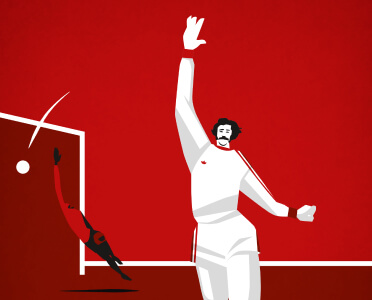
It’s a little in front of Puskás and travelling fast. Madrid are winning 5-1 and Puskás already has a treble. He’s carrying extra timber and his galloping days are over. He could let this ball go and still be a hero – but out juts a right boot, Puskás launching himself to trap the pass, arms spread wide for balance. Then comes the swivel, graceful as a dancer, before he deploys his cannon of a left, slamming the ball into the top corner to leave goalkeeper Egon Loy wondering what just happened.
A balletic and brutal combo just happened. The first and only four-goal salvo in a European Cup final just happened. Ferenc Puskás just happened, leaving us with a moment that somehow feels more modern the older it gets.
There’s something gloriously unreal about the grainy footage of early European Cup games. The gauze, the fuzz, the blur – as if a veil has been laid over the past, forever keeping those footballers of yore mysterious to modern eyes. We watch, but we can never fully see, everything strange and oddly submerged. And then a stout man in a white shirt turns on the spot and blooters a ball high into the net, and suddenly the veil has been whipped away. It’s a goal so jarringly real you might as well be watching in 4K Ultra-HD.
It was even more real to the 127,621 spectators packed inside Hampden Park for the 1960 European Cup final. What they witnessed was one of football’s most extraordinary games, an utterly imperious Real Madrid demolishing Eintracht Frankfurt 7-3 to claim a fifth straight European title. And at the heart of it all was a 33-year-old Hungarian with weight issues and a point to prove. A man in exile from his homeland who had to write a letter of apology just to take part. A scorer of goals so rich in quantity and quality that FIFA named an award after him nearly 50 years later.
Ferenc Puskás was a nervous wreck before kick-off. “I had a bad feeling in the pit of my stomach,” he later wrote. “I was thinking, ‘You’re not 20 any more. Are you up to this?’” It wasn’t the first time he had doubted himself. Puskás had been away on European Cup duty with Honvéd when the Hungarian Uprising broke out in 1956, leading to a brutal repression by Soviet tanks. He’d refused to return home, earning himself a two-year ban from football. By the time the suspension was served, he was seriously overweight – as he admitted to Madrid president Santiago Bernabéu when looking for a new club. “I’m too fat. I can’t possibly play,” Puskás confessed. “That’s not my problem, it’s yours,” came the response.
Two years later, and having missed the 1959 final through injury, he wasn’t exactly svelte. Instead, he was hungry. Playing for Honvéd, the team of the Hungarian army, had given him his Galloping Major nickname, and he’d repaid them with over 350 league goals, but he’d yet to stamp his hooves all over a major showpiece. With Hungary too, gold at the 1952 Olympics had been overshadowed by the 1954 World Cup final, when he’d had played with a fractured ankle, scored the opener and finished on the losing side to
West Germany.
After that game, Puskás accused the victors of doping, an accusation the German football authorities did not take well: they forbid any of their teams from facing him. Hence his hastily penned apology ahead of the showdown with Frankfurt, an act which must have rubbed his nose in that defeat all over again. In short, he was done apologising.


There’s something gloriously unreal about the grainy footage of early European Cup games. The gauze, the fuzz, the blur – as if a veil has been laid over the past, forever keeping those footballers of yore mysterious to modern eyes. We watch, but we can never fully see, everything strange and oddly submerged. And then a stout man in a white shirt turns on the spot and blooters a ball high into the net, and suddenly the veil has been whipped away. It’s a goal so jarringly real you might as well be watching in 4K Ultra-HD.
It was even more real to the 127,621 spectators packed inside Hampden Park for the 1960 European Cup final. What they witnessed was one of football’s most extraordinary games, an utterly imperious Real Madrid demolishing Eintracht Frankfurt 7-3 to claim a fifth straight European title. And at the heart of it all was a 33-year-old Hungarian with weight issues and a point to prove. A man in exile from his homeland who had to write a letter of apology just to take part. A scorer of goals so rich in quantity and quality that FIFA named an award after him nearly 50 years later.
Ferenc Puskás was a nervous wreck before kick-off. “I had a bad feeling in the pit of my stomach,” he later wrote. “I was thinking, ‘You’re not 20 any more. Are you up to this?’” It wasn’t the first time he had doubted himself. Puskás had been away on European Cup duty with Honvéd when the Hungarian Uprising broke out in 1956, leading to a brutal repression by Soviet tanks. He’d refused to return home, earning himself a two-year ban from football. By the time the suspension was served, he was seriously overweight – as he admitted to Madrid president Santiago Bernabéu when looking for a new club. “I’m too fat. I can’t possibly play,” Puskás confessed. “That’s not my problem, it’s yours,” came the response.
Two years later, and having missed the 1959 final through injury, he wasn’t exactly svelte. Instead, he was hungry. Playing for Honvéd, the team of the Hungarian army, had given him his Galloping Major nickname, and he’d repaid them with over 350 league goals, but he’d yet to stamp his hooves all over a major showpiece. With Hungary too, gold at the 1952 Olympics had been overshadowed by the 1954 World Cup final, when he’d had played with a fractured ankle, scored the opener and finished on the losing side to
West Germany.
After that game, Puskás accused the victors of doping, an accusation the German football authorities did not take well: they forbid any of their teams from facing him. Hence his hastily penned apology ahead of the showdown with Frankfurt, an act which must have rubbed his nose in that defeat all over again. In short, he was done apologising.
There’s something gloriously unreal about the grainy footage of early European Cup games. The gauze, the fuzz, the blur – as if a veil has been laid over the past, forever keeping those footballers of yore mysterious to modern eyes. We watch, but we can never fully see, everything strange and oddly submerged. And then a stout man in a white shirt turns on the spot and blooters a ball high into the net, and suddenly the veil has been whipped away. It’s a goal so jarringly real you might as well be watching in 4K Ultra-HD.
It was even more real to the 127,621 spectators packed inside Hampden Park for the 1960 European Cup final. What they witnessed was one of football’s most extraordinary games, an utterly imperious Real Madrid demolishing Eintracht Frankfurt 7-3 to claim a fifth straight European title. And at the heart of it all was a 33-year-old Hungarian with weight issues and a point to prove. A man in exile from his homeland who had to write a letter of apology just to take part. A scorer of goals so rich in quantity and quality that FIFA named an award after him nearly 50 years later.
Ferenc Puskás was a nervous wreck before kick-off. “I had a bad feeling in the pit of my stomach,” he later wrote. “I was thinking, ‘You’re not 20 any more. Are you up to this?’” It wasn’t the first time he had doubted himself. Puskás had been away on European Cup duty with Honvéd when the Hungarian Uprising broke out in 1956, leading to a brutal repression by Soviet tanks. He’d refused to return home, earning himself a two-year ban from football. By the time the suspension was served, he was seriously overweight – as he admitted to Madrid president Santiago Bernabéu when looking for a new club. “I’m too fat. I can’t possibly play,” Puskás confessed. “That’s not my problem, it’s yours,” came the response.
Two years later, and having missed the 1959 final through injury, he wasn’t exactly svelte. Instead, he was hungry. Playing for Honvéd, the team of the Hungarian army, had given him his Galloping Major nickname, and he’d repaid them with over 350 league goals, but he’d yet to stamp his hooves all over a major showpiece. With Hungary too, gold at the 1952 Olympics had been overshadowed by the 1954 World Cup final, when he’d had played with a fractured ankle, scored the opener and finished on the losing side to
West Germany.
After that game, Puskás accused the victors of doping, an accusation the German football authorities did not take well: they forbid any of their teams from facing him. Hence his hastily penned apology ahead of the showdown with Frankfurt, an act which must have rubbed his nose in that defeat all over again. In short, he was done apologising.
Even so, it was Frankfurt who broke the deadlock in Glasgow, an act of impudence they would soon regret. Madrid’s pride had been stung, and 12 minutes later they were ahead, Alfredo Di Stéfano burying two of his three goals that night. Then it was over to Puskás, who struck close to half-time before adding a penalty and a header after the break. With that, he pipped his illustrious team-mate to the first hat-trick in a European Cup final, and he was still hungry for more. As were Madrid, whose white shirts steamrolled forward again with just under 20 minutes remaining.
The move was a masterclass in patience and invention. José María Vidal kicks things off with a back-heel on the right and, from there, Madrid sway unerringly to the left, sauntering forward with aristocratic ease. Puskás himself finally picks up the tempo, collecting a pass from Paco Gento and chipping the ball behind the defence for the explosive winger to chase. Gento runs it down before the byline and swings over a cross.
No Frankfurt player has touched the ball for 24 seconds when finally a defender attempts a clearing header, only to land it at the feet of another Madridista. But who is this player? Here’s where the gauzy veil of the past add its mystique. Some say it’s Vidal, some say José María Zárraga, the footage unclear, but what’s certain is that he jabs the ball towards the penalty spot from out wide on the right.
It’s a little in front of Puskás and travelling fast. Madrid are winning 5-1 and Puskás already has a treble. He’s carrying extra timber and his galloping days are over. He could let this ball go and still be a hero – but out juts a right boot, Puskás launching himself to trap the pass, arms spread wide for balance. Then comes the swivel, graceful as a dancer, before he deploys his cannon of a left, slamming the ball into the top corner to leave goalkeeper Egon Loy wondering what just happened.
A balletic and brutal combo just happened. The first and only four-goal salvo in a European Cup final just happened. Ferenc Puskás just happened, leaving us with a moment that somehow feels more modern the older it gets.
There’s something gloriously unreal about the grainy footage of early European Cup games. The gauze, the fuzz, the blur – as if a veil has been laid over the past, forever keeping those footballers of yore mysterious to modern eyes. We watch, but we can never fully see, everything strange and oddly submerged. And then a stout man in a white shirt turns on the spot and blooters a ball high into the net, and suddenly the veil has been whipped away. It’s a goal so jarringly real you might as well be watching in 4K Ultra-HD.
It was even more real to the 127,621 spectators packed inside Hampden Park for the 1960 European Cup final. What they witnessed was one of football’s most extraordinary games, an utterly imperious Real Madrid demolishing Eintracht Frankfurt 7-3 to claim a fifth straight European title. And at the heart of it all was a 33-year-old Hungarian with weight issues and a point to prove. A man in exile from his homeland who had to write a letter of apology just to take part. A scorer of goals so rich in quantity and quality that FIFA named an award after him nearly 50 years later.
Ferenc Puskás was a nervous wreck before kick-off. “I had a bad feeling in the pit of my stomach,” he later wrote. “I was thinking, ‘You’re not 20 any more. Are you up to this?’” It wasn’t the first time he had doubted himself. Puskás had been away on European Cup duty with Honvéd when the Hungarian Uprising broke out in 1956, leading to a brutal repression by Soviet tanks. He’d refused to return home, earning himself a two-year ban from football. By the time the suspension was served, he was seriously overweight – as he admitted to Madrid president Santiago Bernabéu when looking for a new club. “I’m too fat. I can’t possibly play,” Puskás confessed. “That’s not my problem, it’s yours,” came the response.
Two years later, and having missed the 1959 final through injury, he wasn’t exactly svelte. Instead, he was hungry. Playing for Honvéd, the team of the Hungarian army, had given him his Galloping Major nickname, and he’d repaid them with over 350 league goals, but he’d yet to stamp his hooves all over a major showpiece. With Hungary too, gold at the 1952 Olympics had been overshadowed by the 1954 World Cup final, when he’d had played with a fractured ankle, scored the opener and finished on the losing side to
West Germany.
After that game, Puskás accused the victors of doping, an accusation the German football authorities did not take well: they forbid any of their teams from facing him. Hence his hastily penned apology ahead of the showdown with Frankfurt, an act which must have rubbed his nose in that defeat all over again. In short, he was done apologising.