January is a busy time for all Europe’s football club, with the re-opening of the transfer window meaning nets are cast far and wide in the search for recruitment and reinforcement at a crucial point in the season. But for one team in particular, that search never strays too far from home.
See, Athletic Club are unique in that they operate with an official policy of only signing players who are native to, or have been trained in, the Basque Country. But rather than hinder the club’s fortunes on the pitch, Athletic Club are in fact of only three teams never to have been relegated from Spain’s top flight.
As such, with a club built around the policy of regional pride, the indelible bond between fan and football team is felt strongly across Bilbao, which means the club captaincy becomes more of an ambassadorial role for the area.
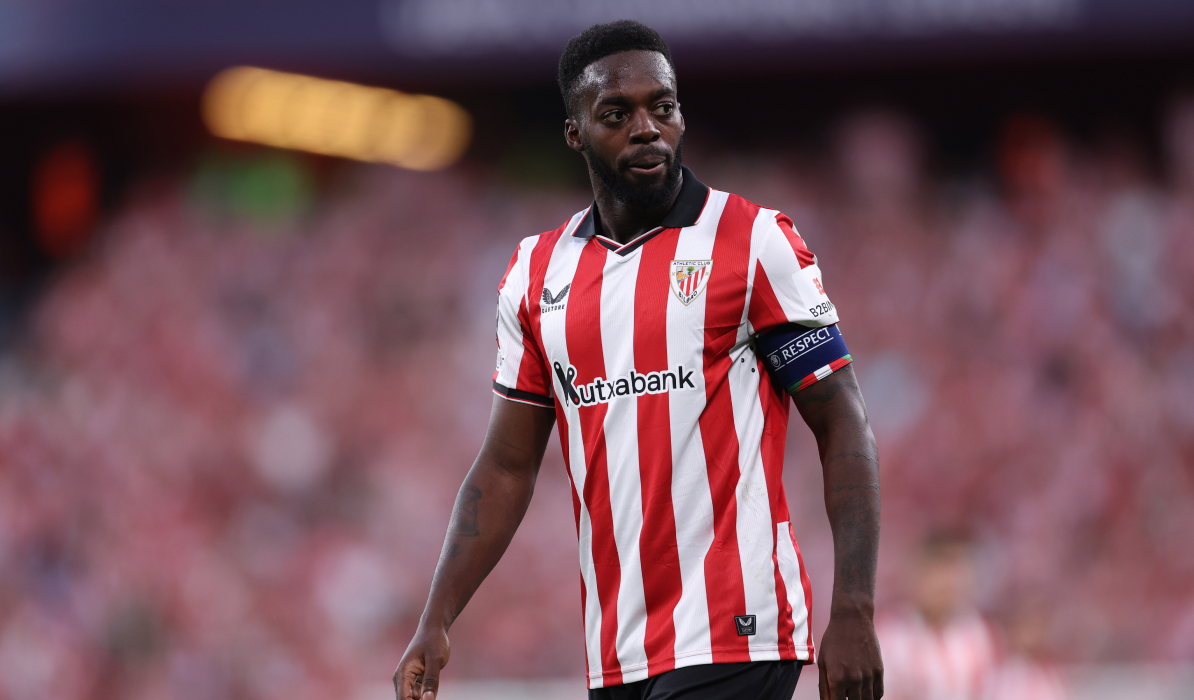
That’s the challenge that Iñaki Williams is now faced with, having been named Athletic Club’s 31st captain at the start of the season, and the eighth skipper to have spent their entire career with the Lehoiak, as he leads his boyhood side back to the Champions League for the first time in over a decade.
Born in Bilbao to Ghanaian parents who crossed the Sahara desert on foot to reach Spain, Williams has featured over 485 times for Athletic Club, scoring 112 goals and contributing 64 assists and counting in his 13 years in the famous red and white stripes, becoming one of their most iconic figures in their modern era.
Having helped guide his side back to the pinnacle of European football, we sat down with Williams to find out what it means to play for the Basque titans, how he keeps control of a dressing-room featuring his younger brother, Nico, and what it means to him to become the first black man to ever captain the club.
Well, I’d say it’s my life really. I was lucky enough to come here at a very young age, when I was barely 16. I basically grew up here, through my teenage years and into adulthood, always fighting for a dream. I used to come to San Mamés from Pamplona as a kid whenever I could, and playing for the first team really is a dream come true.
It means a lot to me, to me and to my family, to be part of Athletic’s first team. It’s a dream I’ve had since I was a child and I feel very proud and grateful to everyone who's helped me make it happen.
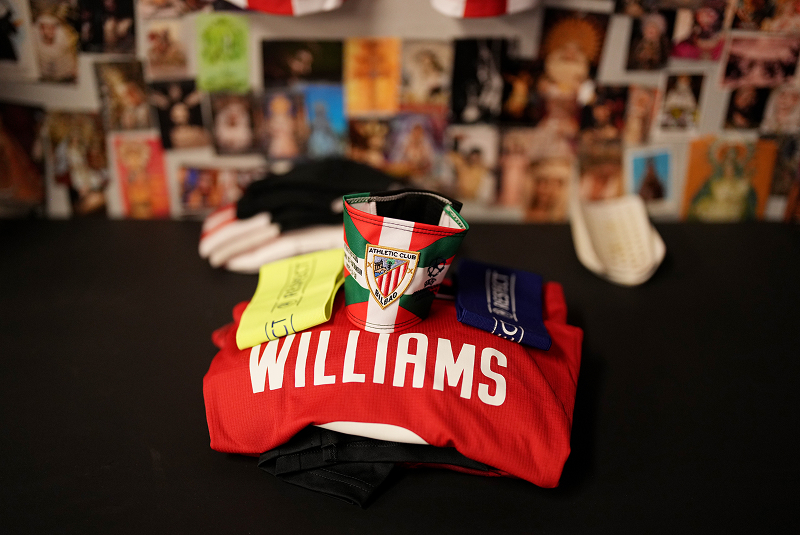
Well, when my parents arrived here, we were lucky to be welcomed really warmly and to meet some wonderful people. And, of course, when you’re surrounded by such good-hearted people, as my parents were, it’s easy to embrace that culture. We grew up in the Basque Country, both in Navarra and in Euskadi, and we’re really, really proud to feel what it means to be Basque, to feel that we’re hardworking, stubborn, and that we always try to help those around us. It’s something truly special, something to be proud of, because in the end, thinking about everything my parents did so that Nico and I could grow up in the way we have… it’s admirable.
Well, it’s really, really special, isn’t it? Every time you walk down the steps at San Mamés wearing the Athletic shirt, when the anthem starts playing… Even after more than ten years, I still get goosebumps.
Like I said, almost all of us in the first team have come through the youth ranks, and our dream was always to set foot on the pitch at San Mamés. So we’re lucky, we feel privileged, and that childhood dream is still alive in us, even as adults.
It was very, very special. From the moment we won the cup, we spent four or five days just waiting impatiently for the day of the gabarra (the barge celebration). Over the years, we had lost several finals, and there was always that lingering frustration. I think that after finally winning it, the wounds of all Athletic fans healed.
There are so many generations who had never experienced a day like that, who had only seen the old images in black and white and longed to feel it again. And we managed to do it. It was an incredible day; living through something like that really changes your life. I believe the club took a big step forward, and the fans now know we are capable of doing it again. That belief is what will drive us in the future as we aim to achieve great things.
January is a busy time for all Europe’s football club, with the re-opening of the transfer window meaning nets are cast far and wide in the search for recruitment and reinforcement at a crucial point in the season. But for one team in particular, that search never strays too far from home.
See, Athletic Club are unique in that they operate with an official policy of only signing players who are native to, or have been trained in, the Basque Country. But rather than hinder the club’s fortunes on the pitch, Athletic Club are in fact of only three teams never to have been relegated from Spain’s top flight.
As such, with a club built around the policy of regional pride, the indelible bond between fan and football team is felt strongly across Bilbao, which means the club captaincy becomes more of an ambassadorial role for the area.
That’s the challenge that Iñaki Williams is now faced with, having been named Athletic Club’s 31st captain at the start of the season, and the eighth skipper to have spent their entire career with the Lehoiak, as he leads his boyhood side back to the Champions League for the first time in over a decade.
Born in Bilbao to Ghanaian parents who crossed the Sahara desert on foot to reach Spain, Williams has featured over 485 times for Athletic Club, scoring 112 goals and contributing 64 assists and counting in his 13 years in the famous red and white stripes, becoming one of their most iconic figures in their modern era.
Having helped guide his side back to the pinnacle of European football, we sat down with Williams to find out what it means to play for the Basque titans, how he keeps control of a dressing-room featuring his younger brother, Nico, and what it means to him to become the first black man to ever captain the club.
Well, I’d say it’s my life really. I was lucky enough to come here at a very young age, when I was barely 16. I basically grew up here, through my teenage years and into adulthood, always fighting for a dream. I used to come to San Mamés from Pamplona as a kid whenever I could, and playing for the first team really is a dream come true.
It means a lot to me, to me and to my family, to be part of Athletic’s first team. It’s a dream I’ve had since I was a child and I feel very proud and grateful to everyone who's helped me make it happen.
Well, when my parents arrived here, we were lucky to be welcomed really warmly and to meet some wonderful people. And, of course, when you’re surrounded by such good-hearted people, as my parents were, it’s easy to embrace that culture. We grew up in the Basque Country, both in Navarra and in Euskadi, and we’re really, really proud to feel what it means to be Basque, to feel that we’re hardworking, stubborn, and that we always try to help those around us. It’s something truly special, something to be proud of, because in the end, thinking about everything my parents did so that Nico and I could grow up in the way we have… it’s admirable.
Well, it’s really, really special, isn’t it? Every time you walk down the steps at San Mamés wearing the Athletic shirt, when the anthem starts playing… Even after more than ten years, I still get goosebumps.
Like I said, almost all of us in the first team have come through the youth ranks, and our dream was always to set foot on the pitch at San Mamés. So we’re lucky, we feel privileged, and that childhood dream is still alive in us, even as adults.
It was very, very special. From the moment we won the cup, we spent four or five days just waiting impatiently for the day of the gabarra (the barge celebration). Over the years, we had lost several finals, and there was always that lingering frustration. I think that after finally winning it, the wounds of all Athletic fans healed.
There are so many generations who had never experienced a day like that, who had only seen the old images in black and white and longed to feel it again. And we managed to do it. It was an incredible day; living through something like that really changes your life. I believe the club took a big step forward, and the fans now know we are capable of doing it again. That belief is what will drive us in the future as we aim to achieve great things.
Incredible, honestly. From the moment we left the port, it was amazing; everywhere was already full of people. Seeing those happy faces is what our work allows us to do, thankfully, through something we love.
To see so much joy – from elderly people to very young children, all united by the same passion we share, which is Athletic – was just impressive. There must have been close to a million people there, which is unbelievable. Until it was all over, most of us players were not really aware of what we had achieved, and even now, I think we still do not fully realise how many people came out to see us. It was truly an unforgettable experience.
Our fans are with us in good times and especially in the bad ones. There have been years when things did not go so well or were not as bright as in recent seasons, and yet the fans have never stopped supporting us. They do demand a lot from us, because they know we are capable of giving our best, but whenever the team has needed them, they have always been there.
As I said before, many of us grew up watching Athletic and some of our greatest players, and now we have the chance to play for the first team. Every Athletic fan would trade places with us if they could. That is what makes us share the same spirit and what makes us very different from the rest.
Yeah, of course it’s a big responsibility. I’m aware that we have amazing players at Athletic who have brought the club to where it is and there’s an element of consistency that comes with being captain. I’m very, very honoured.
Of course, I’ve had amazing role models who have helped me to pick up the baton in the best way possible. I’m going to try to be the same as before and not change what I came here to do. At the end of the day, this is the biggest and best of what you can do.
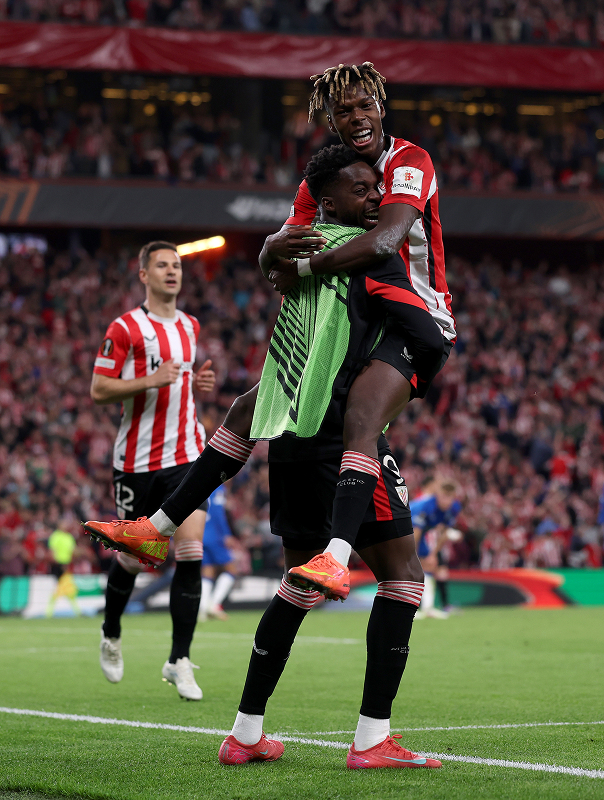
You’ve got to continue doing what you came to do, because I’ve been working on being a great player for so many years, I put in my best effort every day and this shows that I’ve done it.
I think this perseverance has led me to this point in Athletic today and I’ve got to continue working so that the young players see their role model in me as a player who works every day.
Yes, I am aware of it, because when I was younger I didn’t see any black football players in the first team. Now, times are changing. We’re seeing more and more people from other places and from minority groups who are coming to the Basque Country to make a living, especially black kids.
It fills me with pride to make them feel seen, not just by me, but also by my brother, by Adama (Boiro), by Maroan (Sannadi) too who are from families who have come here to set up their lives. It’s positive for everyone, because immigration can bring such positive things at the end of the day.
I think the fact that I’ve been able to become the first to break down that wall makes the club even more special and I think we can go very far.
Well, my relationship with Nico is the same as I have with everyone else. He's my little brother, but there's no favouritism. If I have to tell him off, I do it. Yes, he's my brother, so it's normal I'm closer to him than to the rest, but I try to treat him like everyone else.
Ultimately, that's what this is about. We've been together in this team for a long time, and I think our team-mates wouldn't tell that we're brothers in the locker room. They just know we have a special relationship, but they also know I'll tell him off if I have to! Ultimately, it'd be unfair for the rest of my team-mates [to treat Nico differently]. I try to treat everyone the same. It's true we're very close to each other, but I try to joke around with all the youngsters equally, and the same with everyone in the locker room. I'm a cheerful person, and I like to fool around, but I treat everyone the same.
January is a busy time for all Europe’s football club, with the re-opening of the transfer window meaning nets are cast far and wide in the search for recruitment and reinforcement at a crucial point in the season. But for one team in particular, that search never strays too far from home.
See, Athletic Club are unique in that they operate with an official policy of only signing players who are native to, or have been trained in, the Basque Country. But rather than hinder the club’s fortunes on the pitch, Athletic Club are in fact of only three teams never to have been relegated from Spain’s top flight.
As such, with a club built around the policy of regional pride, the indelible bond between fan and football team is felt strongly across Bilbao, which means the club captaincy becomes more of an ambassadorial role for the area.
That’s the challenge that Iñaki Williams is now faced with, having been named Athletic Club’s 31st captain at the start of the season, and the eighth skipper to have spent their entire career with the Lehoiak, as he leads his boyhood side back to the Champions League for the first time in over a decade.
Born in Bilbao to Ghanaian parents who crossed the Sahara desert on foot to reach Spain, Williams has featured over 485 times for Athletic Club, scoring 112 goals and contributing 64 assists and counting in his 13 years in the famous red and white stripes, becoming one of their most iconic figures in their modern era.
Having helped guide his side back to the pinnacle of European football, we sat down with Williams to find out what it means to play for the Basque titans, how he keeps control of a dressing-room featuring his younger brother, Nico, and what it means to him to become the first black man to ever captain the club.
Well, I’d say it’s my life really. I was lucky enough to come here at a very young age, when I was barely 16. I basically grew up here, through my teenage years and into adulthood, always fighting for a dream. I used to come to San Mamés from Pamplona as a kid whenever I could, and playing for the first team really is a dream come true.
It means a lot to me, to me and to my family, to be part of Athletic’s first team. It’s a dream I’ve had since I was a child and I feel very proud and grateful to everyone who's helped me make it happen.
Well, when my parents arrived here, we were lucky to be welcomed really warmly and to meet some wonderful people. And, of course, when you’re surrounded by such good-hearted people, as my parents were, it’s easy to embrace that culture. We grew up in the Basque Country, both in Navarra and in Euskadi, and we’re really, really proud to feel what it means to be Basque, to feel that we’re hardworking, stubborn, and that we always try to help those around us. It’s something truly special, something to be proud of, because in the end, thinking about everything my parents did so that Nico and I could grow up in the way we have… it’s admirable.
Well, it’s really, really special, isn’t it? Every time you walk down the steps at San Mamés wearing the Athletic shirt, when the anthem starts playing… Even after more than ten years, I still get goosebumps.
Like I said, almost all of us in the first team have come through the youth ranks, and our dream was always to set foot on the pitch at San Mamés. So we’re lucky, we feel privileged, and that childhood dream is still alive in us, even as adults.
It was very, very special. From the moment we won the cup, we spent four or five days just waiting impatiently for the day of the gabarra (the barge celebration). Over the years, we had lost several finals, and there was always that lingering frustration. I think that after finally winning it, the wounds of all Athletic fans healed.
There are so many generations who had never experienced a day like that, who had only seen the old images in black and white and longed to feel it again. And we managed to do it. It was an incredible day; living through something like that really changes your life. I believe the club took a big step forward, and the fans now know we are capable of doing it again. That belief is what will drive us in the future as we aim to achieve great things.


January is a busy time for all Europe’s football club, with the re-opening of the transfer window meaning nets are cast far and wide in the search for recruitment and reinforcement at a crucial point in the season. But for one team in particular, that search never strays too far from home.
See, Athletic Club are unique in that they operate with an official policy of only signing players who are native to, or have been trained in, the Basque Country. But rather than hinder the club’s fortunes on the pitch, Athletic Club are in fact of only three teams never to have been relegated from Spain’s top flight.
As such, with a club built around the policy of regional pride, the indelible bond between fan and football team is felt strongly across Bilbao, which means the club captaincy becomes more of an ambassadorial role for the area.
That’s the challenge that Iñaki Williams is now faced with, having been named Athletic Club’s 31st captain at the start of the season, and the eighth skipper to have spent their entire career with the Lehoiak, as he leads his boyhood side back to the Champions League for the first time in over a decade.
Born in Bilbao to Ghanaian parents who crossed the Sahara desert on foot to reach Spain, Williams has featured over 485 times for Athletic Club, scoring 112 goals and contributing 64 assists and counting in his 13 years in the famous red and white stripes, becoming one of their most iconic figures in their modern era.
Having helped guide his side back to the pinnacle of European football, we sat down with Williams to find out what it means to play for the Basque titans, how he keeps control of a dressing-room featuring his younger brother, Nico, and what it means to him to become the first black man to ever captain the club.
Well, I’d say it’s my life really. I was lucky enough to come here at a very young age, when I was barely 16. I basically grew up here, through my teenage years and into adulthood, always fighting for a dream. I used to come to San Mamés from Pamplona as a kid whenever I could, and playing for the first team really is a dream come true.
It means a lot to me, to me and to my family, to be part of Athletic’s first team. It’s a dream I’ve had since I was a child and I feel very proud and grateful to everyone who's helped me make it happen.
Well, when my parents arrived here, we were lucky to be welcomed really warmly and to meet some wonderful people. And, of course, when you’re surrounded by such good-hearted people, as my parents were, it’s easy to embrace that culture. We grew up in the Basque Country, both in Navarra and in Euskadi, and we’re really, really proud to feel what it means to be Basque, to feel that we’re hardworking, stubborn, and that we always try to help those around us. It’s something truly special, something to be proud of, because in the end, thinking about everything my parents did so that Nico and I could grow up in the way we have… it’s admirable.
Well, it’s really, really special, isn’t it? Every time you walk down the steps at San Mamés wearing the Athletic shirt, when the anthem starts playing… Even after more than ten years, I still get goosebumps.
Like I said, almost all of us in the first team have come through the youth ranks, and our dream was always to set foot on the pitch at San Mamés. So we’re lucky, we feel privileged, and that childhood dream is still alive in us, even as adults.
It was very, very special. From the moment we won the cup, we spent four or five days just waiting impatiently for the day of the gabarra (the barge celebration). Over the years, we had lost several finals, and there was always that lingering frustration. I think that after finally winning it, the wounds of all Athletic fans healed.
There are so many generations who had never experienced a day like that, who had only seen the old images in black and white and longed to feel it again. And we managed to do it. It was an incredible day; living through something like that really changes your life. I believe the club took a big step forward, and the fans now know we are capable of doing it again. That belief is what will drive us in the future as we aim to achieve great things.
January is a busy time for all Europe’s football club, with the re-opening of the transfer window meaning nets are cast far and wide in the search for recruitment and reinforcement at a crucial point in the season. But for one team in particular, that search never strays too far from home.
See, Athletic Club are unique in that they operate with an official policy of only signing players who are native to, or have been trained in, the Basque Country. But rather than hinder the club’s fortunes on the pitch, Athletic Club are in fact of only three teams never to have been relegated from Spain’s top flight.
As such, with a club built around the policy of regional pride, the indelible bond between fan and football team is felt strongly across Bilbao, which means the club captaincy becomes more of an ambassadorial role for the area.
That’s the challenge that Iñaki Williams is now faced with, having been named Athletic Club’s 31st captain at the start of the season, and the eighth skipper to have spent their entire career with the Lehoiak, as he leads his boyhood side back to the Champions League for the first time in over a decade.
Born in Bilbao to Ghanaian parents who crossed the Sahara desert on foot to reach Spain, Williams has featured over 485 times for Athletic Club, scoring 112 goals and contributing 64 assists and counting in his 13 years in the famous red and white stripes, becoming one of their most iconic figures in their modern era.
Having helped guide his side back to the pinnacle of European football, we sat down with Williams to find out what it means to play for the Basque titans, how he keeps control of a dressing-room featuring his younger brother, Nico, and what it means to him to become the first black man to ever captain the club.
Well, I’d say it’s my life really. I was lucky enough to come here at a very young age, when I was barely 16. I basically grew up here, through my teenage years and into adulthood, always fighting for a dream. I used to come to San Mamés from Pamplona as a kid whenever I could, and playing for the first team really is a dream come true.
It means a lot to me, to me and to my family, to be part of Athletic’s first team. It’s a dream I’ve had since I was a child and I feel very proud and grateful to everyone who's helped me make it happen.
Well, when my parents arrived here, we were lucky to be welcomed really warmly and to meet some wonderful people. And, of course, when you’re surrounded by such good-hearted people, as my parents were, it’s easy to embrace that culture. We grew up in the Basque Country, both in Navarra and in Euskadi, and we’re really, really proud to feel what it means to be Basque, to feel that we’re hardworking, stubborn, and that we always try to help those around us. It’s something truly special, something to be proud of, because in the end, thinking about everything my parents did so that Nico and I could grow up in the way we have… it’s admirable.
Well, it’s really, really special, isn’t it? Every time you walk down the steps at San Mamés wearing the Athletic shirt, when the anthem starts playing… Even after more than ten years, I still get goosebumps.
Like I said, almost all of us in the first team have come through the youth ranks, and our dream was always to set foot on the pitch at San Mamés. So we’re lucky, we feel privileged, and that childhood dream is still alive in us, even as adults.
It was very, very special. From the moment we won the cup, we spent four or five days just waiting impatiently for the day of the gabarra (the barge celebration). Over the years, we had lost several finals, and there was always that lingering frustration. I think that after finally winning it, the wounds of all Athletic fans healed.
There are so many generations who had never experienced a day like that, who had only seen the old images in black and white and longed to feel it again. And we managed to do it. It was an incredible day; living through something like that really changes your life. I believe the club took a big step forward, and the fans now know we are capable of doing it again. That belief is what will drive us in the future as we aim to achieve great things.
Incredible, honestly. From the moment we left the port, it was amazing; everywhere was already full of people. Seeing those happy faces is what our work allows us to do, thankfully, through something we love.
To see so much joy – from elderly people to very young children, all united by the same passion we share, which is Athletic – was just impressive. There must have been close to a million people there, which is unbelievable. Until it was all over, most of us players were not really aware of what we had achieved, and even now, I think we still do not fully realise how many people came out to see us. It was truly an unforgettable experience.
Our fans are with us in good times and especially in the bad ones. There have been years when things did not go so well or were not as bright as in recent seasons, and yet the fans have never stopped supporting us. They do demand a lot from us, because they know we are capable of giving our best, but whenever the team has needed them, they have always been there.
As I said before, many of us grew up watching Athletic and some of our greatest players, and now we have the chance to play for the first team. Every Athletic fan would trade places with us if they could. That is what makes us share the same spirit and what makes us very different from the rest.
Yeah, of course it’s a big responsibility. I’m aware that we have amazing players at Athletic who have brought the club to where it is and there’s an element of consistency that comes with being captain. I’m very, very honoured.
Of course, I’ve had amazing role models who have helped me to pick up the baton in the best way possible. I’m going to try to be the same as before and not change what I came here to do. At the end of the day, this is the biggest and best of what you can do.
You’ve got to continue doing what you came to do, because I’ve been working on being a great player for so many years, I put in my best effort every day and this shows that I’ve done it.
I think this perseverance has led me to this point in Athletic today and I’ve got to continue working so that the young players see their role model in me as a player who works every day.
Yes, I am aware of it, because when I was younger I didn’t see any black football players in the first team. Now, times are changing. We’re seeing more and more people from other places and from minority groups who are coming to the Basque Country to make a living, especially black kids.
It fills me with pride to make them feel seen, not just by me, but also by my brother, by Adama (Boiro), by Maroan (Sannadi) too who are from families who have come here to set up their lives. It’s positive for everyone, because immigration can bring such positive things at the end of the day.
I think the fact that I’ve been able to become the first to break down that wall makes the club even more special and I think we can go very far.
Well, my relationship with Nico is the same as I have with everyone else. He's my little brother, but there's no favouritism. If I have to tell him off, I do it. Yes, he's my brother, so it's normal I'm closer to him than to the rest, but I try to treat him like everyone else.
Ultimately, that's what this is about. We've been together in this team for a long time, and I think our team-mates wouldn't tell that we're brothers in the locker room. They just know we have a special relationship, but they also know I'll tell him off if I have to! Ultimately, it'd be unfair for the rest of my team-mates [to treat Nico differently]. I try to treat everyone the same. It's true we're very close to each other, but I try to joke around with all the youngsters equally, and the same with everyone in the locker room. I'm a cheerful person, and I like to fool around, but I treat everyone the same.
January is a busy time for all Europe’s football club, with the re-opening of the transfer window meaning nets are cast far and wide in the search for recruitment and reinforcement at a crucial point in the season. But for one team in particular, that search never strays too far from home.
See, Athletic Club are unique in that they operate with an official policy of only signing players who are native to, or have been trained in, the Basque Country. But rather than hinder the club’s fortunes on the pitch, Athletic Club are in fact of only three teams never to have been relegated from Spain’s top flight.
As such, with a club built around the policy of regional pride, the indelible bond between fan and football team is felt strongly across Bilbao, which means the club captaincy becomes more of an ambassadorial role for the area.
That’s the challenge that Iñaki Williams is now faced with, having been named Athletic Club’s 31st captain at the start of the season, and the eighth skipper to have spent their entire career with the Lehoiak, as he leads his boyhood side back to the Champions League for the first time in over a decade.
Born in Bilbao to Ghanaian parents who crossed the Sahara desert on foot to reach Spain, Williams has featured over 485 times for Athletic Club, scoring 112 goals and contributing 64 assists and counting in his 13 years in the famous red and white stripes, becoming one of their most iconic figures in their modern era.
Having helped guide his side back to the pinnacle of European football, we sat down with Williams to find out what it means to play for the Basque titans, how he keeps control of a dressing-room featuring his younger brother, Nico, and what it means to him to become the first black man to ever captain the club.
Well, I’d say it’s my life really. I was lucky enough to come here at a very young age, when I was barely 16. I basically grew up here, through my teenage years and into adulthood, always fighting for a dream. I used to come to San Mamés from Pamplona as a kid whenever I could, and playing for the first team really is a dream come true.
It means a lot to me, to me and to my family, to be part of Athletic’s first team. It’s a dream I’ve had since I was a child and I feel very proud and grateful to everyone who's helped me make it happen.
Well, when my parents arrived here, we were lucky to be welcomed really warmly and to meet some wonderful people. And, of course, when you’re surrounded by such good-hearted people, as my parents were, it’s easy to embrace that culture. We grew up in the Basque Country, both in Navarra and in Euskadi, and we’re really, really proud to feel what it means to be Basque, to feel that we’re hardworking, stubborn, and that we always try to help those around us. It’s something truly special, something to be proud of, because in the end, thinking about everything my parents did so that Nico and I could grow up in the way we have… it’s admirable.
Well, it’s really, really special, isn’t it? Every time you walk down the steps at San Mamés wearing the Athletic shirt, when the anthem starts playing… Even after more than ten years, I still get goosebumps.
Like I said, almost all of us in the first team have come through the youth ranks, and our dream was always to set foot on the pitch at San Mamés. So we’re lucky, we feel privileged, and that childhood dream is still alive in us, even as adults.
It was very, very special. From the moment we won the cup, we spent four or five days just waiting impatiently for the day of the gabarra (the barge celebration). Over the years, we had lost several finals, and there was always that lingering frustration. I think that after finally winning it, the wounds of all Athletic fans healed.
There are so many generations who had never experienced a day like that, who had only seen the old images in black and white and longed to feel it again. And we managed to do it. It was an incredible day; living through something like that really changes your life. I believe the club took a big step forward, and the fans now know we are capable of doing it again. That belief is what will drive us in the future as we aim to achieve great things.