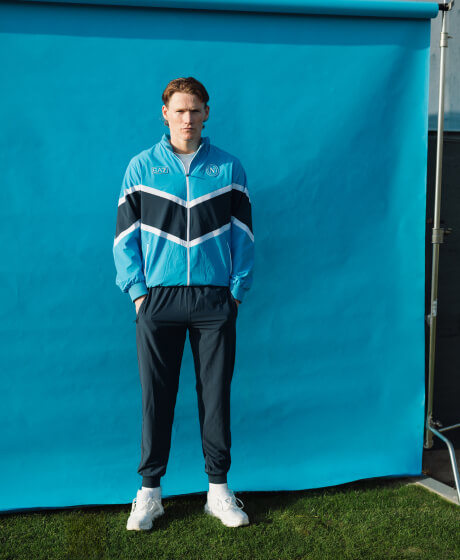
La dolce vita

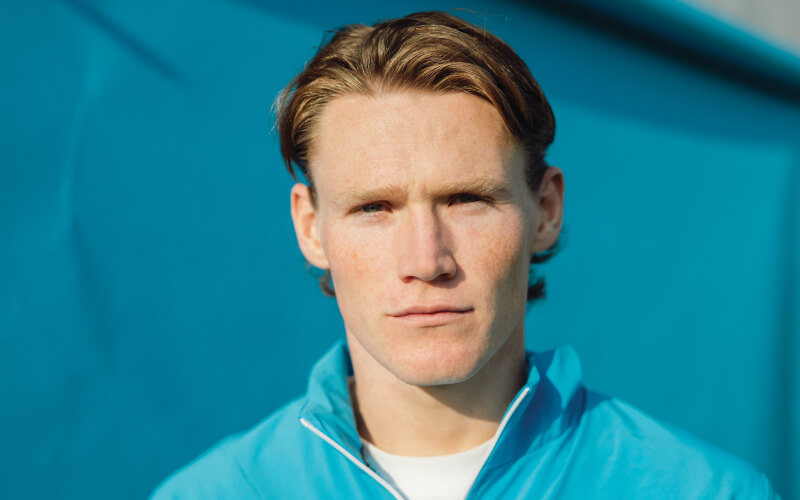
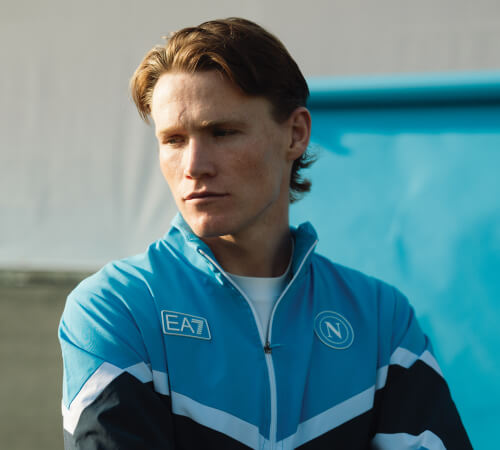
Napoli midfielder Scott McTominay is already part of the fabric of the southern Italian city after winning the Scudetto in his first season at the club. The Scotland international has embraced Italian culture and the Neapolitan lifestyle, garnering a passionate following in return. Here, McTominay talks risotto, espresso and the classic cut of an Italian suit with Alex O’Henley as he reflects on a sensational 18 months

PHOTOGRAPHY Giacomo Cousa

Cover Stories
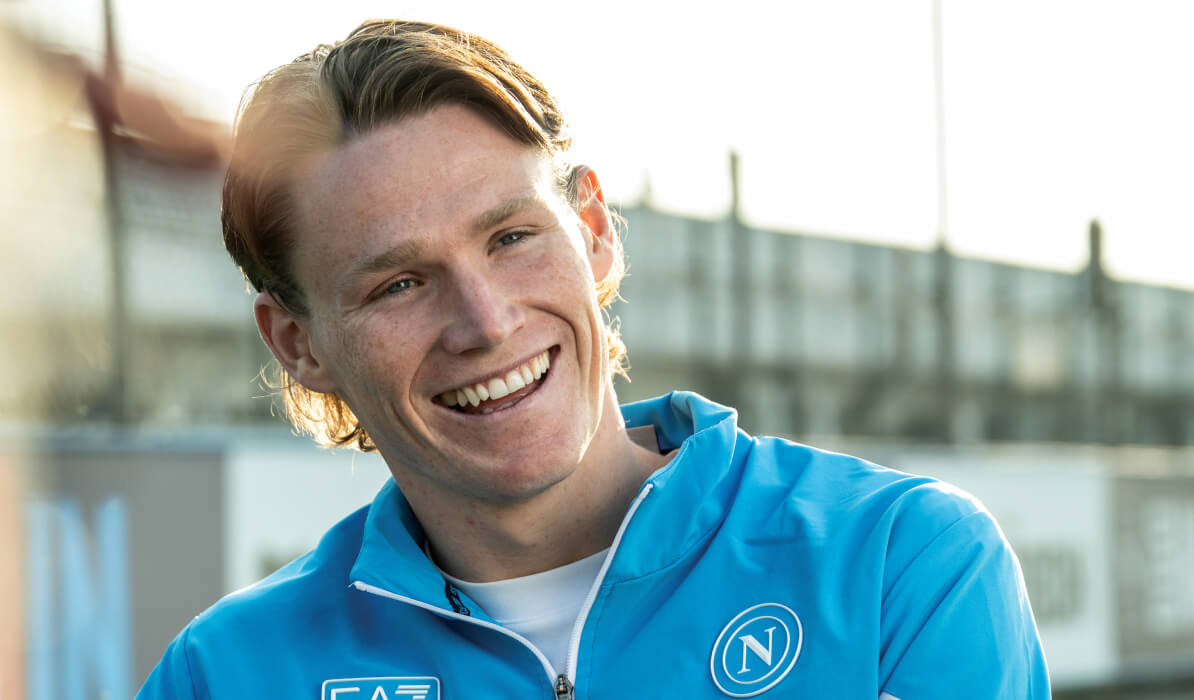
It’s mid-afternoon and the sun is starting to set behind Napoli’s training centre at Castel Volturno when Scott McTominay emerges from the dressing room flanked by the club’s media officer. This has already been a long week for the Scottish midfielder after Napoli’s Champions League trip to Denmark. A training session followed by a photo shoot and a couple of sit-down interviews is probably not top of his wish list for a Friday. However, despite the disappointment of a 1-1 draw against ten-man Copenhagen, I can tell McTominay is looking forward to catching up.

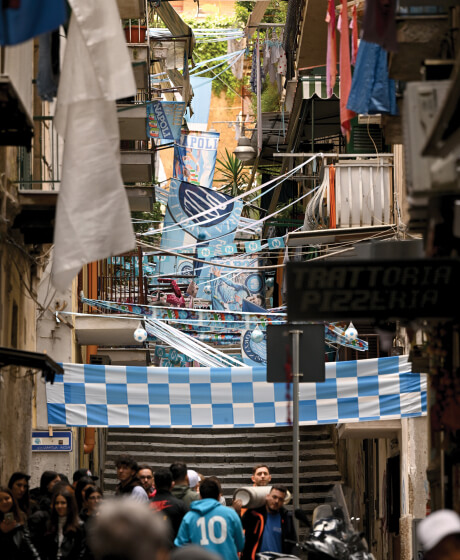
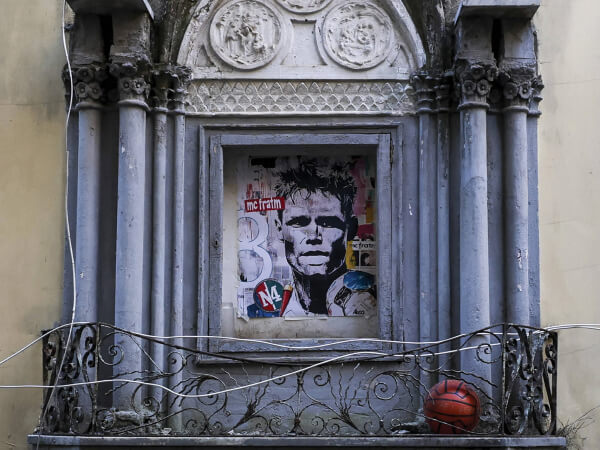
When I last spoke with him, Scotland head coach Steve Clarke had urged him to play with a “smile on his face”. Fast forward 18 months or so and he can’t stop smiling as he continues to live la dolce vita in the capital of Campania. Naples is a city that treats its heroes as gods, and in those first few months when he lived in a hotel, McTominay occasionally used to don a hat as a disguise and walk around the Quartieri Spagnoli (Spanish Quarter) to look in astonishment at the growing array of murals, flags and even a shrine in his honour.

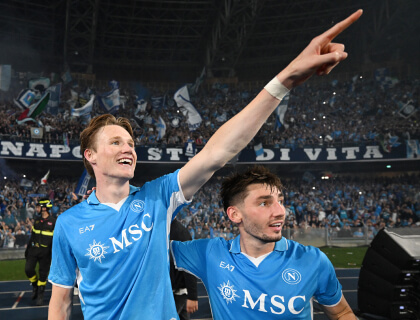
After a first season in which his 12 goals helped propel the Partenopei to their fourth Italian title, McTominay was voted Serie A’s Most Valuable Player as well as being nominated for the Ballon d’Or. Better yet, he has already achieved legendary status among Napoli fans, mentioned in the same breath as the iconic Diego Maradona, who almost single-handedly guided the club to their first two league crowns.

Although defeat by Chelsea after that Copenhagen draw ended their Champions League hopes this term, McTominay still has plenty to smile about. Loved and adored by supporters, appreciated by Antonio Conte for his leadership qualities, the relaxed 29-year-old tells me how he has embraced his new life in Italy, and his hopes for further success with the blue of Napoli and Scotland.

First of all, can we reflect on the mindset of Scott McTominay, the person, when he arrived in Italy 18 months ago? How have you changed in the time you’ve spent here in Naples?

I feel like I haven’t changed much. My personality’s very, very similar – if not the same – as when I was back in the UK. Maybe you feel more confidence here and you have the trust of the manager to play you a lot in the game, so I would say that’s probably the only thing that’s changed. And probably my hair, and that’s it.

Is the pace of life different here? How do you adapt to a different city and the people?

For me, it’s still a little surreal. I could walk around Manchester, wherever I wanted, and people would never recognise me too much, not to the extent of what it is here. I’m still getting used to that. It’s very, very different. But you get used to it, and they give you so much help and support. It’s a very family feel here with everyone – the chefs, the taxi drivers, the people in the club. It’s really, really good. The family feel is something that I’ve been brought up with as a child, and I do enjoy that.

What’s the first thing that stood out to you in Naples?

How passionate the people here are for the team, for the culture, for the lifestyle. It’s still just as passionate to this day. I’ve not got used to it.

On the taxi ride here, I said I was going to interview Scott McTominay and immediately the driver said, “Numero Uno!” and “Il Re!” How does it feel to have that kind of adulation from the people in this city?

I can’t explain it without sounding big-headed. They make me feel so special in a way, which is rare in football because there’s a lot of criticism, there’s a lot of opinion-based stuff. But the fans here, I just want to repay them as [well] as I can because the minute I arrived in the airport was… Wow! My mum was like, “What is going on here?” because there were so many people there to see me. It really took me by surprise, and moments like that, I’ll never, ever forget.

What’s the biggest difference playing in Italy?

The biggest difference playing in Italy was my first game. I was on the bench against Cagliari. My mum and dad and my girlfriend were sat in the crowd and I heard these bombs going off in the crowd, these fireworks, and I couldn’t believe what I was seeing. It’s so different. I’ve never experienced that in a stadium before. Obviously with the football, it’s different to the Premier League and other things, but in terms of the fireworks during the games, it’s crazy.

When you go out and about and you see the murals and shrines, you see the devotion towards you, that must be very satisfying.

I never get too carried away with stuff like that because, in football, you always have something to prove. You always have the next game to improve, and the team needs to improve as well. So, as much as I’m so grateful for the way they treat me here – the staff, the players, the fans and all the people in Naples – you do have to keep a middle ground of emotion, because it would be quite easy to get carried away and think that you’re bigger or better than you are, when I’m no better than any of the other players here. We’re all [facing] in the same direction and wanting to improve as a team. I firmly believe that.

You say you haven’t changed that much, but what about your lifestyle? The way you eat, the way you live?

I don’t really leave the house too much. If I do, it’s going for dinner or going for lunch in the afternoon with Billy [Gilmour], my girlfriend, my parents, some friends that come over. But other than that, my life in Manchester is exactly the same as what it is here. I go home, I recover, I eat good food and spend a lot of time recovering, doing different therapies. To be honest, it’s not too different other than the weather’s beautiful here. It’s nice to walk along the beach and stuff like that – to go to nice cafes and restaurants in Naples.

“When I arrived at the airport, there were so many people there to see me. Moments like that, I’ll never, ever forget”
“I never used to drink espressos in the UK and now I have two or three a day. It’s just the way they do it. If I have an americano, they’re all saying, ‘Mamma mia! How is this possible?’”

Which team-mate would you trust to give you a tour around Naples?

Pasquale Mazzocchi – 100%. Sempre. Because he’s from here, so he knows everything. I love him and he’s such a good guy, so I’d have a good day with him. We’d have three or four caffè doppios and then go around Naples and see what’s happening. He knows everything.

Tell us about the food. What’s your favourite meal, for example?

I’ve always been very fortunate. Growing up as a kid, my mum would make me a whole selection of different foods to eat. I really enjoyed food and always had a great admiration for eating healthy and looking after myself. Since I’ve come here, I’ve really enjoyed it. The food is honestly incredible. My chef at home, who I’m very lucky to have, makes some incredible dishes and, every time he comes round, we have such great fun and a laugh. He’s almost part of the family.

So what would you recommend?

Before games, I always have the parmesan risotto, but at home we have the risotto with maybe mushroom and it’s a little bit heavy. Here, whenever I eat the risotto with the olive oil, the parmesan, the salt, I don’t feel like I’ve eaten too much. Same with the pasta – it’s very light and easy to digest. Me and Rasmus [Højlund] and Billy [Gilmour], we love that risotto. We eat that all the time.

I know Billy and yourself live quite close together. Are you all in the same area and is that the circle you mingle with at the club too?

Yeah, we all live together, 100 metres apart – me, Rasmus, Billy, Kevin [De Bruyne], [Stanislav] Lobotka as well. It’s lucky in that respect. If anyone ever needs a lift into training or we’re going somewhere together, we all go. Obviously, [due to injury] we haven’t seen Kevin for a month or two, and we’re looking forward to having him back so we can go round and see his children. So, it’s nice – that family feel where we’re all really close by.

Can you tell us a bit about your special relationship with the team barista, Tommaso Starace?

Tommy’s a hero, I love him. My Italian is not great and Tommy’s English is limited, but every time we see him, he’s like a grandfather figure for the whole group and everybody in Naples. His coffee is amazing. I never used to drink espressos in the UK and now I have two or three a day. It’s just the way they do it. If I have an americano, they’re all saying, “Mamma mia! How is this possible?” Ever since six months ago to a year, I left them.

From a footballing perspective, how have things have changed for you since you came here? You’re much more advanced now than maybe you were at United, someone who comes from midfield and makes those late runs, gets into the box and scores goals.

Yeah, when I first arrived, I was playing quite high next to Romelu [Lukaku]. Conte’s always trying to help everybody in the team and push us a lot, and he was a real key factor in winning the league last year with what he does off the pitch, helping players and stuff. He helped me a lot in my role, where I was almost like a second striker. In the last two months, I’ve played deeper alongside Lobotka and still have the opportunities to occasionally arrive in the box, but less so because we need to build and create a construction to play through the pitch and ultimately finish with an attack on goal. I still have chances to go into the box now, but obviously we have many injuries so I need to play a little bit deeper. But I enjoy that as well, being a midfield player who can do a little bit of everything – I quite like that idea.

When you reflect on your time here – the Scudetto last season, MVP in Serie A, nominated for the Ballon d’Or, World Cup qualification with Scotland – can you believe how everything has come together?

To be honest, I don’t think about it. Even in good and bad moments at Man United, in good and bad moments here, I’ve always tried to keep a levelled mindset of not getting too carried away. And you have to believe in yourself. You know, if you’d said to me when I was leaving Manchester

United that those things might happen, I would’ve said, “It’s possible, but you never know.” It’s football. Things can change so quickly. I’ve been brought up by amazing parents, amazing family. My girlfriend’s such a good support system with me, and the players here, that it’s quite difficult to get too carried away with yourself and think you’re bigger than you are because football waits for nobody. And, for me, I’ve always known that. Manchester United, wherever – if you’re not playing well, someone’s going to come and take your place. I just want to do as well as I can to help Scotland, to help Napoli, and long may it continue. Just as long as you put in the work that people don’t see behind closed doors, anything can happen in football.

How much of a motivating factor is it knowing that at the end of this season you’ll be going to the World Cup?

That was the dream whenever we first set into the qualifying campaign. I feel like now is the time for everybody in Scotland to change their mindset and change that feeling of how we’re going there. Not to make the numbers up but to flick something in our brain where we’re saying, “Do you know what? We’re going there to compete and we’re going there to get out of the group, and we’re going there to play well.” That’s one of the conversations that the manager will have with the players. Sometimes it’s easy to say, “Oh, we’ve had a lot of disappointment being Scottish and playing in the national team and other things that might have happened.” I think the opposite. I feel like we can go there and try to change that narrative, and be one of the most successful Scottish teams ever.

You’ve always had self-confidence, but how important was that positive mindset in helping you move to a different country and become the player you have?

It’s key, and it comes [from being] around people who you’re around all the time. All my friends – my same friends I’ve known for 10, 15 years – we’re the same group. My family, I see all the time. It’s just a normal life that I live. It’s no different to any other person except I play football. So, whenever I do go home, it’s very rare that we speak about football too much. It’s all family and “How’s everybody getting on?” and going out, enjoying life. Whenever you move to a different country, you have to enjoy the experience, first and foremost, rather than be anxious and get caught up with other things. If you let your hair down and just go with the flow, I feel like you’ll perform better on the pitch as well.

The Napoli fans have given you quite a few nicknames: McFratm, McBro, McTerminator, Il Apribottiglie – the Bottle Opener. Do you have a favourite?

I didn’t know a few of [those] nicknames, so they’re new. But it’s nice and social media is a big creator for stuff like that. I would imagine many, many years ago, when there was no social media for things like that, they wouldn’t occur so much. So now, with social media, they catch on a little bit more. But, yeah, I’m happy. I like all the names.

We’ve talked about your form on the pitch, but you’ve also made a splash off it in terms of your sense of style. Tell us about your love, for example, of classic Italian suits.

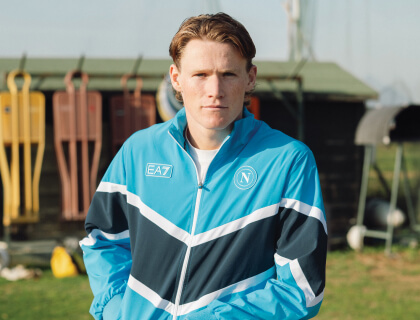
I’m very lucky that I have a tailor here who does all my measurements for me, gets my suits and my overcoats and my trench coats and my safari jackets and my trousers, because I’m quite an awkward fit for trousers. I have long legs and they’re quite slim, so it’s sometimes hard to buy off the shelf and get them exactly how you want them. I love the classic no logos with classic Italian style. I think it’s beautiful, it’s timeless, and I feel like whenever you wear the clothes here, you feel good, you know? And that’s a nice thing – whenever you go out for dinner and everyone sort of dresses the same. There are not too many badges and logos everywhere. I like the simplistic look and to look classy.

Were you surprised to make headlines when you appeared at Wimbledon last summer?

Yeah, I was a little bit surprised, but it’s rare that I’m back in the UK so when people see me there, they make a bit more of a fuss than usual. I don’t know, maybe the suit was a little bit much for the day, but that’s what I wear!

When I last spoke with him, Scotland head coach Steve Clarke had urged him to play with a “smile on his face”. Fast forward 18 months or so and he can’t stop smiling as he continues to live la dolce vita in the capital of Campania. Naples is a city that treats its heroes as gods, and in those first few months when he lived in a hotel, McTominay occasionally used to don a hat as a disguise and walk around the Quartieri Spagnoli (Spanish Quarter) to look in astonishment at the growing array of murals, flags and even a shrine in his honour.

After a first season in which his 12 goals helped propel the Partenopei to their fourth Italian title, McTominay was voted Serie A’s Most Valuable Player as well as being nominated for the Ballon d’Or. Better yet, he has already achieved legendary status among Napoli fans, mentioned in the same breath as the iconic Diego Maradona, who almost single-handedly guided the club to their first two league crowns.

Although defeat by Chelsea after that Copenhagen draw ended their Champions League hopes this term, McTominay still has plenty to smile about. Loved and adored by supporters, appreciated by Antonio Conte for his leadership qualities, the relaxed 29-year-old tells me how he has embraced his new life in Italy, and his hopes for further success with the blue of Napoli and Scotland.

First of all, can we reflect on the mindset of Scott McTominay, the person, when he arrived in Italy 18 months ago? How have you changed in the time you’ve spent here in Naples?

I feel like I haven’t changed much. My personality’s very, very similar – if not the same – as when I was back in the UK. Maybe you feel more confidence here and you have the trust of the manager to play you a lot in the game, so I would say that’s probably the only thing that’s changed. And probably my hair, and that’s it.

Is the pace of life different here? How do you adapt to a different city and the people?

For me, it’s still a little surreal. I could walk around Manchester, wherever I wanted, and people would never recognise me too much, not to the extent of what it is here. I’m still getting used to that. It’s very, very different. But you get used to it, and they give you so much help and support. It’s a very family feel here with everyone – the chefs, the taxi drivers, the people in the club. It’s really, really good. The family feel is something that I’ve been brought up with as a child, and I do enjoy that.

What’s the first thing that stood out to you in Naples?

How passionate the people here are for the team, for the culture, for the lifestyle. It’s still just as passionate to this day. I’ve not got used to it.

On the taxi ride here, I said I was going to interview Scott McTominay and immediately the driver said, “Numero Uno!” and “Il Re!” How does it feel to have that kind of adulation from the people in this city?

I can’t explain it without sounding big-headed. They make me feel so special in a way, which is rare in football because there’s a lot of criticism, there’s a lot of opinion-based stuff. But the fans here, I just want to repay them as [well] as I can because the minute I arrived in the airport was… Wow! My mum was like, “What is going on here?” because there were so many people there to see me. It really took me by surprise, and moments like that, I’ll never, ever forget.

What’s the biggest difference playing in Italy?

The biggest difference playing in Italy was my first game. I was on the bench against Cagliari. My mum and dad and my girlfriend were sat in the crowd and I heard these bombs going off in the crowd, these fireworks, and I couldn’t believe what I was seeing. It’s so different. I’ve never experienced that in a stadium before. Obviously with the football, it’s different to the Premier League and other things, but in terms of the fireworks during the games, it’s crazy.

When you go out and about and you see the murals and shrines, you see the devotion towards you, that must be very satisfying.

I never get too carried away with stuff like that because, in football, you always have something to prove. You always have the next game to improve, and the team needs to improve as well. So, as much as I’m so grateful for the way they treat me here – the staff, the players, the fans and all the people in Naples – you do have to keep a middle ground of emotion, because it would be quite easy to get carried away and think that you’re bigger or better than you are, when I’m no better than any of the other players here. We’re all [facing] in the same direction and wanting to improve as a team. I firmly believe that.

You say you haven’t changed that much, but what about your lifestyle? The way you eat, the way you live?

I don’t really leave the house too much. If I do, it’s going for dinner or going for lunch in the afternoon with Billy [Gilmour], my girlfriend, my parents, some friends that come over. But other than that, my life in Manchester is exactly the same as what it is here. I go home, I recover, I eat good food and spend a lot of time recovering, doing different therapies. To be honest, it’s not too different other than the weather’s beautiful here. It’s nice to walk along the beach and stuff like that – to go to nice cafes and restaurants in Naples.

Read the full story
Sign up now to get access to this and every premium feature on Champions Journal. You will also get access to member-only competitions and offers. And you get all of that completely free!
“When I arrived at the airport, there were so many people there to see me. Moments like that, I’ll never, ever forget”
“I never used to drink espressos in the UK and now I have two or three a day. It’s just the way they do it. If I have an americano, they’re all saying, ‘Mamma mia! How is this possible?’”

Which team-mate would you trust to give you a tour around Naples?

Pasquale Mazzocchi – 100%. Sempre. Because he’s from here, so he knows everything. I love him and he’s such a good guy, so I’d have a good day with him. We’d have three or four caffè doppios and then go around Naples and see what’s happening. He knows everything.

Tell us about the food. What’s your favourite meal, for example?

I’ve always been very fortunate. Growing up as a kid, my mum would make me a whole selection of different foods to eat. I really enjoyed food and always had a great admiration for eating healthy and looking after myself. Since I’ve come here, I’ve really enjoyed it. The food is honestly incredible. My chef at home, who I’m very lucky to have, makes some incredible dishes and, every time he comes round, we have such great fun and a laugh. He’s almost part of the family.

So what would you recommend?

Before games, I always have the parmesan risotto, but at home we have the risotto with maybe mushroom and it’s a little bit heavy. Here, whenever I eat the risotto with the olive oil, the parmesan, the salt, I don’t feel like I’ve eaten too much. Same with the pasta – it’s very light and easy to digest. Me and Rasmus [Højlund] and Billy [Gilmour], we love that risotto. We eat that all the time.

I know Billy and yourself live quite close together. Are you all in the same area and is that the circle you mingle with at the club too?

Yeah, we all live together, 100 metres apart – me, Rasmus, Billy, Kevin [De Bruyne], [Stanislav] Lobotka as well. It’s lucky in that respect. If anyone ever needs a lift into training or we’re going somewhere together, we all go. Obviously, [due to injury] we haven’t seen Kevin for a month or two, and we’re looking forward to having him back so we can go round and see his children. So, it’s nice – that family feel where we’re all really close by.

Can you tell us a bit about your special relationship with the team barista, Tommaso Starace?

Tommy’s a hero, I love him. My Italian is not great and Tommy’s English is limited, but every time we see him, he’s like a grandfather figure for the whole group and everybody in Naples. His coffee is amazing. I never used to drink espressos in the UK and now I have two or three a day. It’s just the way they do it. If I have an americano, they’re all saying, “Mamma mia! How is this possible?” Ever since six months ago to a year, I left them.

From a footballing perspective, how have things have changed for you since you came here? You’re much more advanced now than maybe you were at United, someone who comes from midfield and makes those late runs, gets into the box and scores goals.

Yeah, when I first arrived, I was playing quite high next to Romelu [Lukaku]. Conte’s always trying to help everybody in the team and push us a lot, and he was a real key factor in winning the league last year with what he does off the pitch, helping players and stuff. He helped me a lot in my role, where I was almost like a second striker. In the last two months, I’ve played deeper alongside Lobotka and still have the opportunities to occasionally arrive in the box, but less so because we need to build and create a construction to play through the pitch and ultimately finish with an attack on goal. I still have chances to go into the box now, but obviously we have many injuries so I need to play a little bit deeper. But I enjoy that as well, being a midfield player who can do a little bit of everything – I quite like that idea.

When you reflect on your time here – the Scudetto last season, MVP in Serie A, nominated for the Ballon d’Or, World Cup qualification with Scotland – can you believe how everything has come together?

To be honest, I don’t think about it. Even in good and bad moments at Man United, in good and bad moments here, I’ve always tried to keep a levelled mindset of not getting too carried away. And you have to believe in yourself. You know, if you’d said to me when I was leaving Manchester

United that those things might happen, I would’ve said, “It’s possible, but you never know.” It’s football. Things can change so quickly. I’ve been brought up by amazing parents, amazing family. My girlfriend’s such a good support system with me, and the players here, that it’s quite difficult to get too carried away with yourself and think you’re bigger than you are because football waits for nobody. And, for me, I’ve always known that. Manchester United, wherever – if you’re not playing well, someone’s going to come and take your place. I just want to do as well as I can to help Scotland, to help Napoli, and long may it continue. Just as long as you put in the work that people don’t see behind closed doors, anything can happen in football.

How much of a motivating factor is it knowing that at the end of this season you’ll be going to the World Cup?

That was the dream whenever we first set into the qualifying campaign. I feel like now is the time for everybody in Scotland to change their mindset and change that feeling of how we’re going there. Not to make the numbers up but to flick something in our brain where we’re saying, “Do you know what? We’re going there to compete and we’re going there to get out of the group, and we’re going there to play well.” That’s one of the conversations that the manager will have with the players. Sometimes it’s easy to say, “Oh, we’ve had a lot of disappointment being Scottish and playing in the national team and other things that might have happened.” I think the opposite. I feel like we can go there and try to change that narrative, and be one of the most successful Scottish teams ever.

You’ve always had self-confidence, but how important was that positive mindset in helping you move to a different country and become the player you have?

It’s key, and it comes [from being] around people who you’re around all the time. All my friends – my same friends I’ve known for 10, 15 years – we’re the same group. My family, I see all the time. It’s just a normal life that I live. It’s no different to any other person except I play football. So, whenever I do go home, it’s very rare that we speak about football too much. It’s all family and “How’s everybody getting on?” and going out, enjoying life. Whenever you move to a different country, you have to enjoy the experience, first and foremost, rather than be anxious and get caught up with other things. If you let your hair down and just go with the flow, I feel like you’ll perform better on the pitch as well.

The Napoli fans have given you quite a few nicknames: McFratm, McBro, McTerminator, Il Apribottiglie – the Bottle Opener. Do you have a favourite?

I didn’t know a few of [those] nicknames, so they’re new. But it’s nice and social media is a big creator for stuff like that. I would imagine many, many years ago, when there was no social media for things like that, they wouldn’t occur so much. So now, with social media, they catch on a little bit more. But, yeah, I’m happy. I like all the names.

We’ve talked about your form on the pitch, but you’ve also made a splash off it in terms of your sense of style. Tell us about your love, for example, of classic Italian suits.

I’m very lucky that I have a tailor here who does all my measurements for me, gets my suits and my overcoats and my trench coats and my safari jackets and my trousers, because I’m quite an awkward fit for trousers. I have long legs and they’re quite slim, so it’s sometimes hard to buy off the shelf and get them exactly how you want them. I love the classic no logos with classic Italian style. I think it’s beautiful, it’s timeless, and I feel like whenever you wear the clothes here, you feel good, you know? And that’s a nice thing – whenever you go out for dinner and everyone sort of dresses the same. There are not too many badges and logos everywhere. I like the simplistic look and to look classy.

Were you surprised to make headlines when you appeared at Wimbledon last summer?

Yeah, I was a little bit surprised, but it’s rare that I’m back in the UK so when people see me there, they make a bit more of a fuss than usual. I don’t know, maybe the suit was a little bit much for the day, but that’s what I wear!

When I last spoke with him, Scotland head coach Steve Clarke had urged him to play with a “smile on his face”. Fast forward 18 months or so and he can’t stop smiling as he continues to live la dolce vita in the capital of Campania. Naples is a city that treats its heroes as gods, and in those first few months when he lived in a hotel, McTominay occasionally used to don a hat as a disguise and walk around the Quartieri Spagnoli (Spanish Quarter) to look in astonishment at the growing array of murals, flags and even a shrine in his honour.

After a first season in which his 12 goals helped propel the Partenopei to their fourth Italian title, McTominay was voted Serie A’s Most Valuable Player as well as being nominated for the Ballon d’Or. Better yet, he has already achieved legendary status among Napoli fans, mentioned in the same breath as the iconic Diego Maradona, who almost single-handedly guided the club to their first two league crowns.

Although defeat by Chelsea after that Copenhagen draw ended their Champions League hopes this term, McTominay still has plenty to smile about. Loved and adored by supporters, appreciated by Antonio Conte for his leadership qualities, the relaxed 29-year-old tells me how he has embraced his new life in Italy, and his hopes for further success with the blue of Napoli and Scotland.

First of all, can we reflect on the mindset of Scott McTominay, the person, when he arrived in Italy 18 months ago? How have you changed in the time you’ve spent here in Naples?

I feel like I haven’t changed much. My personality’s very, very similar – if not the same – as when I was back in the UK. Maybe you feel more confidence here and you have the trust of the manager to play you a lot in the game, so I would say that’s probably the only thing that’s changed. And probably my hair, and that’s it.

Is the pace of life different here? How do you adapt to a different city and the people?

For me, it’s still a little surreal. I could walk around Manchester, wherever I wanted, and people would never recognise me too much, not to the extent of what it is here. I’m still getting used to that. It’s very, very different. But you get used to it, and they give you so much help and support. It’s a very family feel here with everyone – the chefs, the taxi drivers, the people in the club. It’s really, really good. The family feel is something that I’ve been brought up with as a child, and I do enjoy that.

What’s the first thing that stood out to you in Naples?

How passionate the people here are for the team, for the culture, for the lifestyle. It’s still just as passionate to this day. I’ve not got used to it.

On the taxi ride here, I said I was going to interview Scott McTominay and immediately the driver said, “Numero Uno!” and “Il Re!” How does it feel to have that kind of adulation from the people in this city?

I can’t explain it without sounding big-headed. They make me feel so special in a way, which is rare in football because there’s a lot of criticism, there’s a lot of opinion-based stuff. But the fans here, I just want to repay them as [well] as I can because the minute I arrived in the airport was… Wow! My mum was like, “What is going on here?” because there were so many people there to see me. It really took me by surprise, and moments like that, I’ll never, ever forget.

What’s the biggest difference playing in Italy?

The biggest difference playing in Italy was my first game. I was on the bench against Cagliari. My mum and dad and my girlfriend were sat in the crowd and I heard these bombs going off in the crowd, these fireworks, and I couldn’t believe what I was seeing. It’s so different. I’ve never experienced that in a stadium before. Obviously with the football, it’s different to the Premier League and other things, but in terms of the fireworks during the games, it’s crazy.

When you go out and about and you see the murals and shrines, you see the devotion towards you, that must be very satisfying.

I never get too carried away with stuff like that because, in football, you always have something to prove. You always have the next game to improve, and the team needs to improve as well. So, as much as I’m so grateful for the way they treat me here – the staff, the players, the fans and all the people in Naples – you do have to keep a middle ground of emotion, because it would be quite easy to get carried away and think that you’re bigger or better than you are, when I’m no better than any of the other players here. We’re all [facing] in the same direction and wanting to improve as a team. I firmly believe that.

You say you haven’t changed that much, but what about your lifestyle? The way you eat, the way you live?

I don’t really leave the house too much. If I do, it’s going for dinner or going for lunch in the afternoon with Billy [Gilmour], my girlfriend, my parents, some friends that come over. But other than that, my life in Manchester is exactly the same as what it is here. I go home, I recover, I eat good food and spend a lot of time recovering, doing different therapies. To be honest, it’s not too different other than the weather’s beautiful here. It’s nice to walk along the beach and stuff like that – to go to nice cafes and restaurants in Naples.

“When I arrived at the airport, there were so many people there to see me. Moments like that, I’ll never, ever forget”
“I never used to drink espressos in the UK and now I have two or three a day. It’s just the way they do it. If I have an americano, they’re all saying, ‘Mamma mia! How is this possible?’”

Which team-mate would you trust to give you a tour around Naples?

Pasquale Mazzocchi – 100%. Sempre. Because he’s from here, so he knows everything. I love him and he’s such a good guy, so I’d have a good day with him. We’d have three or four caffè doppios and then go around Naples and see what’s happening. He knows everything.

Tell us about the food. What’s your favourite meal, for example?

I’ve always been very fortunate. Growing up as a kid, my mum would make me a whole selection of different foods to eat. I really enjoyed food and always had a great admiration for eating healthy and looking after myself. Since I’ve come here, I’ve really enjoyed it. The food is honestly incredible. My chef at home, who I’m very lucky to have, makes some incredible dishes and, every time he comes round, we have such great fun and a laugh. He’s almost part of the family.

So what would you recommend?

Before games, I always have the parmesan risotto, but at home we have the risotto with maybe mushroom and it’s a little bit heavy. Here, whenever I eat the risotto with the olive oil, the parmesan, the salt, I don’t feel like I’ve eaten too much. Same with the pasta – it’s very light and easy to digest. Me and Rasmus [Højlund] and Billy [Gilmour], we love that risotto. We eat that all the time.

I know Billy and yourself live quite close together. Are you all in the same area and is that the circle you mingle with at the club too?

Yeah, we all live together, 100 metres apart – me, Rasmus, Billy, Kevin [De Bruyne], [Stanislav] Lobotka as well. It’s lucky in that respect. If anyone ever needs a lift into training or we’re going somewhere together, we all go. Obviously, [due to injury] we haven’t seen Kevin for a month or two, and we’re looking forward to having him back so we can go round and see his children. So, it’s nice – that family feel where we’re all really close by.

Can you tell us a bit about your special relationship with the team barista, Tommaso Starace?

Tommy’s a hero, I love him. My Italian is not great and Tommy’s English is limited, but every time we see him, he’s like a grandfather figure for the whole group and everybody in Naples. His coffee is amazing. I never used to drink espressos in the UK and now I have two or three a day. It’s just the way they do it. If I have an americano, they’re all saying, “Mamma mia! How is this possible?” Ever since six months ago to a year, I left them.

From a footballing perspective, how have things have changed for you since you came here? You’re much more advanced now than maybe you were at United, someone who comes from midfield and makes those late runs, gets into the box and scores goals.

Yeah, when I first arrived, I was playing quite high next to Romelu [Lukaku]. Conte’s always trying to help everybody in the team and push us a lot, and he was a real key factor in winning the league last year with what he does off the pitch, helping players and stuff. He helped me a lot in my role, where I was almost like a second striker. In the last two months, I’ve played deeper alongside Lobotka and still have the opportunities to occasionally arrive in the box, but less so because we need to build and create a construction to play through the pitch and ultimately finish with an attack on goal. I still have chances to go into the box now, but obviously we have many injuries so I need to play a little bit deeper. But I enjoy that as well, being a midfield player who can do a little bit of everything – I quite like that idea.

When you reflect on your time here – the Scudetto last season, MVP in Serie A, nominated for the Ballon d’Or, World Cup qualification with Scotland – can you believe how everything has come together?

To be honest, I don’t think about it. Even in good and bad moments at Man United, in good and bad moments here, I’ve always tried to keep a levelled mindset of not getting too carried away. And you have to believe in yourself. You know, if you’d said to me when I was leaving Manchester

United that those things might happen, I would’ve said, “It’s possible, but you never know.” It’s football. Things can change so quickly. I’ve been brought up by amazing parents, amazing family. My girlfriend’s such a good support system with me, and the players here, that it’s quite difficult to get too carried away with yourself and think you’re bigger than you are because football waits for nobody. And, for me, I’ve always known that. Manchester United, wherever – if you’re not playing well, someone’s going to come and take your place. I just want to do as well as I can to help Scotland, to help Napoli, and long may it continue. Just as long as you put in the work that people don’t see behind closed doors, anything can happen in football.

How much of a motivating factor is it knowing that at the end of this season you’ll be going to the World Cup?

That was the dream whenever we first set into the qualifying campaign. I feel like now is the time for everybody in Scotland to change their mindset and change that feeling of how we’re going there. Not to make the numbers up but to flick something in our brain where we’re saying, “Do you know what? We’re going there to compete and we’re going there to get out of the group, and we’re going there to play well.” That’s one of the conversations that the manager will have with the players. Sometimes it’s easy to say, “Oh, we’ve had a lot of disappointment being Scottish and playing in the national team and other things that might have happened.” I think the opposite. I feel like we can go there and try to change that narrative, and be one of the most successful Scottish teams ever.

You’ve always had self-confidence, but how important was that positive mindset in helping you move to a different country and become the player you have?

It’s key, and it comes [from being] around people who you’re around all the time. All my friends – my same friends I’ve known for 10, 15 years – we’re the same group. My family, I see all the time. It’s just a normal life that I live. It’s no different to any other person except I play football. So, whenever I do go home, it’s very rare that we speak about football too much. It’s all family and “How’s everybody getting on?” and going out, enjoying life. Whenever you move to a different country, you have to enjoy the experience, first and foremost, rather than be anxious and get caught up with other things. If you let your hair down and just go with the flow, I feel like you’ll perform better on the pitch as well.

The Napoli fans have given you quite a few nicknames: McFratm, McBro, McTerminator, Il Apribottiglie – the Bottle Opener. Do you have a favourite?

I didn’t know a few of [those] nicknames, so they’re new. But it’s nice and social media is a big creator for stuff like that. I would imagine many, many years ago, when there was no social media for things like that, they wouldn’t occur so much. So now, with social media, they catch on a little bit more. But, yeah, I’m happy. I like all the names.

We’ve talked about your form on the pitch, but you’ve also made a splash off it in terms of your sense of style. Tell us about your love, for example, of classic Italian suits.

I’m very lucky that I have a tailor here who does all my measurements for me, gets my suits and my overcoats and my trench coats and my safari jackets and my trousers, because I’m quite an awkward fit for trousers. I have long legs and they’re quite slim, so it’s sometimes hard to buy off the shelf and get them exactly how you want them. I love the classic no logos with classic Italian style. I think it’s beautiful, it’s timeless, and I feel like whenever you wear the clothes here, you feel good, you know? And that’s a nice thing – whenever you go out for dinner and everyone sort of dresses the same. There are not too many badges and logos everywhere. I like the simplistic look and to look classy.

Were you surprised to make headlines when you appeared at Wimbledon last summer?

Yeah, I was a little bit surprised, but it’s rare that I’m back in the UK so when people see me there, they make a bit more of a fuss than usual. I don’t know, maybe the suit was a little bit much for the day, but that’s what I wear!

History
I grandi Scozzesi

Three Scottish greats who have given Italian football a tartan hue over the years

When Scott McTominay and Billy Gilmour lifted the Scudetto for Napoli last season, they became the first Scottish players to do so in 120 years. Their predecessors, Jack Diment and James Squair, played in the first Juventus side to win the Prima Categoria – the forerunner to Serie A – all the way back in 1905.

Recent years have brought a resurgence of Scots dipping their toes into Italian waters. Liam Henderson, currently at Sampdoria, started the trend, followed by now Bologna captain Lewis Ferguson. Ché Adams has been hitting goals for Torino, while Fife native Kieron Bowie has just moved to Hellas Verona from Hibs and Lennon Miller, 19, swapped Motherwell for Udinese last summer.

While that represents an unprecedented influx of Scottish players into Serie A, the years between 1905 and 2025 weren’t completely devoid of Caledonian influence. Here, we explore some of the Scottish legends who have made their mark on Italian soil over the years.
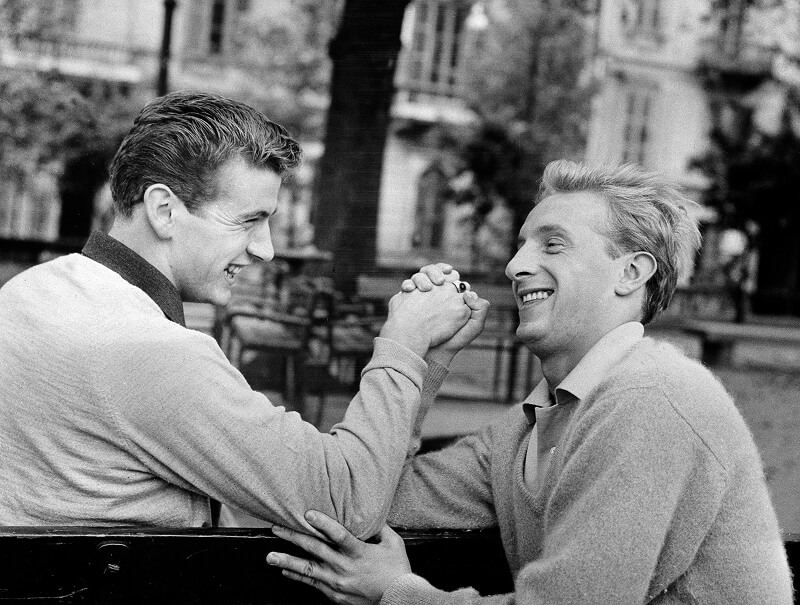
Denis Law (right) arm-wrestles Joe Baker during his stint at Torino

Fuoriclasse

Denis Law

Denis Law only spent a season in Italian football with Torino, but to this day the striker is considered one of the best foreign players to have sported the Granata shirt. Ten goals in 27 appearances during the 1961/62 season earned Law lofty labels such as fuoriclasse (superstar). Such was his status among the fans that he was given the nickname Valentino after the club’s legendary captain Valentino Mazzola, who tragically died in the Superga air crash a few years earlier. However, the emphasis on defensive football didn’t suit Law’s all-action style and he returned to England the following season, scoring 237 goals for Manchester United and winning the prestigious Ballon d’Or trophy, the only Scot ever to do so.
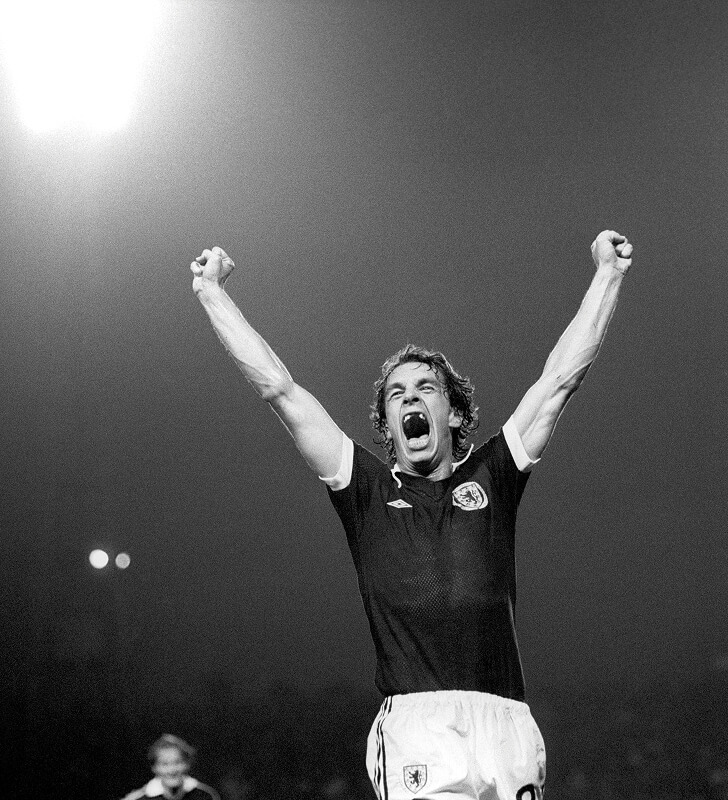
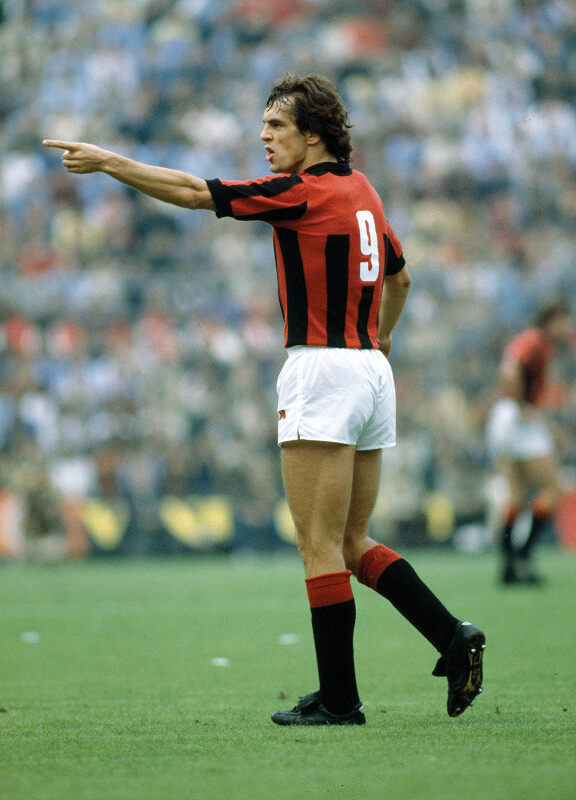
Joe Jordan and his teeth at AC Milan

Lo Squalo

Joe Jordan

Joe Jordan is fondly remembered at AC Milan and Verona after playing for both clubs in the early to mid-1980s. Fabio Capello, who would later become Milan coach, went to watch Jordan play for Scotland in Glasgow and recommended the striker to chairman Giuseppe Farina. Jordan’s aggressive pressing, non-stop running and goalscoring prowess were just what the Rossoneri needed to fire them back to Serie A in the 1982/83 season, with the former Manchester United and Leeds United ace netting ten goals in 30 league appearances. Jordan’s predatory skills in the penalty box, especially his aerial ability, together with his fearsome appearance – having lost four front teeth in a reserve match during his time at Leeds – earned him the sobriquet Lo Squalo, or the Shark.
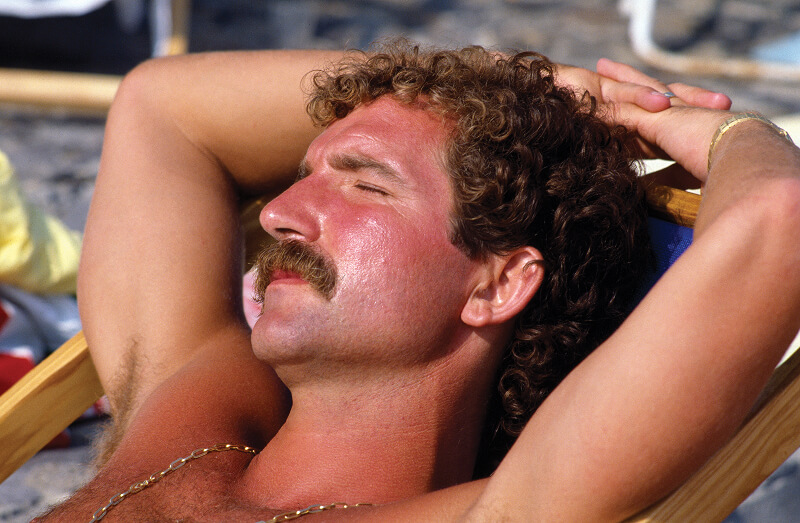
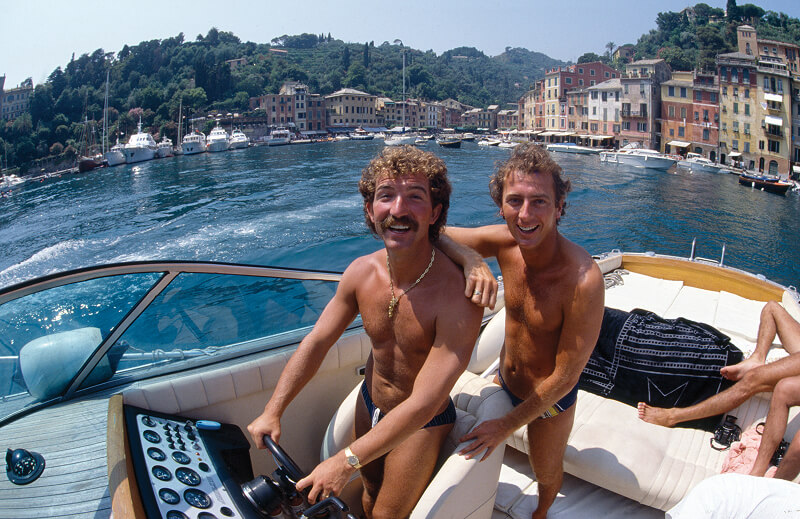
Graeme Souness works on his tan, and gets out on the water with Trevor Francis

Charlie Champagne

Graeme Souness

Sampdoria were a club on the way up and had already signed the likes of Trevor Francis and Liam Brady before Graeme Souness joined the Blucerchiati from Liverpool in 1984. Brady had moved to Inter Milan and Sampdoria were looking for an experienced talent to lead younger players such as Roberto Mancini, Gianluca Vialli and Pietro Vierchowod. Souness’ swashbuckling style laced with a hint of Scottish swagger was perfectly suited to the slower tempo of Italian football, and the midfielder was on the scoresheet along with Mancini and Vialli as Sampdoria lifted their first-ever Coppa Italia a year later. Off the pitch, Souness embraced the elegance and chic of the Italian lifestyle, especially fashion, all the while maintaining his aura of tough guy charm before returning to the UK as player-manager of Rangers in 1986.

History
I grandi Scozzesi

Three Scottish greats who have given Italian football a tartan hue over the years

When Scott McTominay and Billy Gilmour lifted the Scudetto for Napoli last season, they became the first Scottish players to do so in 120 years. Their predecessors, Jack Diment and James Squair, played in the first Juventus side to win the Prima Categoria – the forerunner to Serie A – all the way back in 1905.

Recent years have brought a resurgence of Scots dipping their toes into Italian waters. Liam Henderson, currently at Sampdoria, started the trend, followed by now Bologna captain Lewis Ferguson. Ché Adams has been hitting goals for Torino, while Fife native Kieron Bowie has just moved to Hellas Verona from Hibs and Lennon Miller, 19, swapped Motherwell for Udinese last summer.

While that represents an unprecedented influx of Scottish players into Serie A, the years between 1905 and 2025 weren’t completely devoid of Caledonian influence. Here, we explore some of the Scottish legends who have made their mark on Italian soil over the years.

Denis Law (right) arm-wrestles Joe Baker during his stint at Torino

Fuoriclasse

Denis Law

Denis Law only spent a season in Italian football with Torino, but to this day the striker is considered one of the best foreign players to have sported the Granata shirt. Ten goals in 27 appearances during the 1961/62 season earned Law lofty labels such as fuoriclasse (superstar). Such was his status among the fans that he was given the nickname Valentino after the club’s legendary captain Valentino Mazzola, who tragically died in the Superga air crash a few years earlier. However, the emphasis on defensive football didn’t suit Law’s all-action style and he returned to England the following season, scoring 237 goals for Manchester United and winning the prestigious Ballon d’Or trophy, the only Scot ever to do so.

Joe Jordan and his teeth at AC Milan

Lo Squalo

Joe Jordan

Joe Jordan is fondly remembered at AC Milan and Verona after playing for both clubs in the early to mid-1980s. Fabio Capello, who would later become Milan coach, went to watch Jordan play for Scotland in Glasgow and recommended the striker to chairman Giuseppe Farina. Jordan’s aggressive pressing, non-stop running and goalscoring prowess were just what the Rossoneri needed to fire them back to Serie A in the 1982/83 season, with the former Manchester United and Leeds United ace netting ten goals in 30 league appearances. Jordan’s predatory skills in the penalty box, especially his aerial ability, together with his fearsome appearance – having lost four front teeth in a reserve match during his time at Leeds – earned him the sobriquet Lo Squalo, or the Shark.

Graeme Souness works on his tan, and gets out on the water with Trevor Francis

Charlie Champagne

Graeme Souness

Sampdoria were a club on the way up and had already signed the likes of Trevor Francis and Liam Brady before Graeme Souness joined the Blucerchiati from Liverpool in 1984. Brady had moved to Inter Milan and Sampdoria were looking for an experienced talent to lead younger players such as Roberto Mancini, Gianluca Vialli and Pietro Vierchowod. Souness’ swashbuckling style laced with a hint of Scottish swagger was perfectly suited to the slower tempo of Italian football, and the midfielder was on the scoresheet along with Mancini and Vialli as Sampdoria lifted their first-ever Coppa Italia a year later. Off the pitch, Souness embraced the elegance and chic of the Italian lifestyle, especially fashion, all the while maintaining his aura of tough guy charm before returning to the UK as player-manager of Rangers in 1986.

History
I grandi Scozzesi

Three Scottish greats who have given Italian football a tartan hue over the years

When Scott McTominay and Billy Gilmour lifted the Scudetto for Napoli last season, they became the first Scottish players to do so in 120 years. Their predecessors, Jack Diment and James Squair, played in the first Juventus side to win the Prima Categoria – the forerunner to Serie A – all the way back in 1905.

Recent years have brought a resurgence of Scots dipping their toes into Italian waters. Liam Henderson, currently at Sampdoria, started the trend, followed by now Bologna captain Lewis Ferguson. Ché Adams has been hitting goals for Torino, while Fife native Kieron Bowie has just moved to Hellas Verona from Hibs and Lennon Miller, 19, swapped Motherwell for Udinese last summer.

While that represents an unprecedented influx of Scottish players into Serie A, the years between 1905 and 2025 weren’t completely devoid of Caledonian influence. Here, we explore some of the Scottish legends who have made their mark on Italian soil over the years.

Denis Law (right) arm-wrestles Joe Baker during his stint at Torino

Fuoriclasse

Denis Law

Denis Law only spent a season in Italian football with Torino, but to this day the striker is considered one of the best foreign players to have sported the Granata shirt. Ten goals in 27 appearances during the 1961/62 season earned Law lofty labels such as fuoriclasse (superstar). Such was his status among the fans that he was given the nickname Valentino after the club’s legendary captain Valentino Mazzola, who tragically died in the Superga air crash a few years earlier. However, the emphasis on defensive football didn’t suit Law’s all-action style and he returned to England the following season, scoring 237 goals for Manchester United and winning the prestigious Ballon d’Or trophy, the only Scot ever to do so.

Joe Jordan and his teeth at AC Milan

Lo Squalo

Joe Jordan

Joe Jordan is fondly remembered at AC Milan and Verona after playing for both clubs in the early to mid-1980s. Fabio Capello, who would later become Milan coach, went to watch Jordan play for Scotland in Glasgow and recommended the striker to chairman Giuseppe Farina. Jordan’s aggressive pressing, non-stop running and goalscoring prowess were just what the Rossoneri needed to fire them back to Serie A in the 1982/83 season, with the former Manchester United and Leeds United ace netting ten goals in 30 league appearances. Jordan’s predatory skills in the penalty box, especially his aerial ability, together with his fearsome appearance – having lost four front teeth in a reserve match during his time at Leeds – earned him the sobriquet Lo Squalo, or the Shark.

Graeme Souness works on his tan, and gets out on the water with Trevor Francis

Charlie Champagne

Graeme Souness

Sampdoria were a club on the way up and had already signed the likes of Trevor Francis and Liam Brady before Graeme Souness joined the Blucerchiati from Liverpool in 1984. Brady had moved to Inter Milan and Sampdoria were looking for an experienced talent to lead younger players such as Roberto Mancini, Gianluca Vialli and Pietro Vierchowod. Souness’ swashbuckling style laced with a hint of Scottish swagger was perfectly suited to the slower tempo of Italian football, and the midfielder was on the scoresheet along with Mancini and Vialli as Sampdoria lifted their first-ever Coppa Italia a year later. Off the pitch, Souness embraced the elegance and chic of the Italian lifestyle, especially fashion, all the while maintaining his aura of tough guy charm before returning to the UK as player-manager of Rangers in 1986.

To access this article, as well as all CJ+ content and competitions, you will need a subscription to Champions Journal.
Already a subscriber? Sign in
close
END OF JANUARY SALE
christmas offer
Christmas CHEER
Up to 40% off
Start shopping
50% off!
Win two tickets to the UEFA Champions League final
And receive a free Champions Travel
eSIM when you enter
enter now
0
Days
0
Hrs
0
Mins
0
Secs
This element will display when the countdown is finished.