Shoot to thrill
From the fight in his eyes to his brio on the ball, Luis Díaz has given an already formidable Bayern München attack a whole new dimension this season. As the 29-year-old tells Graham Hunter, a tough upbringing has produced a footballer always playing at full throttle, driven to bring chaos to any defence he faces
PHOTOGRAPHY Simon Mellar

Cover Stories
For anyone who fears that modern football has become too formulaic, risk-averse and system-dependent, Luis Díaz is manna from heaven. Not simply because he has been born with divine, Tasmanian devil energy, elasticity and skill – but because he lives to thrill. And because he’s happy to admit it. On the ball, he’ll dance like a Colombian Artful Dodger, then cheerfully describe how he lives to drive defenders around the bend.
He’s also honest about the fact that he likes to be appreciated, that he recognises the adoration of fans who vicariously vibe off his vivacity. And the highlight moment of this interview, conducted at Bayern’s Säbener Strasse headquarters, was when he admitted that he loves to see fear in an opponent’s eyes. That he loves to introduce a bit of anarchy into matches.
How lucky he is, then, to work for Vincent Kompany, who seems not only laid-back about this will-of-the-wisp attitude but actively encourages it. To the extent that Díaz celebrates his first season in the Bundesliga both as champion and with nearly a half-century of goal contributions in all competitions too.
And how lucky he is that, for whatever reason, Liverpool acceded to letting him go last summer. Retrospectively, is there any degree to which the absence of the Colombian has contributed to the Reds being less competitive in the Premier League this season? Who can tell, but Díaz is unswerving in his gratitude for what he learned at Anfield and the Liverpool training ground. They, and Porto, helped transform something of a ragamuffin footballer who had learned his skills in Barrancas playing barefoot, tearing toenails off by kicking stones around the mud rather than a ball, and whose raw potential was there to see but needed trust and education.
“You had to make a ball out of rags, and we played on dirt football pitches with rocks. but we were always smiling”
Díaz had played against both Harry Kane and Michael Olise in the Premier League – but read on to discover how much his admiration for their abilities, mentalities and flair grew once he shared a dressing room and a training ground with them.
This is the first time in many years that the runners and riders for the Ballon d’Or awards look like they could be dominated by various Bayern employees. But if Kane and Olise are already in many people’s minds ahead of the World Cup, only the inattentive or biased could be forgetting the case for this explosively talented and effective winger. And perhaps I’ve fallen into the trap too: it’s not only about his extraordinary statistics – it’s about the spectacle, the fun and the daring.
When he joined us for this extended interview, Díaz had already been at Bayern HQ for some video analysis and a long training session, only to be told by the club that, because Kane was feeling under the weather, he would have to take over the Englishman’s previously assigned media duties.
Despite this making his day at the training centre extremely long, given that he had promised to sit down and take time over this interview, he happily insisted we add an extra 15 minutes at the end because he was enjoying himself and had more to say. Here’s the evidence of that, and a genuine glimpse of the real Luis Díaz: nice guy, fun, enthusiastic and a devilishly good footballer.
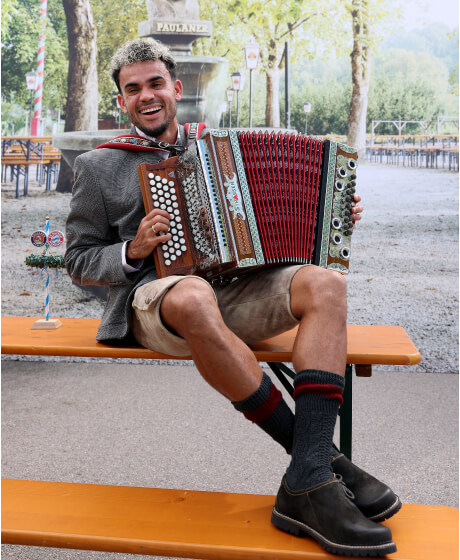
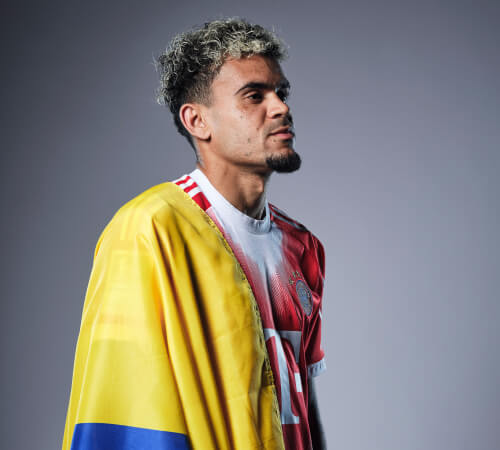
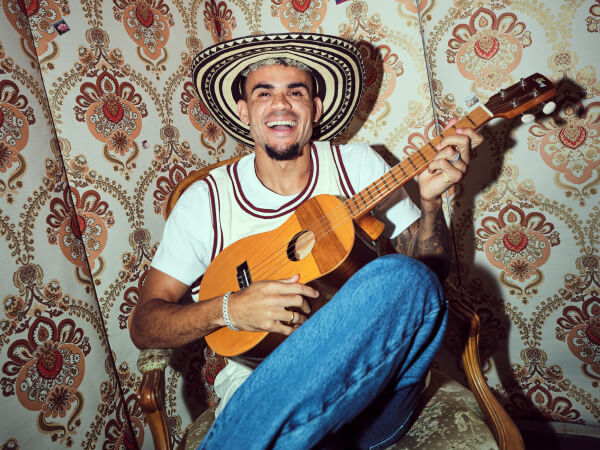
“I know I’m dangerous when I have the ball at my feet, so I love those moments when I create chaos. Forwards and wingers live for that, when the opposition is scared”
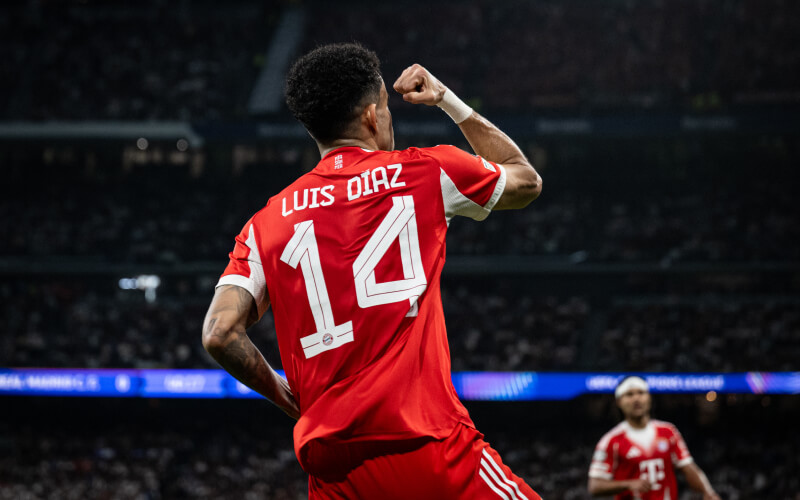
"You had to make a ball out of rags, and we played on dirt football pitches with rocks. But we were all smiling"
Your nickname, Lucho, comes from the word to fight in Spanish. Can you pick a moment from your life when you had to fight the most?
There have been difficult moments when I had to fight to get through. I have pursued my dream of being a professional football player ever since I was little. It’s tough, because in Colombia there aren’t many opportunities and you have to seek them out yourself. At Barranquilla Fútbol Club, when I got to Barranquilla city I had to fight to get what I wanted. I remember that stage of my life very clearly, so I’m very thankful to God and to life for giving me those moments and those obstacles, because they were lessons that allowed me to grow and reach where I am today. Nowadays, I’m seeing the fruits of that hard work. So I always try to attach the word fight to my name, and I strive to be happy and enjoy the results of that. The process of moving to another city, travelling, leaving my family and being away from them was a little difficult. When you get to a new city, you come across a lot of things that surprise you, especially in your teenage years. It was difficult to be away from my parents, my siblings, because we’re very close-knit and tight. There were moments when I really thought that was it. But those moments also reminded me that I had to fight to give my family a better life and get what I wanted, which was to play football professionally. Today, thank God, I was able to fulfil that dream.
What was it like growing up in a very small town in Colombia? A mining town, if I’m not mistaken.
I’m very proud of being a Barrancas native. Every time I have the opportunity to go back to my home town, I do, because to have been born there and to have lived through those experiences is unique. It’s a small community, but everyone is very happy, everyone is very good-humoured, they really enjoy life, and they work very hard to get what they want. They always find a way to overcome obstacles by rolling their sleeves up and getting to work, always looking to sort out whatever needs to be sorted. That’s what I admire most about the people from my home town, as well as their humility. I will always be grateful to everyone who helped me have the life I have now, the ones who gave me a hand when I needed it. Nowadays, I am an example for many youngsters, and that is important – to show youngsters who want to be like me that they can make it, that you can achieve anything through hard work, effort, discipline and dedication. Everyone knows that there are precious few opportunities and resources for those living in small towns, so you have to do what you can. I try to help them so that they can overcome obstacles.
What was football like for you in those days?
My father was a coach when I lived there and he had a football school. But there were times when we were growing up that there was no ball. You had to make a ball out of rags, out of anything. And we played on dirt football pitches, with rocks. It was crazy! So many things happened there. Our toenails would get ripped off. We had many beautiful, great experiences there, and we always enjoyed it. We were always smiling. We made the most of the little we had. For us, having those experiences was positive. Nowadays you wouldn’t go through that, but I am very happy and grateful that I did.
Deep inside, what drives you?
I always remember what has happened in the past to get me here, so nowadays I don’t look back. I just enjoy the present. I look at everything I have achieved and fought for because if there are moments when you’re tired or there is a day when you haven’t slept well, this is normal in football and it’s normal in life, and I think it happens to everyone. I try to remember what has happened in the past. I try to enjoy what is happening in the present. I try to keep fighting for my goals, for my dreams, for my milestones.
You strike fear into the hearts of the opposition when you’re on the ball. What is going on when you’re creating that kind of chaos? Is it pure instinct?
I know that I’m dangerous when I have the ball at my feet, so I love those moments when I create chaos for the opposition. Forwards and wingers live for those moments, when the opposition is scared or you know you’re doing things well or you’re helping the team. It makes you feel good and you become more confident. I know in the moment when I’m doing well, having a good game and creating this chaos, as you called it. I keep trying to score and assist, because that’s what forwards live for. A lot of what I do is just rooted in instinct because a lot of things I do are decided in a split-second. I enjoy every move, every moment, every goal, every assist and every time I help the team too. I have a lot of desire to win, to keep developing, to keep achieving more, because I’m not content simply to rest on my laurels. Nobody lives in the past, so you need to keep striving for more. If you do that, everything that comes after feels even better.
One of the things that puts you in the top three or four in the world, in my view, is that you’re a warrior who battles without the ball. Did you learn that or is it in your nature, that Colombian spirit?
I think it’s in my nature. It’s something you have inside you from a young age: that hunger you were talking about where you want more. You want to help the team because I understand we’re a team. I think that comes naturally. Obviously, there are exceptions, but I think, as Colombians, we have a real drive to be successful, to fight, to want more, to go for it like it’s all or nothing. That’s what makes Colombia important. And, obviously, playing good football, keeping possession and enjoying the game are typical in Colombia. So it also has something to do with my roots.
Turning to your team-mates here at Bayern, what do you admire most about Michael Olise?
His talent! I think Michael has massive talent. He’s a very calm guy, but he knows exactly what’s going on in the game – he provides assists, he scores goals. Technically, he’s very good with his feet, so if he gets a chance, he’ll score. If he has a chance to provide an assist, he’ll provide a great assist. And he’s always there for the team; he’s a lad who works really hard. He’s a calm guy who’s very communicative – obviously not with the media or going out or anything – but within his role in the team, he’s very communicative. He talks to you, he tells you what to do or how to defend, those little details that you don’t see on TV. But what I admire most about him is his talent and the technical ability he has.
And Harry Kane?
I admire absolutely everything about him. I don’t think there’s currently another striker like him. He scores goals, he provides assists, he runs, he goes out on the pitch and pings you a pass from 30 metres away. He does everything with the ability he has, of course, but also mentally he’s very strong as well. I’ve also learned a lot from him in that respect and I admire him for that, because he has an incredible mindset. He always wants to win. Having a player like that on your team gives you a feeling of assurance. He’s very good. He can do it all.
What’s the difference between the Liverpool Luis Díaz and the Bayern Luis Díaz?
I don’t know! I don’t think there’s that much of a difference, because I believe that I grew a lot as a player at Liverpool. Obviously, the first year was very good, because I remember arriving and settling into the team very well. Unfortunately, then I got injured, and that’s when I started feeling uncomfortable, mainly due to the issue with my knee. But for me personally, my last year was spectacular. I loved it. I learned a lot, I had some good times and some bad times, but I think I grew significantly as a player. I was already going through that process of growing, of improving, of maintaining a good level, so it’s tough to compare that to what I do here. I have to keep proving my worth in every match, earning the manager’s trust. When you arrive here and find yourself at such a huge club, with a winning mentality, it’s very important to adapt quickly. So all of that came together and made me grow even more.
Finally, what’s it like in your home town Barrancas on a matchnight when you’re playing for Bayern in the Champions League? Are people just glued to their TVs, praying?
Yes, 100 per cent. Now everyone supports Bayern. No doubt about that. To be honest, Colombia has shown me incredible support. Every Colombian who represents the country at a high level is obviously a source of great pride for Colombia. The country feels proud and supports them, recognises them, prays for them. Colombia is phenomenal in that sense. The people are very supportive, so I am always grateful for that. If I picture myself playing at a very high level – like the Champions League – then they will be there, supporting us, enjoying the experience, giving their all so we can win that trophy. Without a doubt, they are always there for me, all the time.

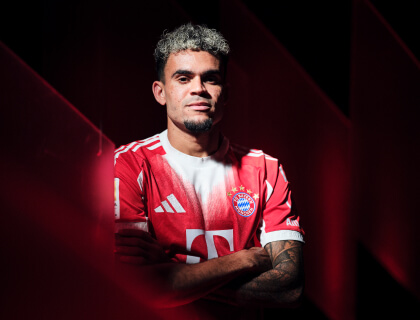
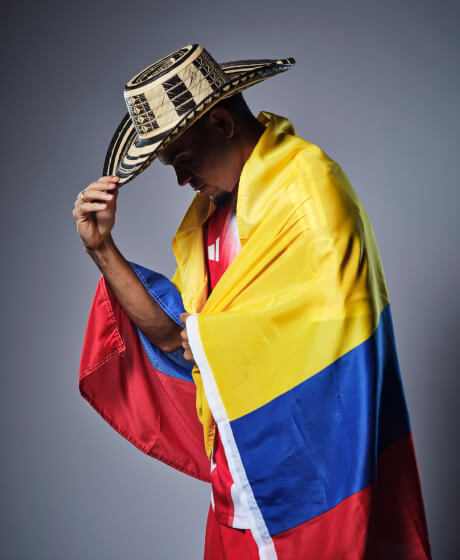
He’s also honest about the fact that he likes to be appreciated, that he recognises the adoration of fans who vicariously vibe off his vivacity. And the highlight moment of this interview, conducted at Bayern’s Säbener Strasse headquarters, was when he admitted that he loves to see fear in an opponent’s eyes. That he loves to introduce a bit of anarchy into matches.
How lucky he is, then, to work for Vincent Kompany, who seems not only laid-back about this will-of-the-wisp attitude but actively encourages it. To the extent that Díaz celebrates his first season in the Bundesliga both as champion and with nearly a half-century of goal contributions in all competitions too.
And how lucky he is that, for whatever reason, Liverpool acceded to letting him go last summer. Retrospectively, is there any degree to which the absence of the Colombian has contributed to the Reds being less competitive in the Premier League this season? Who can tell, but Díaz is unswerving in his gratitude for what he learned at Anfield and the Liverpool training ground. They, and Porto, helped transform something of a ragamuffin footballer who had learned his skills in Barrancas playing barefoot, tearing toenails off by kicking stones around the mud rather than a ball, and whose raw potential was there to see but needed trust and education.
“You had to make a ball out of rags, and we played on dirt football pitches with rocks. but we were always smiling”
Díaz had played against both Harry Kane and Michael Olise in the Premier League – but read on to discover how much his admiration for their abilities, mentalities and flair grew once he shared a dressing room and a training ground with them.
This is the first time in many years that the runners and riders for the Ballon d’Or awards look like they could be dominated by various Bayern employees. But if Kane and Olise are already in many people’s minds ahead of the World Cup, only the inattentive or biased could be forgetting the case for this explosively talented and effective winger. And perhaps I’ve fallen into the trap too: it’s not only about his extraordinary statistics – it’s about the spectacle, the fun and the daring.
When he joined us for this extended interview, Díaz had already been at Bayern HQ for some video analysis and a long training session, only to be told by the club that, because Kane was feeling under the weather, he would have to take over the Englishman’s previously assigned media duties.
Despite this making his day at the training centre extremely long, given that he had promised to sit down and take time over this interview, he happily insisted we add an extra 15 minutes at the end because he was enjoying himself and had more to say. Here’s the evidence of that, and a genuine glimpse of the real Luis Díaz: nice guy, fun, enthusiastic and a devilishly good footballer.
Read the full story
Sign up now to get access to this and every premium feature on Champions Journal. You will also get access to member-only competitions and offers. And you get all of that completely free!
“I know I’m dangerous when I have the ball at my feet, so I love those moments when I create chaos. Forwards and wingers live for that, when the opposition is scared”
"You had to make a ball out of rags, and we played on dirt football pitches with rocks. But we were all smiling"
One of the things that puts you in the top three or four in the world, in my view, is that you’re a warrior who battles without the ball. Did you learn that or is it in your nature, that Colombian spirit?
I think it’s in my nature. It’s something you have inside you from a young age: that hunger you were talking about where you want more. You want to help the team because I understand we’re a team. I think that comes naturally. Obviously, there are exceptions, but I think, as Colombians, we have a real drive to be successful, to fight, to want more, to go for it like it’s all or nothing. That’s what makes Colombia important. And, obviously, playing good football, keeping possession and enjoying the game are typical in Colombia. So it also has something to do with my roots.
Turning to your team-mates here at Bayern, what do you admire most about Michael Olise?
His talent! I think Michael has massive talent. He’s a very calm guy, but he knows exactly what’s going on in the game – he provides assists, he scores goals. Technically, he’s very good with his feet, so if he gets a chance, he’ll score. If he has a chance to provide an assist, he’ll provide a great assist. And he’s always there for the team; he’s a lad who works really hard. He’s a calm guy who’s very communicative – obviously not with the media or going out or anything – but within his role in the team, he’s very communicative. He talks to you, he tells you what to do or how to defend, those little details that you don’t see on TV. But what I admire most about him is his talent and the technical ability he has.
And Harry Kane?
I admire absolutely everything about him. I don’t think there’s currently another striker like him. He scores goals, he provides assists, he runs, he goes out on the pitch and pings you a pass from 30 metres away. He does everything with the ability he has, of course, but also mentally he’s very strong as well. I’ve also learned a lot from him in that respect and I admire him for that, because he has an incredible mindset. He always wants to win. Having a player like that on your team gives you a feeling of assurance. He’s very good. He can do it all.
What’s the difference between the Liverpool Luis Díaz and the Bayern Luis Díaz?
I don’t know! I don’t think there’s that much of a difference, because I believe that I grew a lot as a player at Liverpool. Obviously, the first year was very good, because I remember arriving and settling into the team very well. Unfortunately, then I got injured, and that’s when I started feeling uncomfortable, mainly due to the issue with my knee. But for me personally, my last year was spectacular. I loved it. I learned a lot, I had some good times and some bad times, but I think I grew significantly as a player. I was already going through that process of growing, of improving, of maintaining a good level, so it’s tough to compare that to what I do here. I have to keep proving my worth in every match, earning the manager’s trust. When you arrive here and find yourself at such a huge club, with a winning mentality, it’s very important to adapt quickly. So all of that came together and made me grow even more.
Finally, what’s it like in your home town Barrancas on a matchnight when you’re playing for Bayern in the Champions League? Are people just glued to their TVs, praying?
Yes, 100 per cent. Now everyone supports Bayern. No doubt about that. To be honest, Colombia has shown me incredible support. Every Colombian who represents the country at a high level is obviously a source of great pride for Colombia. The country feels proud and supports them, recognises them, prays for them. Colombia is phenomenal in that sense. The people are very supportive, so I am always grateful for that. If I picture myself playing at a very high level – like the Champions League – then they will be there, supporting us, enjoying the experience, giving their all so we can win that trophy. Without a doubt, they are always there for me, all the time.
He’s also honest about the fact that he likes to be appreciated, that he recognises the adoration of fans who vicariously vibe off his vivacity. And the highlight moment of this interview, conducted at Bayern’s Säbener Strasse headquarters, was when he admitted that he loves to see fear in an opponent’s eyes. That he loves to introduce a bit of anarchy into matches.
How lucky he is, then, to work for Vincent Kompany, who seems not only laid-back about this will-of-the-wisp attitude but actively encourages it. To the extent that Díaz celebrates his first season in the Bundesliga both as champion and with nearly a half-century of goal contributions in all competitions too.
And how lucky he is that, for whatever reason, Liverpool acceded to letting him go last summer. Retrospectively, is there any degree to which the absence of the Colombian has contributed to the Reds being less competitive in the Premier League this season? Who can tell, but Díaz is unswerving in his gratitude for what he learned at Anfield and the Liverpool training ground. They, and Porto, helped transform something of a ragamuffin footballer who had learned his skills in Barrancas playing barefoot, tearing toenails off by kicking stones around the mud rather than a ball, and whose raw potential was there to see but needed trust and education.
“You had to make a ball out of rags, and we played on dirt football pitches with rocks. but we were always smiling”
Díaz had played against both Harry Kane and Michael Olise in the Premier League – but read on to discover how much his admiration for their abilities, mentalities and flair grew once he shared a dressing room and a training ground with them.
This is the first time in many years that the runners and riders for the Ballon d’Or awards look like they could be dominated by various Bayern employees. But if Kane and Olise are already in many people’s minds ahead of the World Cup, only the inattentive or biased could be forgetting the case for this explosively talented and effective winger. And perhaps I’ve fallen into the trap too: it’s not only about his extraordinary statistics – it’s about the spectacle, the fun and the daring.
When he joined us for this extended interview, Díaz had already been at Bayern HQ for some video analysis and a long training session, only to be told by the club that, because Kane was feeling under the weather, he would have to take over the Englishman’s previously assigned media duties.
Despite this making his day at the training centre extremely long, given that he had promised to sit down and take time over this interview, he happily insisted we add an extra 15 minutes at the end because he was enjoying himself and had more to say. Here’s the evidence of that, and a genuine glimpse of the real Luis Díaz: nice guy, fun, enthusiastic and a devilishly good footballer.
“I know I’m dangerous when I have the ball at my feet, so I love those moments when I create chaos. Forwards and wingers live for that, when the opposition is scared”
"You had to make a ball out of rags, and we played on dirt football pitches with rocks. But we were all smiling"
One of the things that puts you in the top three or four in the world, in my view, is that you’re a warrior who battles without the ball. Did you learn that or is it in your nature, that Colombian spirit?
I think it’s in my nature. It’s something you have inside you from a young age: that hunger you were talking about where you want more. You want to help the team because I understand we’re a team. I think that comes naturally. Obviously, there are exceptions, but I think, as Colombians, we have a real drive to be successful, to fight, to want more, to go for it like it’s all or nothing. That’s what makes Colombia important. And, obviously, playing good football, keeping possession and enjoying the game are typical in Colombia. So it also has something to do with my roots.
Turning to your team-mates here at Bayern, what do you admire most about Michael Olise?
His talent! I think Michael has massive talent. He’s a very calm guy, but he knows exactly what’s going on in the game – he provides assists, he scores goals. Technically, he’s very good with his feet, so if he gets a chance, he’ll score. If he has a chance to provide an assist, he’ll provide a great assist. And he’s always there for the team; he’s a lad who works really hard. He’s a calm guy who’s very communicative – obviously not with the media or going out or anything – but within his role in the team, he’s very communicative. He talks to you, he tells you what to do or how to defend, those little details that you don’t see on TV. But what I admire most about him is his talent and the technical ability he has.
And Harry Kane?
I admire absolutely everything about him. I don’t think there’s currently another striker like him. He scores goals, he provides assists, he runs, he goes out on the pitch and pings you a pass from 30 metres away. He does everything with the ability he has, of course, but also mentally he’s very strong as well. I’ve also learned a lot from him in that respect and I admire him for that, because he has an incredible mindset. He always wants to win. Having a player like that on your team gives you a feeling of assurance. He’s very good. He can do it all.
What’s the difference between the Liverpool Luis Díaz and the Bayern Luis Díaz?
I don’t know! I don’t think there’s that much of a difference, because I believe that I grew a lot as a player at Liverpool. Obviously, the first year was very good, because I remember arriving and settling into the team very well. Unfortunately, then I got injured, and that’s when I started feeling uncomfortable, mainly due to the issue with my knee. But for me personally, my last year was spectacular. I loved it. I learned a lot, I had some good times and some bad times, but I think I grew significantly as a player. I was already going through that process of growing, of improving, of maintaining a good level, so it’s tough to compare that to what I do here. I have to keep proving my worth in every match, earning the manager’s trust. When you arrive here and find yourself at such a huge club, with a winning mentality, it’s very important to adapt quickly. So all of that came together and made me grow even more.
Finally, what’s it like in your home town Barrancas on a matchnight when you’re playing for Bayern in the Champions League? Are people just glued to their TVs, praying?
Yes, 100 per cent. Now everyone supports Bayern. No doubt about that. To be honest, Colombia has shown me incredible support. Every Colombian who represents the country at a high level is obviously a source of great pride for Colombia. The country feels proud and supports them, recognises them, prays for them. Colombia is phenomenal in that sense. The people are very supportive, so I am always grateful for that. If I picture myself playing at a very high level – like the Champions League – then they will be there, supporting us, enjoying the experience, giving their all so we can win that trophy. Without a doubt, they are always there for me, all the time.