For the people
While it may seem that they occupy two very different spheres, there has always been plenty of overlap between football and art. We spoke to Emmely Elgersma, judge for the Football Art Prize, to find out what connects the two disciplines
WORDS Aaryan Parasnis
Art
When Cristiano Ronaldo made his internet-breaking return to Manchester United in 2021, commentator Peter Drury marked the moment with an iconic monologue. “Madeira, Manchester, Madrid, Turin and Manchester again. Wreathed in red. Restored to this great gallery of the game. A walking work of art,” he intoned. And each time Lionel Messi has danced through defences to score one of his trademark solo goals, countless coaches and pundits have likened his movements to the brushstrokes of the world’s greatest painters. Think too of LS Lowry’s iconic Going to the Match tableaus. Any way you slice it, it’s clear that football and art are deeply, intangibly intertwined.
“Football is communal, open to everyone. Anyone can watch football and understand it – at the pub, at the stadium or at home. It’s so accessible. It’s like a language that we can all understand.” So says Emmely Elgersma, an artist and judge of this year’s Football Art Prize, explaining why football and art can so fruitfully interact. “Football is not an intimidating art gallery. It’s open to everyone. That’s what’s wonderful about it and makes it a starting point that people can use to turn into art.”
This year, the London-based artist and designer sat on a panel consisting of artists, curators, historians and football professionals to judge over 900 artworks submitted by creators all over the world who used the beautiful game as their muse. The Football Art Prize is now in its second edition, and Elgersma and her fellow judges had the unenviable task of whittling down the entries to just 75 works for the final shortlist before ultimately selecting the winner.
As an artist herself, Elgersma’s own practice explores material transformation and the relationship between art, sport and community. She creates clay from kitchen products and papier-mâché out of household chemicals, which, in turn, she shapes into striking sculptures. Elgersma is also a football coach to add to her repertoire of talents, having received her FA Level 1 coaching qualification in 2020 and worked at Tottenham Hotspur and Juventus.
For Elgersma, it’s not just football inspiring art; her background in art helps her with the football coaching too. “I teach a lot of art and ceramics, and I really wanted to push myself to teach in a different genre,” she says. “And it’s the creativity; I love doing tactics, drills and things like that because it’s very visual. I find that being open-minded as an artist is really helpful, especially when I’m working with children. There are some shy children, some bossy children, some confident children. Having that arts background is really helpful to understand a different mix of people.”
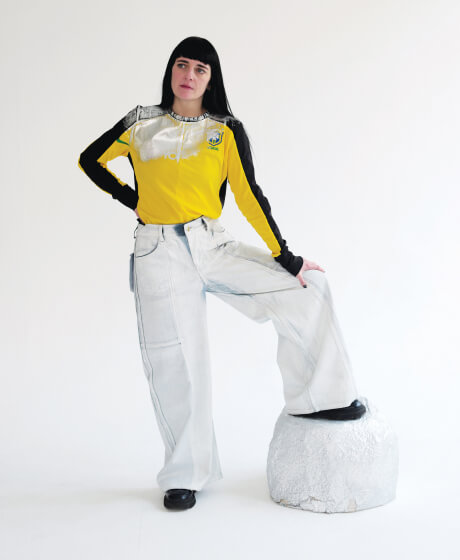
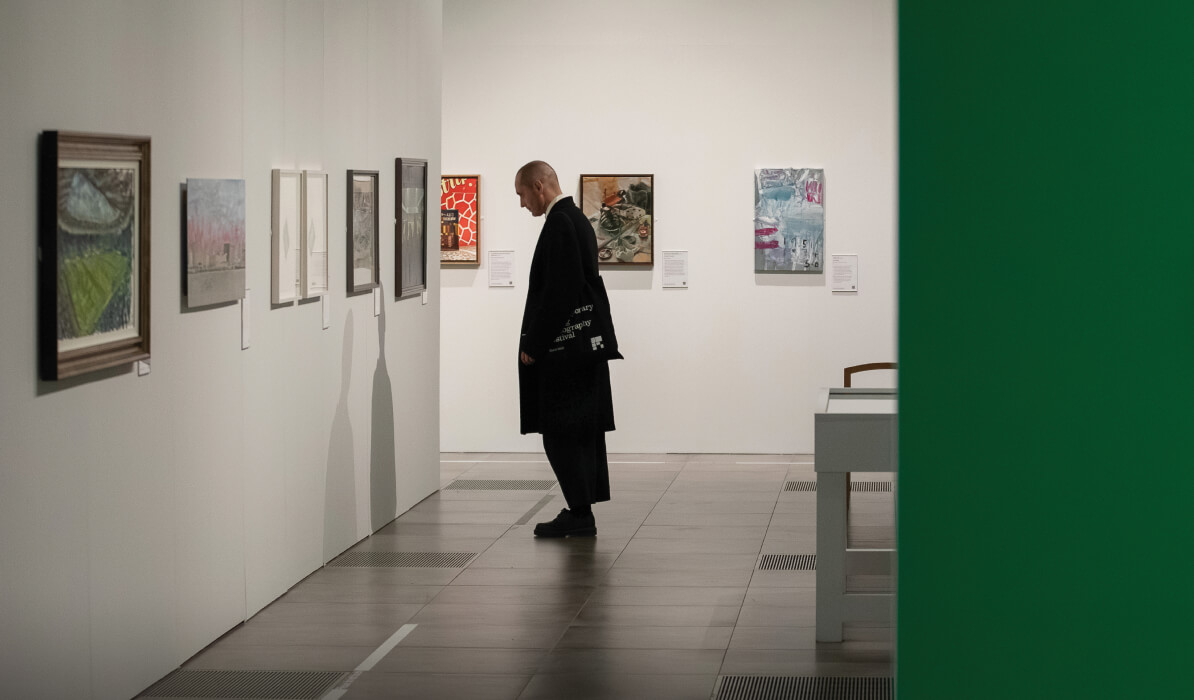
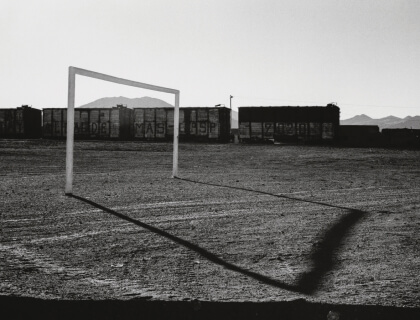
A visitor admiring the art in Sheffield (top); artist and Football Art Prize judge Emmely Elgersma (above); Nacho Rivera’s photo of a goal (top right); Keith Bird's depiction of fans leaving a stadium (right)
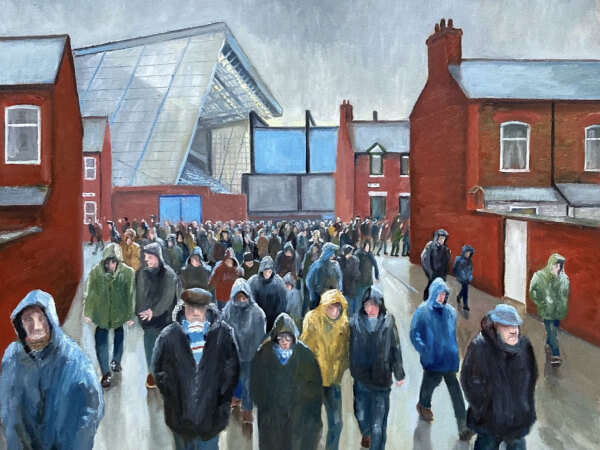
A visitor admiring the art in Sheffield (top); artist and Football Art Prize judge Emmely Elgersma (above); Nacho Rivera’s photo of a goal (top right); Keith Bird's depiction of fans leaving a stadium (right)
Art exhibitions are different for everyone; we all walk away with our own interpretations and reactions to what we’ve seen. Take, for instance, Bangladeshi photographer Ziaul Haque’s shot of children playing football in a landfill.

The winning work was a film, titled Footwork, by 26-year-old Manchester-based artist Alina Akbar
Art exhibitions are different for everyone; we all walk away with our own interpretations and reactions to what we’ve seen. Take, for instance, Bangladeshi photographer Ziaul Haque’s shot of children playing football in a landfill. It instantly reminded me of Victor Osimhen’s recollections, in an interview for this magazine, of growing up next to one of the world’s biggest dumpsites in Lagos and scrambling for footwear among the refuse before he began scoring for fun in the Champions League.
And speaking of the Champions League, spare a moment to admire Felix Higham’s oil painting of fans inside a pub for Newcastle United’s round of 16 second-leg match against Barcelona last season. The simple visual of supporters in their coats with eyes raised to the TV instantly transports you to a brisk March evening. You can almost hear the bustling inside, where pints are being filled, glasses are clinking and conversation is flowing.
After the judging process was over, Elgersma was left feeling inspired, and that’s exactly what she believes is the purpose of an exhibition like this. “I was like, ‘Oh, I really want to make some art now.’ When you’re selecting works that are going to be in an exhibition, you want people to come away with that same feeling. We also wanted to make it accessible because some football fans might not like art, but if they like football and they’re curious, it opens up their mind to art.”
According to Elgersma, the bottom line of this exhibition is to view the art from the most basic but important lens: the selected entries are all ones you look at and think, “Wow.” Just like every time you see a ball arrowing into the top corner from outside the box. “Hang it in the Louvre,” as the fans love to say. Or, better yet, in Sheffield and Manchester.
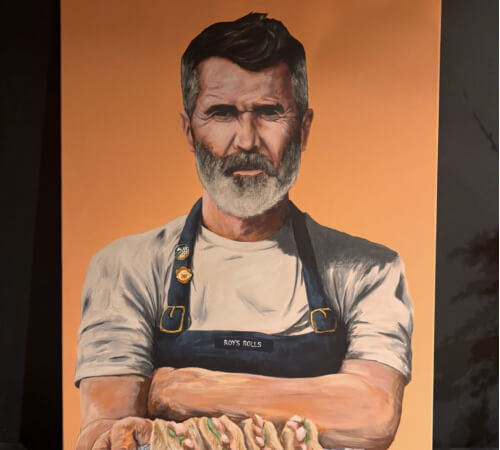
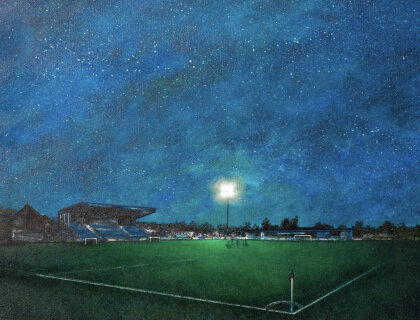
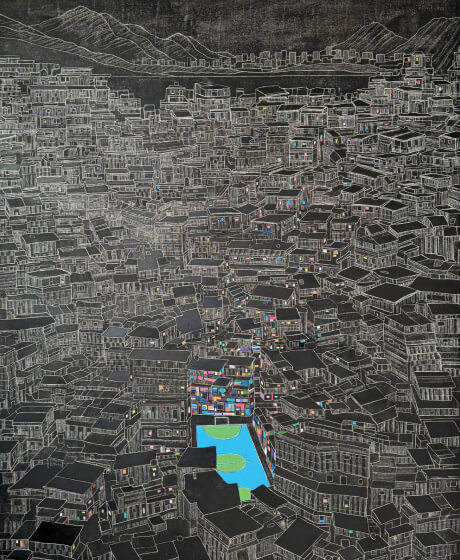
Kyle Jagger's tongue-in-cheek rendering of Roy Keane (above left); Steven MacIver's painting of a futsal court in Brazil (above); Diane Griffiths' stylized entry of a flood-lit stadium (left)
Kyle Jagger's tongue-in-cheek rendering of Roy Keane (above left); Steven MacIver's painting of a futsal court in Brazil (above); Diane Griffiths' stylized entry of a flood-lit stadium (left)
“Football is communal, open to everyone. Anyone can watch football and understand it – at the pub, at the stadium or at home. It’s so accessible. It’s like a language that we can all understand.” So says Emmely Elgersma, an artist and judge of this year’s Football Art Prize, explaining why football and art can so fruitfully interact. “Football is not an intimidating art gallery. It’s open to everyone. That’s what’s wonderful about it and makes it a starting point that people can use to turn into art.”
This year, the London-based artist and designer sat on a panel consisting of artists, curators, historians and football professionals to judge over 900 artworks submitted by creators all over the world who used the beautiful game as their muse. The Football Art Prize is now in its second edition, and Elgersma and her fellow judges had the unenviable task of whittling down the entries to just 75 works for the final shortlist before ultimately selecting the winner.
As an artist herself, Elgersma’s own practice explores material transformation and the relationship between art, sport and community. She creates clay from kitchen products and papier-mâché out of household chemicals, which, in turn, she shapes into striking sculptures. Elgersma is also a football coach to add to her repertoire of talents, having received her FA Level 1 coaching qualification in 2020 and worked at Tottenham Hotspur and Juventus.
For Elgersma, it’s not just football inspiring art; her background in art helps her with the football coaching too. “I teach a lot of art and ceramics, and I really wanted to push myself to teach in a different genre,” she says. “And it’s the creativity; I love doing tactics, drills and things like that because it’s very visual. I find that being open-minded as an artist is really helpful, especially when I’m working with children. There are some shy children, some bossy children, some confident children. Having that arts background is really helpful to understand a different mix of people.”
A visitor admiring the art in Sheffield (top); artist and Football Art Prize judge Emmely Elgersma (above); Nacho Rivera’s photo of a goal (top right); Keith Bird's depiction of fans leaving a stadium (right)
A visitor admiring the art in Sheffield (top); artist and Football Art Prize judge Emmely Elgersma (above); Nacho Rivera’s photo of a goal (top right); Keith Bird's depiction of fans leaving a stadium (right)
Read the full story
Sign up now to get access to this and every premium feature on Champions Journal. You will also get access to member-only competitions and offers. And you get all of that completely free!
Art exhibitions are different for everyone; we all walk away with our own interpretations and reactions to what we’ve seen. Take, for instance, Bangladeshi photographer Ziaul Haque’s shot of children playing football in a landfill.
The winning work was a film, titled Footwork, by 26-year-old Manchester-based artist Alina Akbar
Art exhibitions are different for everyone; we all walk away with our own interpretations and reactions to what we’ve seen. Take, for instance, Bangladeshi photographer Ziaul Haque’s shot of children playing football in a landfill. It instantly reminded me of Victor Osimhen’s recollections, in an interview for this magazine, of growing up next to one of the world’s biggest dumpsites in Lagos and scrambling for footwear among the refuse before he began scoring for fun in the Champions League.
And speaking of the Champions League, spare a moment to admire Felix Higham’s oil painting of fans inside a pub for Newcastle United’s round of 16 second-leg match against Barcelona last season. The simple visual of supporters in their coats with eyes raised to the TV instantly transports you to a brisk March evening. You can almost hear the bustling inside, where pints are being filled, glasses are clinking and conversation is flowing.
After the judging process was over, Elgersma was left feeling inspired, and that’s exactly what she believes is the purpose of an exhibition like this. “I was like, ‘Oh, I really want to make some art now.’ When you’re selecting works that are going to be in an exhibition, you want people to come away with that same feeling. We also wanted to make it accessible because some football fans might not like art, but if they like football and they’re curious, it opens up their mind to art.”
According to Elgersma, the bottom line of this exhibition is to view the art from the most basic but important lens: the selected entries are all ones you look at and think, “Wow.” Just like every time you see a ball arrowing into the top corner from outside the box. “Hang it in the Louvre,” as the fans love to say. Or, better yet, in Sheffield and Manchester.
Kyle Jagger's tongue-in-cheek rendering of Roy Keane (above left); Steven MacIver's painting of a futsal court in Brazil (above); Diane Griffiths' stylized entry of a flood-lit stadium (left)
Kyle Jagger's tongue-in-cheek rendering of Roy Keane (above left); Steven MacIver's painting of a futsal court in Brazil (above); Diane Griffiths' stylized entry of a flood-lit stadium (left)
“Football is communal, open to everyone. Anyone can watch football and understand it – at the pub, at the stadium or at home. It’s so accessible. It’s like a language that we can all understand.” So says Emmely Elgersma, an artist and judge of this year’s Football Art Prize, explaining why football and art can so fruitfully interact. “Football is not an intimidating art gallery. It’s open to everyone. That’s what’s wonderful about it and makes it a starting point that people can use to turn into art.”
This year, the London-based artist and designer sat on a panel consisting of artists, curators, historians and football professionals to judge over 900 artworks submitted by creators all over the world who used the beautiful game as their muse. The Football Art Prize is now in its second edition, and Elgersma and her fellow judges had the unenviable task of whittling down the entries to just 75 works for the final shortlist before ultimately selecting the winner.
As an artist herself, Elgersma’s own practice explores material transformation and the relationship between art, sport and community. She creates clay from kitchen products and papier-mâché out of household chemicals, which, in turn, she shapes into striking sculptures. Elgersma is also a football coach to add to her repertoire of talents, having received her FA Level 1 coaching qualification in 2020 and worked at Tottenham Hotspur and Juventus.
For Elgersma, it’s not just football inspiring art; her background in art helps her with the football coaching too. “I teach a lot of art and ceramics, and I really wanted to push myself to teach in a different genre,” she says. “And it’s the creativity; I love doing tactics, drills and things like that because it’s very visual. I find that being open-minded as an artist is really helpful, especially when I’m working with children. There are some shy children, some bossy children, some confident children. Having that arts background is really helpful to understand a different mix of people.”
A visitor admiring the art in Sheffield (top); artist and Football Art Prize judge Emmely Elgersma (above); Nacho Rivera’s photo of a goal (top right); Keith Bird's depiction of fans leaving a stadium (right)
A visitor admiring the art in Sheffield (top); artist and Football Art Prize judge Emmely Elgersma (above); Nacho Rivera’s photo of a goal (top right); Keith Bird's depiction of fans leaving a stadium (right)
Art exhibitions are different for everyone; we all walk away with our own interpretations and reactions to what we’ve seen. Take, for instance, Bangladeshi photographer Ziaul Haque’s shot of children playing football in a landfill.
The winning work was a film, titled Footwork, by 26-year-old Manchester-based artist Alina Akbar
Art exhibitions are different for everyone; we all walk away with our own interpretations and reactions to what we’ve seen. Take, for instance, Bangladeshi photographer Ziaul Haque’s shot of children playing football in a landfill. It instantly reminded me of Victor Osimhen’s recollections, in an interview for this magazine, of growing up next to one of the world’s biggest dumpsites in Lagos and scrambling for footwear among the refuse before he began scoring for fun in the Champions League.
And speaking of the Champions League, spare a moment to admire Felix Higham’s oil painting of fans inside a pub for Newcastle United’s round of 16 second-leg match against Barcelona last season. The simple visual of supporters in their coats with eyes raised to the TV instantly transports you to a brisk March evening. You can almost hear the bustling inside, where pints are being filled, glasses are clinking and conversation is flowing.
After the judging process was over, Elgersma was left feeling inspired, and that’s exactly what she believes is the purpose of an exhibition like this. “I was like, ‘Oh, I really want to make some art now.’ When you’re selecting works that are going to be in an exhibition, you want people to come away with that same feeling. We also wanted to make it accessible because some football fans might not like art, but if they like football and they’re curious, it opens up their mind to art.”
According to Elgersma, the bottom line of this exhibition is to view the art from the most basic but important lens: the selected entries are all ones you look at and think, “Wow.” Just like every time you see a ball arrowing into the top corner from outside the box. “Hang it in the Louvre,” as the fans love to say. Or, better yet, in Sheffield and Manchester.
Kyle Jagger's tongue-in-cheek rendering of Roy Keane (above left); Steven MacIver's painting of a futsal court in Brazil (above); Diane Griffiths' stylized entry of a flood-lit stadium (left)
Kyle Jagger's tongue-in-cheek rendering of Roy Keane (above left); Steven MacIver's painting of a futsal court in Brazil (above); Diane Griffiths' stylized entry of a flood-lit stadium (left)