Bodø/Glimt: Northern lights
As the Champions League touches down in the Arctic Circle for the first time, we take in the breathtaking scenery and learn from Bodø/Glimt defender Fredrik Sjøvold about life in the far north
INTERVIEW Phil O’Connor | PHOTOGRAPHY Dan Mariner
Cities
It’s time to update one of football’s most enduring quips. For years, the classic line about any twinkle-toed talent has been to ask whether they can impress “on a cold, rainy night in Stoke”. The city in the English Midlands may not be the French Riviera, but it would probably feel positively balmy to Fredrik Sjøvold and his Bodø/Glimt team-mates. Not to mention any clubs visiting the Norwegian outfit in the Champions League this season.
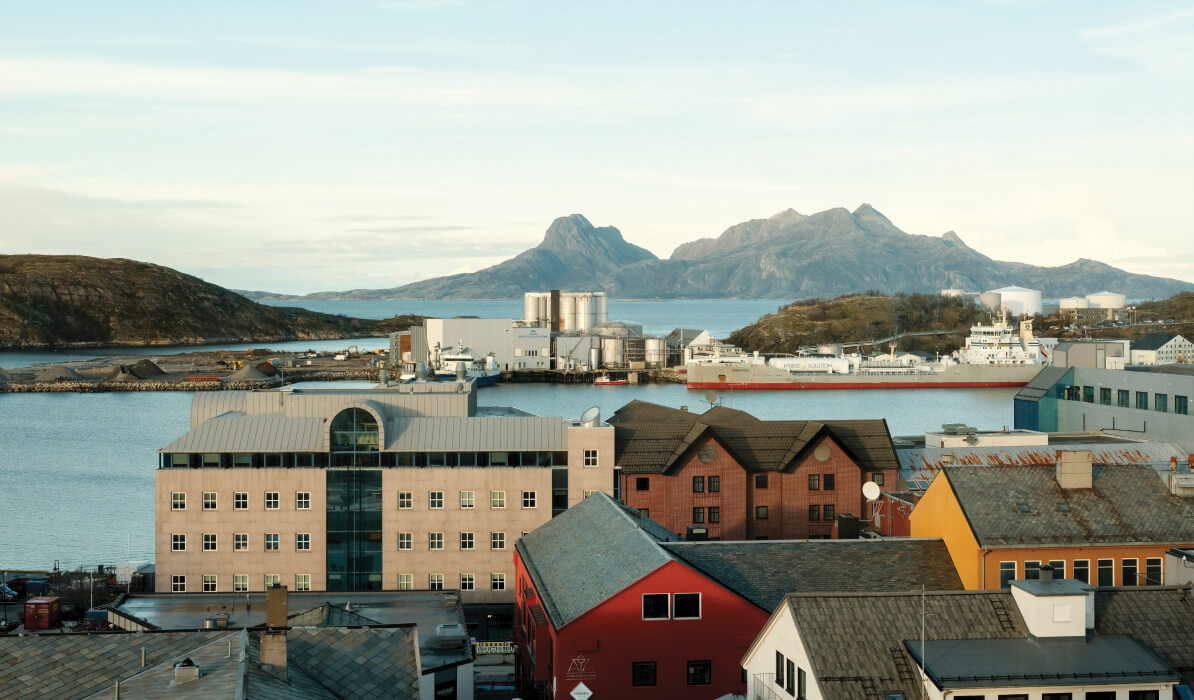
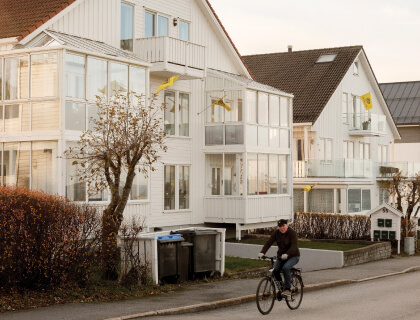
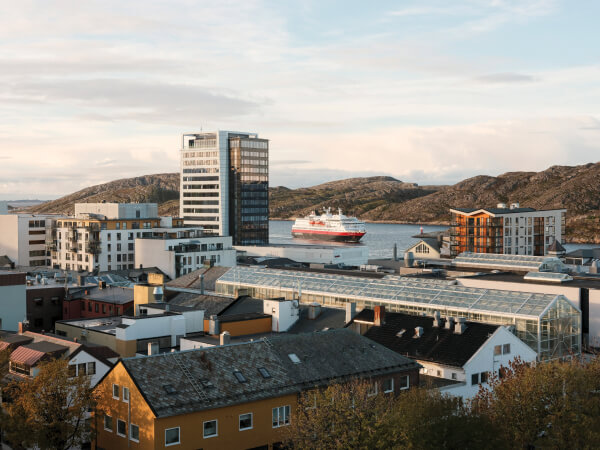
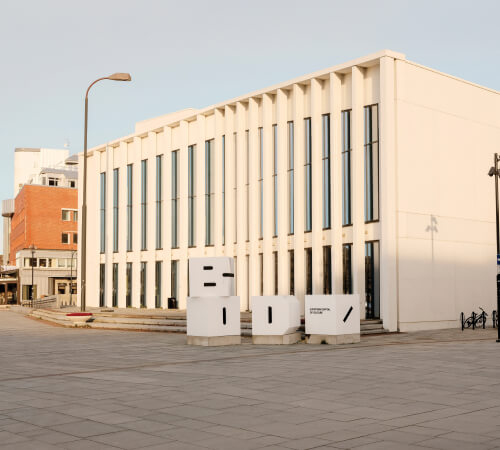
Kjetil Knutsen’s side are making history this term as the northernmost team to appear in the Champions League proper. Never before has the competition ventured inside the Arctic Circle, but that’s where the Norwegian champions reside, their home town of Bodø located on a peninsula over 800km north of the capital, Oslo. Think cold, windy and dark, with zero hours of sunlight in December, a mean daily minimum temperature of -3.2C in February and a chilly all-time record low of -18.5C.
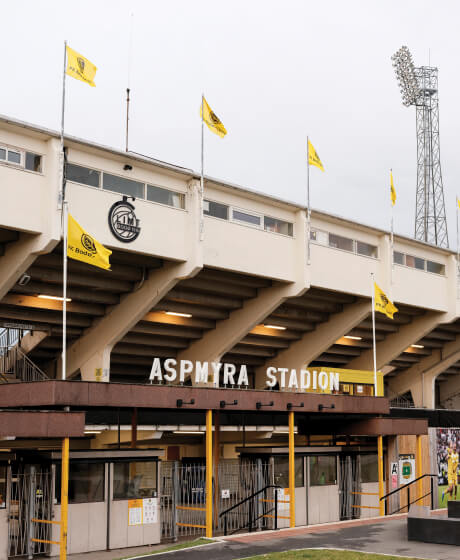
That might explain why Bodø’s population is just 43,000, smaller than the capacity of many Champions League grounds – indeed, Bodø/Glimt’s own Aspmyra Stadion holds just over 8,000. For Sjøvold, such “extreme” conditions offer them a genuine home advantage, but that’s not all the place has to offer. As the 22-year-old full-back explains, the locals are also blessed with some of the most spectacular untamed nature in Europe.
“The Norwegian word Friluftsliv is about enjoying being in nature, enjoying your surroundings, getting outside and simply enjoying the beautiful landscape and everything it has to offer. For those of us living so far north, it’s something you really appreciate. As athletes, there’s not a lot of time to go on long trips, but all of us who live here appreciate the nature around us and the landscape. We like to get out into the fresh air, and it’s a really nice break from our everyday life. There’s something special about being outside in completely silent surroundings and just enjoying that silence.
“I’ve actually taken a few trips this year. I was in the mountains here on a camping trip, and it was fantastic. That’s what I like most: going up into the mountains to get a nice view, get fresh air and to just live a little like they did in the past. That seems really exciting. It’s nice to just get away a bit from the town. Even if there isn’t the biggest town life here, it’s still nice to head into nature and just enjoy the fresh air. It’s also nice to get a break from everyday life now and again because it’s game after game. “I skied a lot when I was younger, so I really like cross-country skiing. We also have several players – Jens Petter Hauge, Patrick Berg, Fredrik André Bjørkan – who really like fishing. I haven’t heard them brag about it yet, but I know it’s coming. They don’t go after big fish, unfortunately. They enjoy fishing more to eat, like trout, salmon, that kind of thing. Me personally, I don’t actually like touching fish, even though I come from Norway.
“The weather here is quite extreme. It’s probably quite a bit different from what most people in Europe experience normally. It’s windy, it’s cold. In the winter, it’s very dark. So, it’s quite different from most other places.
“WE’RE USED TO PLAYING IN THESE CONDITIONS. IT CAN BE UNCOMFORTABLE FOR TEAMS WHO COME FROM FURTHER SOUTH"
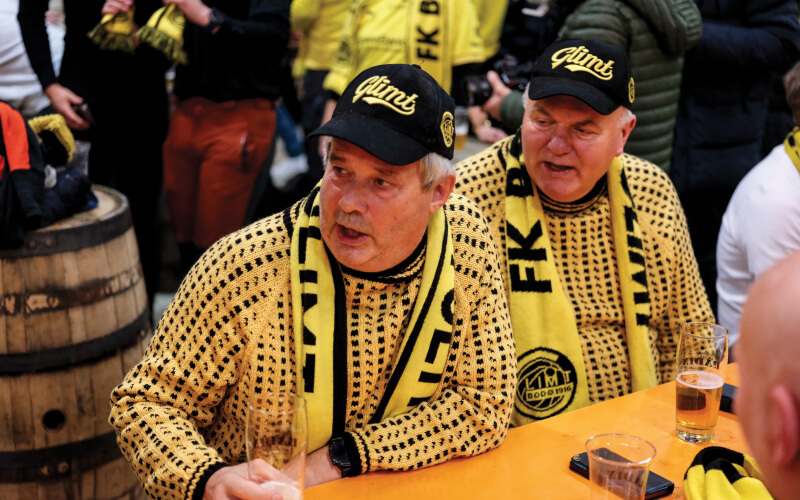
“We know that the town is proud of us, and that just makes it even more fun when we manage to achieve things together”
“For us, playing in these conditions has simply become something we’re used to. We’ve had countless training sessions and matches where there’s been a lot of wind, in particular. And of course that affects the ball, it affects what the matches are like, because it’s tough to play in. In one half, you can have a lot of tailwind, which helps with going long. In the second half, you can have headwinds, meaning you need to keep the ball on the ground. We’re used to that and we’ve practised with it, and then there’s another factor to consider when it’s cold as well.
“It can be uncomfortable for teams who come from further south. We’ve played a lot of games in freezing temperatures. I remember when we had Beşiktaş here, and it was -5C, and you saw they weren’t comfortable with that. The Turkish players were used to warmer weather.
“When winter comes around, we feel we have an advantage over the teams we come up against, and it’s something which shapes us too as we’re used to this rough climate. It might be a small advantage for us that we have a bit of a tough daily life in relation to the climate.
“Playing in the Champions League is the biggest thing you can achieve. It’s what you dreamt of when you were a child. To walk out for this competition with the club I’ve become so fond of is quite cool. I also think it’s incredibly cool for the town that they get to experience and share that with us because the experience of having all of them there in the stadium and sharing that together is so unique and crazy.
“You’re a little bit stressed and anxious about the occasion. How will you handle it, how will the game go? There are a lot of emotions. For our first home match [a 2-2 draw with Tottenham Hotspur], it was important to just take a moment to breathe, especially when we started the game well. You feel like, ‘OK, we can handle this.’ That feeling is really nice.
“Sometimes, you just need to pinch yourself and think about how lucky you are to be a part of what we get to be a part of, and simply try to enjoy the occasion – not just thinking about how important it is but enjoying an experience we’re so lucky to have.
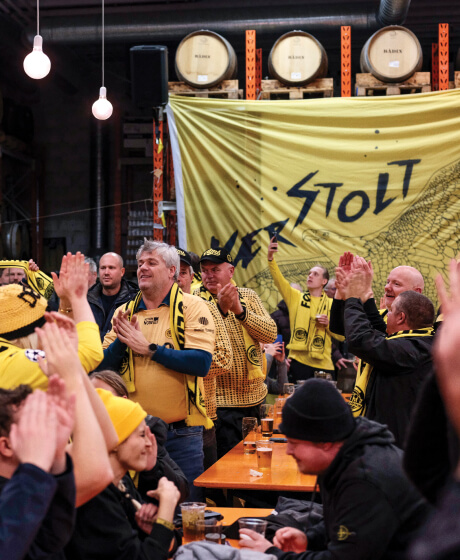
“It means a lot to us players too that the club means so much to people who live in the town. We take that with us into every single match because we know how many people are proud of us. We know that the town is proud of us, and that just makes it even more fun when we manage to achieve things together.
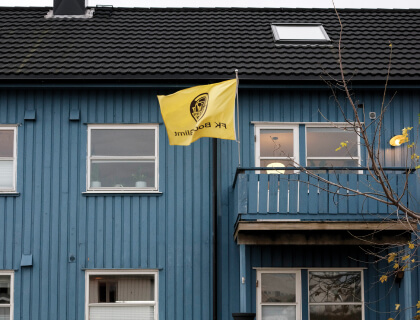
“When it’s a place as small as Bodø, you get recognised when you’re in town. You meet a lot of normal people who like to chat with you about football, and in that way you become very connected with all the people and what happens in the town.
“It’s also something people talk about because people like how everyone is paying attention to what we do. We’ve made a name for ourselves in town, and people seem to enjoy keeping an eye on us. It means a lot to them. Football is nothing if people don’t care. At the end of the day, that’s what counts. The fact that people support us means so much.”
Kjetil Knutsen’s side are making history this term as the northernmost team to appear in the Champions League proper. Never before has the competition ventured inside the Arctic Circle, but that’s where the Norwegian champions reside, their home town of Bodø located on a peninsula over 800km north of the capital, Oslo. Think cold, windy and dark, with zero hours of sunlight in December, a mean daily minimum temperature of -3.2C in February and a chilly all-time record low of -18.5C.
That might explain why Bodø’s population is just 43,000, smaller than the capacity of many Champions League grounds – indeed, Bodø/Glimt’s own Aspmyra Stadion holds just over 8,000. For Sjøvold, such “extreme” conditions offer them a genuine home advantage, but that’s not all the place has to offer. As the 22-year-old full-back explains, the locals are also blessed with some of the most spectacular untamed nature in Europe.
“The Norwegian word Friluftsliv is about enjoying being in nature, enjoying your surroundings, getting outside and simply enjoying the beautiful landscape and everything it has to offer. For those of us living so far north, it’s something you really appreciate. As athletes, there’s not a lot of time to go on long trips, but all of us who live here appreciate the nature around us and the landscape. We like to get out into the fresh air, and it’s a really nice break from our everyday life. There’s something special about being outside in completely silent surroundings and just enjoying that silence.
“I’ve actually taken a few trips this year. I was in the mountains here on a camping trip, and it was fantastic. That’s what I like most: going up into the mountains to get a nice view, get fresh air and to just live a little like they did in the past. That seems really exciting. It’s nice to just get away a bit from the town. Even if there isn’t the biggest town life here, it’s still nice to head into nature and just enjoy the fresh air. It’s also nice to get a break from everyday life now and again because it’s game after game. “I skied a lot when I was younger, so I really like cross-country skiing. We also have several players – Jens Petter Hauge, Patrick Berg, Fredrik André Bjørkan – who really like fishing. I haven’t heard them brag about it yet, but I know it’s coming. They don’t go after big fish, unfortunately. They enjoy fishing more to eat, like trout, salmon, that kind of thing. Me personally, I don’t actually like touching fish, even though I come from Norway.
“The weather here is quite extreme. It’s probably quite a bit different from what most people in Europe experience normally. It’s windy, it’s cold. In the winter, it’s very dark. So, it’s quite different from most other places.
Read the full story
Sign up now to get access to this and every premium feature on Champions Journal. You will also get access to member-only competitions and offers. And you get all of that completely free!
“WE’RE USED TO PLAYING IN THESE CONDITIONS. IT CAN BE UNCOMFORTABLE FOR TEAMS WHO COME FROM FURTHER SOUTH"
“We know that the town is proud of us, and that just makes it even more fun when we manage to achieve things together”
“You’re a little bit stressed and anxious about the occasion. How will you handle it, how will the game go? There are a lot of emotions. For our first home match [a 2-2 draw with Tottenham Hotspur], it was important to just take a moment to breathe, especially when we started the game well. You feel like, ‘OK, we can handle this.’ That feeling is really nice.
“Sometimes, you just need to pinch yourself and think about how lucky you are to be a part of what we get to be a part of, and simply try to enjoy the occasion – not just thinking about how important it is but enjoying an experience we’re so lucky to have.
“It means a lot to us players too that the club means so much to people who live in the town. We take that with us into every single match because we know how many people are proud of us. We know that the town is proud of us, and that just makes it even more fun when we manage to achieve things together.
“When it’s a place as small as Bodø, you get recognised when you’re in town. You meet a lot of normal people who like to chat with you about football, and in that way you become very connected with all the people and what happens in the town.
“It’s also something people talk about because people like how everyone is paying attention to what we do. We’ve made a name for ourselves in town, and people seem to enjoy keeping an eye on us. It means a lot to them. Football is nothing if people don’t care. At the end of the day, that’s what counts. The fact that people support us means so much.”
Kjetil Knutsen’s side are making history this term as the northernmost team to appear in the Champions League proper. Never before has the competition ventured inside the Arctic Circle, but that’s where the Norwegian champions reside, their home town of Bodø located on a peninsula over 800km north of the capital, Oslo. Think cold, windy and dark, with zero hours of sunlight in December, a mean daily minimum temperature of -3.2C in February and a chilly all-time record low of -18.5C.
That might explain why Bodø’s population is just 43,000, smaller than the capacity of many Champions League grounds – indeed, Bodø/Glimt’s own Aspmyra Stadion holds just over 8,000. For Sjøvold, such “extreme” conditions offer them a genuine home advantage, but that’s not all the place has to offer. As the 22-year-old full-back explains, the locals are also blessed with some of the most spectacular untamed nature in Europe.
“The Norwegian word Friluftsliv is about enjoying being in nature, enjoying your surroundings, getting outside and simply enjoying the beautiful landscape and everything it has to offer. For those of us living so far north, it’s something you really appreciate. As athletes, there’s not a lot of time to go on long trips, but all of us who live here appreciate the nature around us and the landscape. We like to get out into the fresh air, and it’s a really nice break from our everyday life. There’s something special about being outside in completely silent surroundings and just enjoying that silence.
“I’ve actually taken a few trips this year. I was in the mountains here on a camping trip, and it was fantastic. That’s what I like most: going up into the mountains to get a nice view, get fresh air and to just live a little like they did in the past. That seems really exciting. It’s nice to just get away a bit from the town. Even if there isn’t the biggest town life here, it’s still nice to head into nature and just enjoy the fresh air. It’s also nice to get a break from everyday life now and again because it’s game after game. “I skied a lot when I was younger, so I really like cross-country skiing. We also have several players – Jens Petter Hauge, Patrick Berg, Fredrik André Bjørkan – who really like fishing. I haven’t heard them brag about it yet, but I know it’s coming. They don’t go after big fish, unfortunately. They enjoy fishing more to eat, like trout, salmon, that kind of thing. Me personally, I don’t actually like touching fish, even though I come from Norway.
“The weather here is quite extreme. It’s probably quite a bit different from what most people in Europe experience normally. It’s windy, it’s cold. In the winter, it’s very dark. So, it’s quite different from most other places.
“WE’RE USED TO PLAYING IN THESE CONDITIONS. IT CAN BE UNCOMFORTABLE FOR TEAMS WHO COME FROM FURTHER SOUTH"
“We know that the town is proud of us, and that just makes it even more fun when we manage to achieve things together”
“You’re a little bit stressed and anxious about the occasion. How will you handle it, how will the game go? There are a lot of emotions. For our first home match [a 2-2 draw with Tottenham Hotspur], it was important to just take a moment to breathe, especially when we started the game well. You feel like, ‘OK, we can handle this.’ That feeling is really nice.
“Sometimes, you just need to pinch yourself and think about how lucky you are to be a part of what we get to be a part of, and simply try to enjoy the occasion – not just thinking about how important it is but enjoying an experience we’re so lucky to have.
“It means a lot to us players too that the club means so much to people who live in the town. We take that with us into every single match because we know how many people are proud of us. We know that the town is proud of us, and that just makes it even more fun when we manage to achieve things together.
“When it’s a place as small as Bodø, you get recognised when you’re in town. You meet a lot of normal people who like to chat with you about football, and in that way you become very connected with all the people and what happens in the town.
“It’s also something people talk about because people like how everyone is paying attention to what we do. We’ve made a name for ourselves in town, and people seem to enjoy keeping an eye on us. It means a lot to them. Football is nothing if people don’t care. At the end of the day, that’s what counts. The fact that people support us means so much.”