Interview

"I won't change"

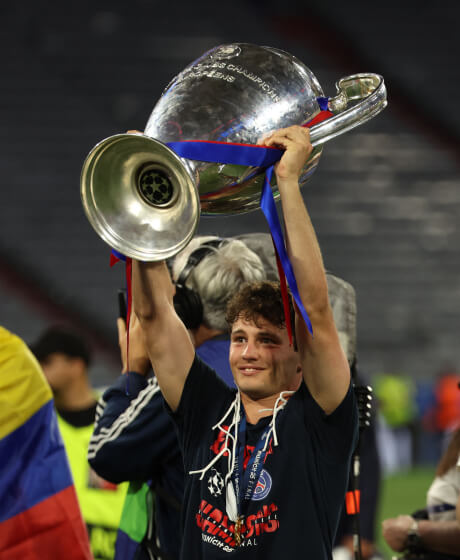
Paris Saint-Germain’s Champions League winner João Neves opens up on why intelligence, and not physical prowess, has turned him into one of the world’s finest modern-day midfielders

INTERVIEW Caroline de Moraes

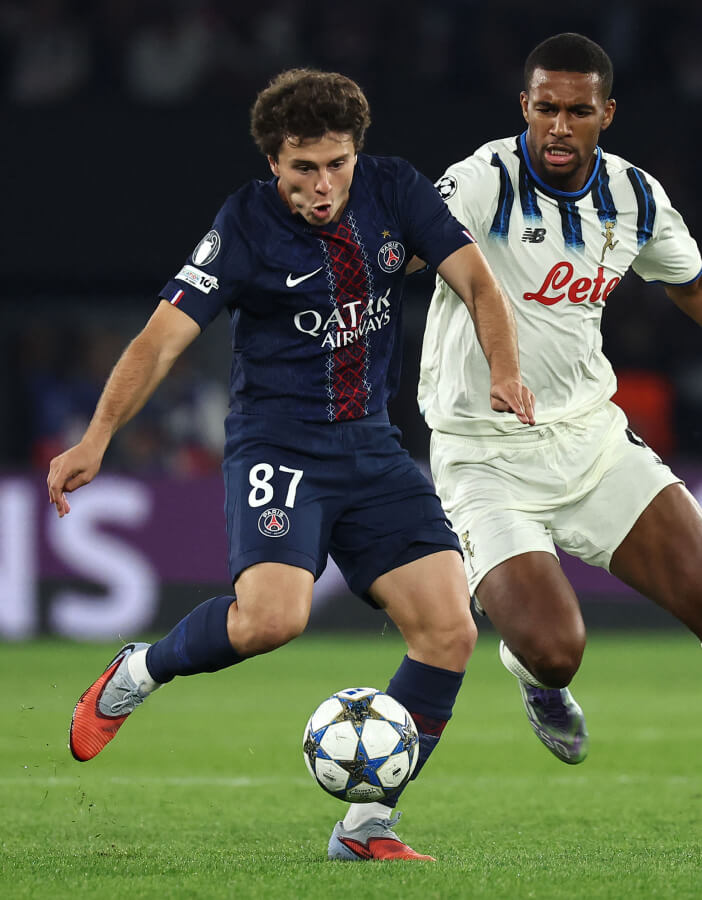
There is no instruction pamphlet or recipe card for creating the perfect modern midfielder but if there was, you’d expect at least a page dedicated to João Neves. What makes the Paris Saint-Germain maestro so exceptional as a midfield general is not his wonderful range of passing, nor his press resistance and instant control, but the fact that he has managed to turn what many felt was his greatest weakness into one of his biggest strengths.  

It takes a certain maturity to muster that level of self-assessment, to be able to look in the mirror without any filter at all, which is why it’s even more impressive that this realisation came at the tender age of 14.  

“Maybe people underestimate me because of my size, but intelligence also plays a part. If you aren’t physically strong, you have to be smart. I can’t explain it. It’s instinctive; I don’t think about it,” said a 14-year-old Neves.  

What’s more surprising is the fact that was only seven years ago. At just 21, Neves has become the pivotal piece in Europe’s finest midfield trio alongside compatriot Vitinha and Spain’s Fabián Ruiz, sweeping the continent aside with Paris to win last summer’s Champions League.

Here, the Portuguese magician talks us through the lessons that shaped him, why intelligence is the most important trait in modern football, and the surprising positional change that turned him into a world-beating midfielder.

When did you first realise that you had to be smarter than those more physically imposing than you?

I was fortunate to grow up in a supportive family environment. Also, because of the way he was raised and his own childhood, my dad tried to instil in me the values I have today.  

People wouldn’t go in as hard in duels because I was smaller than them, so they were surprised when I always gave 100% in every aspect of my game. When you have to prevent someone from getting on the end of the ball, they would mark the taller players, and they would leave me alone. So, my maturity and the way I look at things had to be a little more intelligent than the other players.  

I had to know how to position myself, know when to jump, and know the timings. The more you repeat something in training or during a match, the more you perfect it. And there will come a time when you do it without thinking about it, and it’s just intuition.

What was it like being the son of a policeman?

My dad, being a policeman, always had a strict way of bringing me up. For example, everything always had to be in order, and I took that into my adult life. I don’t think I’d be where I am now if it wasn’t for that strict upbringing. I wouldn’t have the perseverance and resilience that I have.  

I remember us doing races during lockdown, during COVID, when we were training at home. The plan was to do 15 minutes walking and 15 minutes running, and my dad would make me run for 17 minutes and rest for 13 minutes. I didn’t know a thing, and thought I was doing the usual 15-15.  

It was quite tough, but I mean it in a positive way. I’m very happy I had that upbringing and fulfilled my dreams because, as I always say, it’s all thanks to my family’s support.

Do you think intelligence is more important than physique, or do they have the same importance?

I think football is becoming more tactical. Knowing how to position yourself, when to play with one touch or two, when to play forward, slow the match down or speed it up, is the most important thing.

Of course, having more stamina, more strength, and speed helps with your performance, but I don’t think it’s the main thing. I think we need to be a bit smarter, to anticipate plays and what to do. And it’s in that sense of anticipating the play that we must always be one step ahead of our opponent.

There is no instruction pamphlet or recipe card for creating the perfect modern midfielder but if there was, you’d expect at least a page dedicated to João Neves. What makes the Paris Saint-Germain maestro so exceptional as a midfield general is not his wonderful range of passing, nor his press resistance and instant control, but the fact that he has managed to turn what many felt was his greatest weakness into one of his biggest strengths.  

It takes a certain maturity to muster that level of self-assessment, to be able to look in the mirror without any filter at all, which is why it’s even more impressive that this realisation came at the tender age of 14.  

“Maybe people underestimate me because of my size, but intelligence also plays a part. If you aren’t physically strong, you have to be smart. I can’t explain it. It’s instinctive; I don’t think about it,” said a 14-year-old Neves.  

What’s more surprising is the fact that was only seven years ago. At just 21, Neves has become the pivotal piece in Europe’s finest midfield trio alongside compatriot Vitinha and Spain’s Fabián Ruiz, sweeping the continent aside with Paris to win last summer’s Champions League.

Here, the Portuguese magician talks us through the lessons that shaped him, why intelligence is the most important trait in modern football, and the surprising positional change that turned him into a world-beating midfielder.

When did you first realise that you had to be smarter than those more physically imposing than you?

I was fortunate to grow up in a supportive family environment. Also, because of the way he was raised and his own childhood, my dad tried to instil in me the values I have today.  

People wouldn’t go in as hard in duels because I was smaller than them, so they were surprised when I always gave 100% in every aspect of my game. When you have to prevent someone from getting on the end of the ball, they would mark the taller players, and they would leave me alone. So, my maturity and the way I look at things had to be a little more intelligent than the other players.  

I had to know how to position myself, know when to jump, and know the timings. The more you repeat something in training or during a match, the more you perfect it. And there will come a time when you do it without thinking about it, and it’s just intuition.

What was it like being the son of a policeman?

My dad, being a policeman, always had a strict way of bringing me up. For example, everything always had to be in order, and I took that into my adult life. I don’t think I’d be where I am now if it wasn’t for that strict upbringing. I wouldn’t have the perseverance and resilience that I have.  

I remember us doing races during lockdown, during COVID, when we were training at home. The plan was to do 15 minutes walking and 15 minutes running, and my dad would make me run for 17 minutes and rest for 13 minutes. I didn’t know a thing, and thought I was doing the usual 15-15.  

It was quite tough, but I mean it in a positive way. I’m very happy I had that upbringing and fulfilled my dreams because, as I always say, it’s all thanks to my family’s support.

Do you think intelligence is more important than physique, or do they have the same importance?

I think football is becoming more tactical. Knowing how to position yourself, when to play with one touch or two, when to play forward, slow the match down or speed it up, is the most important thing.

Of course, having more stamina, more strength, and speed helps with your performance, but I don’t think it’s the main thing. I think we need to be a bit smarter, to anticipate plays and what to do. And it’s in that sense of anticipating the play that we must always be one step ahead of our opponent.

Read the full story
Sign up now to get access to this and every premium feature on Champions Journal. You will also get access to member-only competitions and offers. And you get all of that completely free!

There is no instruction pamphlet or recipe card for creating the perfect modern midfielder but if there was, you’d expect at least a page dedicated to João Neves. What makes the Paris Saint-Germain maestro so exceptional as a midfield general is not his wonderful range of passing, nor his press resistance and instant control, but the fact that he has managed to turn what many felt was his greatest weakness into one of his biggest strengths.  

It takes a certain maturity to muster that level of self-assessment, to be able to look in the mirror without any filter at all, which is why it’s even more impressive that this realisation came at the tender age of 14.  

“Maybe people underestimate me because of my size, but intelligence also plays a part. If you aren’t physically strong, you have to be smart. I can’t explain it. It’s instinctive; I don’t think about it,” said a 14-year-old Neves.  

What’s more surprising is the fact that was only seven years ago. At just 21, Neves has become the pivotal piece in Europe’s finest midfield trio alongside compatriot Vitinha and Spain’s Fabián Ruiz, sweeping the continent aside with Paris to win last summer’s Champions League.

Here, the Portuguese magician talks us through the lessons that shaped him, why intelligence is the most important trait in modern football, and the surprising positional change that turned him into a world-beating midfielder.

When did you first realise that you had to be smarter than those more physically imposing than you?

I was fortunate to grow up in a supportive family environment. Also, because of the way he was raised and his own childhood, my dad tried to instil in me the values I have today.  

People wouldn’t go in as hard in duels because I was smaller than them, so they were surprised when I always gave 100% in every aspect of my game. When you have to prevent someone from getting on the end of the ball, they would mark the taller players, and they would leave me alone. So, my maturity and the way I look at things had to be a little more intelligent than the other players.  

I had to know how to position myself, know when to jump, and know the timings. The more you repeat something in training or during a match, the more you perfect it. And there will come a time when you do it without thinking about it, and it’s just intuition.

What was it like being the son of a policeman?

My dad, being a policeman, always had a strict way of bringing me up. For example, everything always had to be in order, and I took that into my adult life. I don’t think I’d be where I am now if it wasn’t for that strict upbringing. I wouldn’t have the perseverance and resilience that I have.  

I remember us doing races during lockdown, during COVID, when we were training at home. The plan was to do 15 minutes walking and 15 minutes running, and my dad would make me run for 17 minutes and rest for 13 minutes. I didn’t know a thing, and thought I was doing the usual 15-15.  

It was quite tough, but I mean it in a positive way. I’m very happy I had that upbringing and fulfilled my dreams because, as I always say, it’s all thanks to my family’s support.

Do you think intelligence is more important than physique, or do they have the same importance?

I think football is becoming more tactical. Knowing how to position yourself, when to play with one touch or two, when to play forward, slow the match down or speed it up, is the most important thing.

Of course, having more stamina, more strength, and speed helps with your performance, but I don’t think it’s the main thing. I think we need to be a bit smarter, to anticipate plays and what to do. And it’s in that sense of anticipating the play that we must always be one step ahead of our opponent.

I actually was a striker when I was little, but as the pitch got bigger, we found out what our real strengths and qualities are
By

Were there times in your career when you thought that you wouldn’t make it because of your height?

I never thought about giving up because I was shorter or physically weaker than others. But there was a time when we were told on average, only one or two players, sometimes none, would become professional footballers and there are thousands of young players trying to reach the same place.  

So, I questioned whether I was wasting my time because only one or two out of every thousand players make it. I spoke to my sister about it: she didn’t know much about it, but she encouraged me to keep going and doing what I loved. So, I kept playing football without pressure or looking at it as a job; it was more like a hobby.  

Then, an opportunity to get into the Benfica first team arose when I least expected it. That was when I achieved one of my dreams: making my debut for the club I love. And that was the moment I realised that, yes, maybe football was going to be my true calling, and that’s what I wanted.

How has that mentality shaped your playing style, because you’re not a striker but you’ve scored plenty of goals this season!

I actually was a striker when I was little, but as the pitch got bigger, we found out what our real strengths and qualities are. I liked to be involved all over the pitch, so I never really saw myself playing up front as a striker or as a defender.  

Midfield was always the best choice for me because I want to be a complete player and do a bit of everything. I think football revolves a lot around the midfield, defending and attacking, making passes, and winning the ball back. So, I think I chose the right position on the pitch. It was what made the most sense to me.

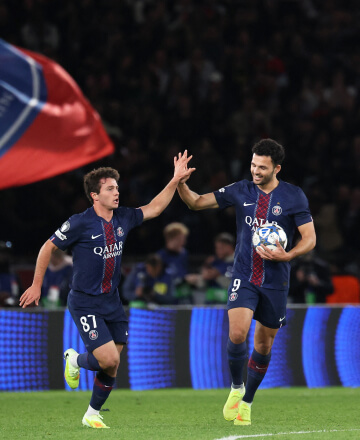
When it comes to the goals, as everyone knows full well, our game isn’t one where we use a traditional a striker, and we prefer a false nine. So it’s about getting into the box and not being afraid to take risks. It’s something I’ve always said I had to improve in my game, but I was never in a hurry to do so. I always keep my father's words in mind: “The most difficult part isn't getting there; it's staying there.” So, now comes the most difficult part: maintain my level and run of performances.  

Is there a story behind why you always play with your shirt tucked in?

Playing with my shirt tucked in and my socks below the knee were a Benfica tradition that I’ve followed to this day. And, nowadays, like I usually tell my friends, I even get scared of not doing so because if anything bad happens, I’m going to use that as an excuse! So, I can’t bring myself to change. I won’t change.

How did it feel to go out on the pitch and hear the Champions League anthem before the final last year?

It was a special game, with many pre-match nerves, as is to be expected. I was obviously aware that it was the Champions League final and that it was a once-in-a-lifetime opportunity for us.  

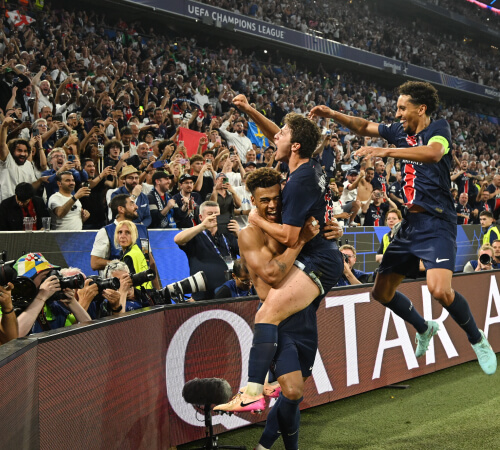
Knowing our families were in the stands meant there was even more pressure on us because we didn’t want to upset anyone. But I remember feeling relaxed stepping onto the pitch, hearing the Champions League anthem and getting goosebumps. Then, when I heard the final whistle, there was bigger relief than I’d ever felt in my life.

The season was over, we’d ended it in the best way possible, nobody could accuse us negatively of anything, and then it was just a matter of revelling in the occasion and laughing with our loved ones, our families who were in the stands.

No items found.
Interview

"I won't change"

Paris Saint-Germain’s Champions League winner João Neves opens up on why intelligence, and not physical prowess, has turned him into one of the world’s finest modern-day midfielders

INTERVIEW Caroline de Moraes

There is no instruction pamphlet or recipe card for creating the perfect modern midfielder but if there was, you’d expect at least a page dedicated to João Neves. What makes the Paris Saint-Germain maestro so exceptional as a midfield general is not his wonderful range of passing, nor his press resistance and instant control, but the fact that he has managed to turn what many felt was his greatest weakness into one of his biggest strengths.  

It takes a certain maturity to muster that level of self-assessment, to be able to look in the mirror without any filter at all, which is why it’s even more impressive that this realisation came at the tender age of 14.  

“Maybe people underestimate me because of my size, but intelligence also plays a part. If you aren’t physically strong, you have to be smart. I can’t explain it. It’s instinctive; I don’t think about it,” said a 14-year-old Neves.  

What’s more surprising is the fact that was only seven years ago. At just 21, Neves has become the pivotal piece in Europe’s finest midfield trio alongside compatriot Vitinha and Spain’s Fabián Ruiz, sweeping the continent aside with Paris to win last summer’s Champions League.

Here, the Portuguese magician talks us through the lessons that shaped him, why intelligence is the most important trait in modern football, and the surprising positional change that turned him into a world-beating midfielder.

When did you first realise that you had to be smarter than those more physically imposing than you?

I was fortunate to grow up in a supportive family environment. Also, because of the way he was raised and his own childhood, my dad tried to instil in me the values I have today.  

People wouldn’t go in as hard in duels because I was smaller than them, so they were surprised when I always gave 100% in every aspect of my game. When you have to prevent someone from getting on the end of the ball, they would mark the taller players, and they would leave me alone. So, my maturity and the way I look at things had to be a little more intelligent than the other players.  

I had to know how to position myself, know when to jump, and know the timings. The more you repeat something in training or during a match, the more you perfect it. And there will come a time when you do it without thinking about it, and it’s just intuition.

What was it like being the son of a policeman?

My dad, being a policeman, always had a strict way of bringing me up. For example, everything always had to be in order, and I took that into my adult life. I don’t think I’d be where I am now if it wasn’t for that strict upbringing. I wouldn’t have the perseverance and resilience that I have.  

I remember us doing races during lockdown, during COVID, when we were training at home. The plan was to do 15 minutes walking and 15 minutes running, and my dad would make me run for 17 minutes and rest for 13 minutes. I didn’t know a thing, and thought I was doing the usual 15-15.  

It was quite tough, but I mean it in a positive way. I’m very happy I had that upbringing and fulfilled my dreams because, as I always say, it’s all thanks to my family’s support.

Do you think intelligence is more important than physique, or do they have the same importance?

I think football is becoming more tactical. Knowing how to position yourself, when to play with one touch or two, when to play forward, slow the match down or speed it up, is the most important thing.

Of course, having more stamina, more strength, and speed helps with your performance, but I don’t think it’s the main thing. I think we need to be a bit smarter, to anticipate plays and what to do. And it’s in that sense of anticipating the play that we must always be one step ahead of our opponent.

Read the full story
Sign up now to get access to this and every premium feature on Champions Journal. You will also get access to member-only competitions and offers. And you get all of that completely free!
I actually was a striker when I was little, but as the pitch got bigger, we found out what our real strengths and qualities are
By

Were there times in your career when you thought that you wouldn’t make it because of your height?

I never thought about giving up because I was shorter or physically weaker than others. But there was a time when we were told on average, only one or two players, sometimes none, would become professional footballers and there are thousands of young players trying to reach the same place.  

So, I questioned whether I was wasting my time because only one or two out of every thousand players make it. I spoke to my sister about it: she didn’t know much about it, but she encouraged me to keep going and doing what I loved. So, I kept playing football without pressure or looking at it as a job; it was more like a hobby.  

Then, an opportunity to get into the Benfica first team arose when I least expected it. That was when I achieved one of my dreams: making my debut for the club I love. And that was the moment I realised that, yes, maybe football was going to be my true calling, and that’s what I wanted.

How has that mentality shaped your playing style, because you’re not a striker but you’ve scored plenty of goals this season!

I actually was a striker when I was little, but as the pitch got bigger, we found out what our real strengths and qualities are. I liked to be involved all over the pitch, so I never really saw myself playing up front as a striker or as a defender.  

Midfield was always the best choice for me because I want to be a complete player and do a bit of everything. I think football revolves a lot around the midfield, defending and attacking, making passes, and winning the ball back. So, I think I chose the right position on the pitch. It was what made the most sense to me.

When it comes to the goals, as everyone knows full well, our game isn’t one where we use a traditional a striker, and we prefer a false nine. So it’s about getting into the box and not being afraid to take risks. It’s something I’ve always said I had to improve in my game, but I was never in a hurry to do so. I always keep my father's words in mind: “The most difficult part isn't getting there; it's staying there.” So, now comes the most difficult part: maintain my level and run of performances.  

Is there a story behind why you always play with your shirt tucked in?

Playing with my shirt tucked in and my socks below the knee were a Benfica tradition that I’ve followed to this day. And, nowadays, like I usually tell my friends, I even get scared of not doing so because if anything bad happens, I’m going to use that as an excuse! So, I can’t bring myself to change. I won’t change.

How did it feel to go out on the pitch and hear the Champions League anthem before the final last year?

It was a special game, with many pre-match nerves, as is to be expected. I was obviously aware that it was the Champions League final and that it was a once-in-a-lifetime opportunity for us.  

Knowing our families were in the stands meant there was even more pressure on us because we didn’t want to upset anyone. But I remember feeling relaxed stepping onto the pitch, hearing the Champions League anthem and getting goosebumps. Then, when I heard the final whistle, there was bigger relief than I’d ever felt in my life.

The season was over, we’d ended it in the best way possible, nobody could accuse us negatively of anything, and then it was just a matter of revelling in the occasion and laughing with our loved ones, our families who were in the stands.

Interview

"I won't change"

Paris Saint-Germain’s Champions League winner João Neves opens up on why intelligence, and not physical prowess, has turned him into one of the world’s finest modern-day midfielders

INTERVIEW Caroline de Moraes

There is no instruction pamphlet or recipe card for creating the perfect modern midfielder but if there was, you’d expect at least a page dedicated to João Neves. What makes the Paris Saint-Germain maestro so exceptional as a midfield general is not his wonderful range of passing, nor his press resistance and instant control, but the fact that he has managed to turn what many felt was his greatest weakness into one of his biggest strengths.  

It takes a certain maturity to muster that level of self-assessment, to be able to look in the mirror without any filter at all, which is why it’s even more impressive that this realisation came at the tender age of 14.  

“Maybe people underestimate me because of my size, but intelligence also plays a part. If you aren’t physically strong, you have to be smart. I can’t explain it. It’s instinctive; I don’t think about it,” said a 14-year-old Neves.  

What’s more surprising is the fact that was only seven years ago. At just 21, Neves has become the pivotal piece in Europe’s finest midfield trio alongside compatriot Vitinha and Spain’s Fabián Ruiz, sweeping the continent aside with Paris to win last summer’s Champions League.

Here, the Portuguese magician talks us through the lessons that shaped him, why intelligence is the most important trait in modern football, and the surprising positional change that turned him into a world-beating midfielder.

When did you first realise that you had to be smarter than those more physically imposing than you?

I was fortunate to grow up in a supportive family environment. Also, because of the way he was raised and his own childhood, my dad tried to instil in me the values I have today.  

People wouldn’t go in as hard in duels because I was smaller than them, so they were surprised when I always gave 100% in every aspect of my game. When you have to prevent someone from getting on the end of the ball, they would mark the taller players, and they would leave me alone. So, my maturity and the way I look at things had to be a little more intelligent than the other players.  

I had to know how to position myself, know when to jump, and know the timings. The more you repeat something in training or during a match, the more you perfect it. And there will come a time when you do it without thinking about it, and it’s just intuition.

What was it like being the son of a policeman?

My dad, being a policeman, always had a strict way of bringing me up. For example, everything always had to be in order, and I took that into my adult life. I don’t think I’d be where I am now if it wasn’t for that strict upbringing. I wouldn’t have the perseverance and resilience that I have.  

I remember us doing races during lockdown, during COVID, when we were training at home. The plan was to do 15 minutes walking and 15 minutes running, and my dad would make me run for 17 minutes and rest for 13 minutes. I didn’t know a thing, and thought I was doing the usual 15-15.  

It was quite tough, but I mean it in a positive way. I’m very happy I had that upbringing and fulfilled my dreams because, as I always say, it’s all thanks to my family’s support.

Do you think intelligence is more important than physique, or do they have the same importance?

I think football is becoming more tactical. Knowing how to position yourself, when to play with one touch or two, when to play forward, slow the match down or speed it up, is the most important thing.

Of course, having more stamina, more strength, and speed helps with your performance, but I don’t think it’s the main thing. I think we need to be a bit smarter, to anticipate plays and what to do. And it’s in that sense of anticipating the play that we must always be one step ahead of our opponent.

There is no instruction pamphlet or recipe card for creating the perfect modern midfielder but if there was, you’d expect at least a page dedicated to João Neves. What makes the Paris Saint-Germain maestro so exceptional as a midfield general is not his wonderful range of passing, nor his press resistance and instant control, but the fact that he has managed to turn what many felt was his greatest weakness into one of his biggest strengths.  

It takes a certain maturity to muster that level of self-assessment, to be able to look in the mirror without any filter at all, which is why it’s even more impressive that this realisation came at the tender age of 14.  

“Maybe people underestimate me because of my size, but intelligence also plays a part. If you aren’t physically strong, you have to be smart. I can’t explain it. It’s instinctive; I don’t think about it,” said a 14-year-old Neves.  

What’s more surprising is the fact that was only seven years ago. At just 21, Neves has become the pivotal piece in Europe’s finest midfield trio alongside compatriot Vitinha and Spain’s Fabián Ruiz, sweeping the continent aside with Paris to win last summer’s Champions League.

Here, the Portuguese magician talks us through the lessons that shaped him, why intelligence is the most important trait in modern football, and the surprising positional change that turned him into a world-beating midfielder.

When did you first realise that you had to be smarter than those more physically imposing than you?

I was fortunate to grow up in a supportive family environment. Also, because of the way he was raised and his own childhood, my dad tried to instil in me the values I have today.  

People wouldn’t go in as hard in duels because I was smaller than them, so they were surprised when I always gave 100% in every aspect of my game. When you have to prevent someone from getting on the end of the ball, they would mark the taller players, and they would leave me alone. So, my maturity and the way I look at things had to be a little more intelligent than the other players.  

I had to know how to position myself, know when to jump, and know the timings. The more you repeat something in training or during a match, the more you perfect it. And there will come a time when you do it without thinking about it, and it’s just intuition.

What was it like being the son of a policeman?

My dad, being a policeman, always had a strict way of bringing me up. For example, everything always had to be in order, and I took that into my adult life. I don’t think I’d be where I am now if it wasn’t for that strict upbringing. I wouldn’t have the perseverance and resilience that I have.  

I remember us doing races during lockdown, during COVID, when we were training at home. The plan was to do 15 minutes walking and 15 minutes running, and my dad would make me run for 17 minutes and rest for 13 minutes. I didn’t know a thing, and thought I was doing the usual 15-15.  

It was quite tough, but I mean it in a positive way. I’m very happy I had that upbringing and fulfilled my dreams because, as I always say, it’s all thanks to my family’s support.

Do you think intelligence is more important than physique, or do they have the same importance?

I think football is becoming more tactical. Knowing how to position yourself, when to play with one touch or two, when to play forward, slow the match down or speed it up, is the most important thing.

Of course, having more stamina, more strength, and speed helps with your performance, but I don’t think it’s the main thing. I think we need to be a bit smarter, to anticipate plays and what to do. And it’s in that sense of anticipating the play that we must always be one step ahead of our opponent.

Read the full story
Sign up now to get access to this and every premium feature on Champions Journal. You will also get access to member-only competitions and offers. And you get all of that completely free!

There is no instruction pamphlet or recipe card for creating the perfect modern midfielder but if there was, you’d expect at least a page dedicated to João Neves. What makes the Paris Saint-Germain maestro so exceptional as a midfield general is not his wonderful range of passing, nor his press resistance and instant control, but the fact that he has managed to turn what many felt was his greatest weakness into one of his biggest strengths.  

It takes a certain maturity to muster that level of self-assessment, to be able to look in the mirror without any filter at all, which is why it’s even more impressive that this realisation came at the tender age of 14.  

“Maybe people underestimate me because of my size, but intelligence also plays a part. If you aren’t physically strong, you have to be smart. I can’t explain it. It’s instinctive; I don’t think about it,” said a 14-year-old Neves.  

What’s more surprising is the fact that was only seven years ago. At just 21, Neves has become the pivotal piece in Europe’s finest midfield trio alongside compatriot Vitinha and Spain’s Fabián Ruiz, sweeping the continent aside with Paris to win last summer’s Champions League.

Here, the Portuguese magician talks us through the lessons that shaped him, why intelligence is the most important trait in modern football, and the surprising positional change that turned him into a world-beating midfielder.

When did you first realise that you had to be smarter than those more physically imposing than you?

I was fortunate to grow up in a supportive family environment. Also, because of the way he was raised and his own childhood, my dad tried to instil in me the values I have today.  

People wouldn’t go in as hard in duels because I was smaller than them, so they were surprised when I always gave 100% in every aspect of my game. When you have to prevent someone from getting on the end of the ball, they would mark the taller players, and they would leave me alone. So, my maturity and the way I look at things had to be a little more intelligent than the other players.  

I had to know how to position myself, know when to jump, and know the timings. The more you repeat something in training or during a match, the more you perfect it. And there will come a time when you do it without thinking about it, and it’s just intuition.

What was it like being the son of a policeman?

My dad, being a policeman, always had a strict way of bringing me up. For example, everything always had to be in order, and I took that into my adult life. I don’t think I’d be where I am now if it wasn’t for that strict upbringing. I wouldn’t have the perseverance and resilience that I have.  

I remember us doing races during lockdown, during COVID, when we were training at home. The plan was to do 15 minutes walking and 15 minutes running, and my dad would make me run for 17 minutes and rest for 13 minutes. I didn’t know a thing, and thought I was doing the usual 15-15.  

It was quite tough, but I mean it in a positive way. I’m very happy I had that upbringing and fulfilled my dreams because, as I always say, it’s all thanks to my family’s support.

Do you think intelligence is more important than physique, or do they have the same importance?

I think football is becoming more tactical. Knowing how to position yourself, when to play with one touch or two, when to play forward, slow the match down or speed it up, is the most important thing.

Of course, having more stamina, more strength, and speed helps with your performance, but I don’t think it’s the main thing. I think we need to be a bit smarter, to anticipate plays and what to do. And it’s in that sense of anticipating the play that we must always be one step ahead of our opponent.

I actually was a striker when I was little, but as the pitch got bigger, we found out what our real strengths and qualities are
By

Were there times in your career when you thought that you wouldn’t make it because of your height?

I never thought about giving up because I was shorter or physically weaker than others. But there was a time when we were told on average, only one or two players, sometimes none, would become professional footballers and there are thousands of young players trying to reach the same place.  

So, I questioned whether I was wasting my time because only one or two out of every thousand players make it. I spoke to my sister about it: she didn’t know much about it, but she encouraged me to keep going and doing what I loved. So, I kept playing football without pressure or looking at it as a job; it was more like a hobby.  

Then, an opportunity to get into the Benfica first team arose when I least expected it. That was when I achieved one of my dreams: making my debut for the club I love. And that was the moment I realised that, yes, maybe football was going to be my true calling, and that’s what I wanted.

How has that mentality shaped your playing style, because you’re not a striker but you’ve scored plenty of goals this season!

I actually was a striker when I was little, but as the pitch got bigger, we found out what our real strengths and qualities are. I liked to be involved all over the pitch, so I never really saw myself playing up front as a striker or as a defender.  

Midfield was always the best choice for me because I want to be a complete player and do a bit of everything. I think football revolves a lot around the midfield, defending and attacking, making passes, and winning the ball back. So, I think I chose the right position on the pitch. It was what made the most sense to me.

When it comes to the goals, as everyone knows full well, our game isn’t one where we use a traditional a striker, and we prefer a false nine. So it’s about getting into the box and not being afraid to take risks. It’s something I’ve always said I had to improve in my game, but I was never in a hurry to do so. I always keep my father's words in mind: “The most difficult part isn't getting there; it's staying there.” So, now comes the most difficult part: maintain my level and run of performances.  

Is there a story behind why you always play with your shirt tucked in?

Playing with my shirt tucked in and my socks below the knee were a Benfica tradition that I’ve followed to this day. And, nowadays, like I usually tell my friends, I even get scared of not doing so because if anything bad happens, I’m going to use that as an excuse! So, I can’t bring myself to change. I won’t change.

How did it feel to go out on the pitch and hear the Champions League anthem before the final last year?

It was a special game, with many pre-match nerves, as is to be expected. I was obviously aware that it was the Champions League final and that it was a once-in-a-lifetime opportunity for us.  

Knowing our families were in the stands meant there was even more pressure on us because we didn’t want to upset anyone. But I remember feeling relaxed stepping onto the pitch, hearing the Champions League anthem and getting goosebumps. Then, when I heard the final whistle, there was bigger relief than I’d ever felt in my life.

The season was over, we’d ended it in the best way possible, nobody could accuse us negatively of anything, and then it was just a matter of revelling in the occasion and laughing with our loved ones, our families who were in the stands.

To access this article, as well as all CJ+ content and competitions, you will need a subscription to Champions Journal.
Already a subscriber? Sign in
close
It's your time to decide
Choose which classic final goal you would like to see in Issue 03 of Champions Journal.
END OF JANUARY SALE
christmas offer
Christmas CHEER
Up to 40% off
Start shopping
50% off!
Win two tickets to the UEFA Champions League final
And receive a free Champions Travel
eSIM when you enter
enter now
0
Days
0
Hrs
0
Mins
0
Secs
This element will display when the countdown is finished.