That lady in red on her way to the game is what Liverpudlians are all about: loud, proud and unapologetic about it. Liverpool seems to have lots of older female supporters that go to the matches and many of them dress up. Going to the game is an occasion. They are strong and independent women; you know just by looking at them they are the head of the family and aren’t to be messed with.
For me, the culture of football is as interesting as the game itself. It fascinates me how football brings everybody together. You can be anywhere in England and you’ll see the same tribalism. You even see it in the clothes – people in the northeast wear the same sort of clothes, people in Liverpool have their own style. Football matches are a snapshot of life and that’s what I like about it.
It makes me think of the work of the painter L.S. Lowry. His paintings of football in the 1950s are the ultimate record of the working-class game from a bygone era. I think everyone of a certain age looks at those paintings and thinks “I’ve been there” on their walk to a football stadium at a point in time. Another artist but slightly more modern is Mackenzie Thorpe, who also captured that northern connection between football and the working classes. Both of them have influenced the way I look at football.
You go to Italy and they’re all eating ham. In Spain, they have tapas in a nice little bar. In England, you sit on some wall outside a terraced house and eat fish and chips. That’s what interests me. It’s so English. They probably order the same thing every single time. I definitely do.
When I shoot around a ground, I’m looking for interesting people, people that look like they belong in that setting, just normal people going about their normal matchday routine, lost in their own world. Ninety per cent of the people never even notice I’m taking a picture. They’re just head down, making their way to the ground. I never ask for anyone to pose for a shot, because that takes away the real-life moment you only get when people are unaware that you’re there.
I used to go and watch Stoke City at the old Victoria Ground with my dad, my grandad and my brother. We’d park a little bit away and walk to the ground, exactly like the people I’m talking about. We’d go to the same sweet shop, I’d buy some pear drops, and we’d walk down the terraced streets and you’d see the floodlights in the distance. There was something particularly special about night games at the Victoria Ground. We’d always stand on the same spot in the Boothen End, even though there was a pillar blocking the far goal. That was our spot for the first 15 years that I went to football matches, so I never saw a goal scored at the far end.
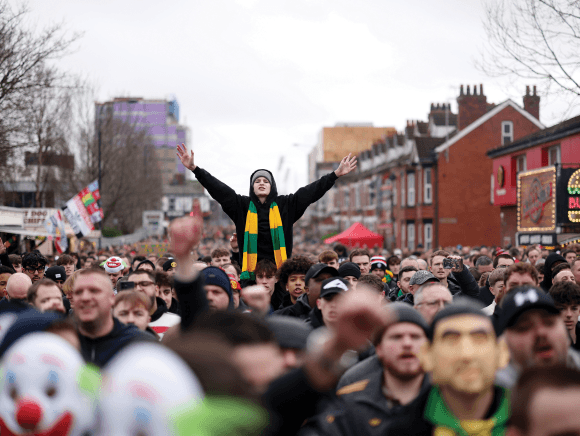
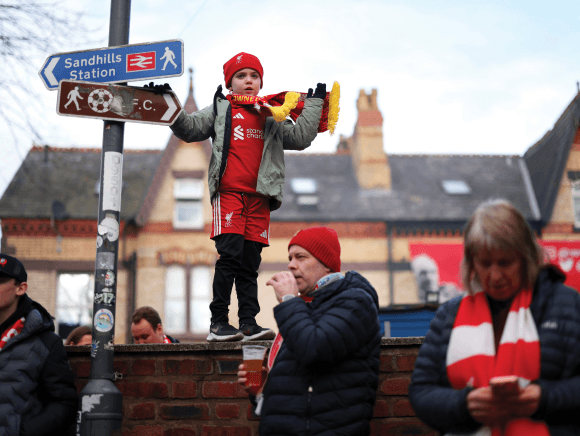
It’s that sense that nothing changes, but everything changes. Everything has changed around the game, but the pitch is in exactly the same spot. Going to the game, watching the football, coming home from the football, that’s still the same now as it was 100 years ago. It’s almost like a pilgrimage. In Liverpool, there are 65,000 people converging on a field in a housing estate. There’s something pretty unique about that.
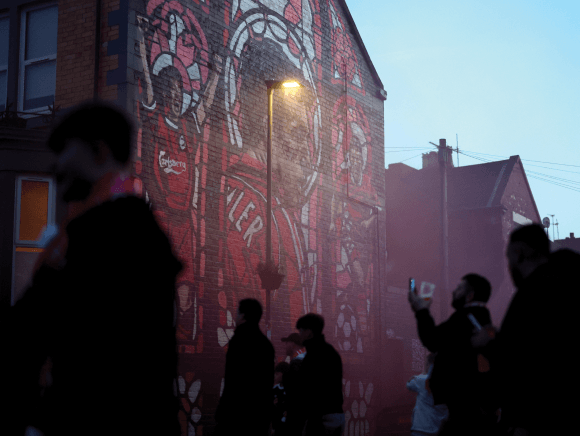
Football ties communities together. A few teams have struggled with the transition to a new stadium. It takes a while for it to feel like home. I think you really do lose the sense of belonging and familiarity. I understand about starting new chapters and things move forward, but you do lose something.

In the inner-city grounds, more than the new grounds on the outskirts, you get a sense of the generations that have gone before. The 50-year-old bloke today is probably making the same walk to the ground that his grandad made, and now he’s taking his son or daughter.
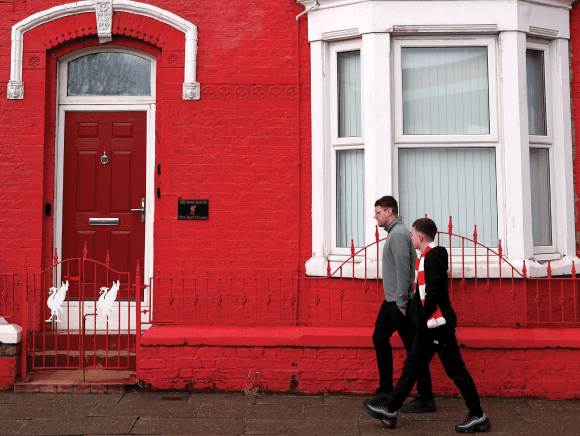
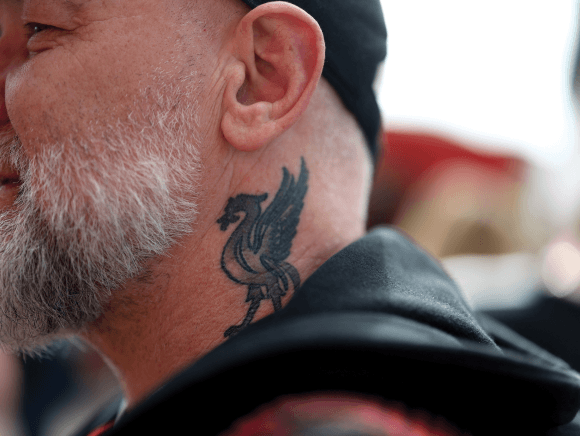
I like the romance of football. There is something quite beautiful about people just doing something as normal as going to a match. I hope the photographs resonate with people and they think, “That’s the same as when I used to go.” I just try to show normal. But it’s not just the people, it’s the place that makes it stand out. Like the guy who has painted his house red and has a liver bird on his gate. You almost instantly know it’s Liverpool without knowing it’s Liverpool. Those houses are uniquely British, and then you have a football stadium plonked in the middle of them. It may be multi-million-pound footballers playing on the pitch, but around the corner it’s still just a normal bloke who does his normal job and lives in a normal house that just happens to be right next to the stadium where he goes to watch these superstars. The contrast is massive. But nobody seems to mind. It’s everybody’s escape, isn’t it?

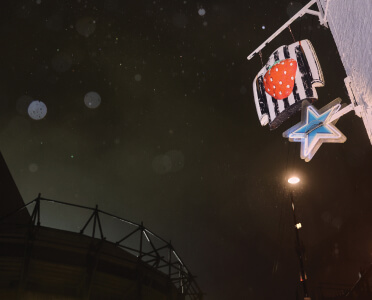
With Newcastle, you come down the A1 and, as you come over the bridge, you see St James’ Park like a castle at the top of a hill, dominating the skyline. Everybody wears the shirt, everybody wears a scarf, whether you’re six or 65. Everybody’s proud to show where they’re from, and wants to show that black and white. There is a siege mentality up there – it’s you against the world. Newcastle feels cut off from everywhere so they’re really proud of where they come from and they want to share it.
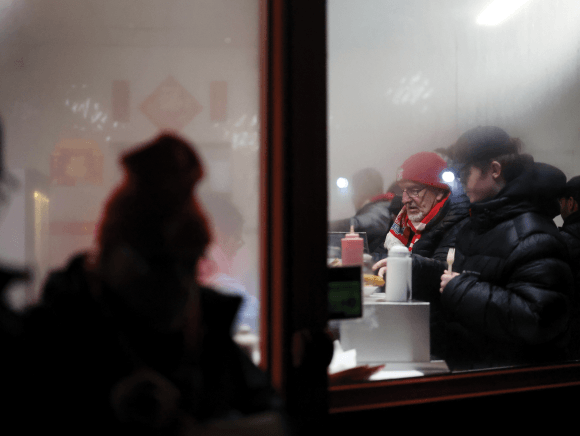
I like taking shots of people having fish and chips because they’re so rooted in place, so quintessentially England. Have a couple of pints, some fish and chips and then walk to the match. It’s the ultimate working-class meal and there’s something beautifully English, beautifully simple, about standing outside with a bag of chips, half an hour to go before the match.
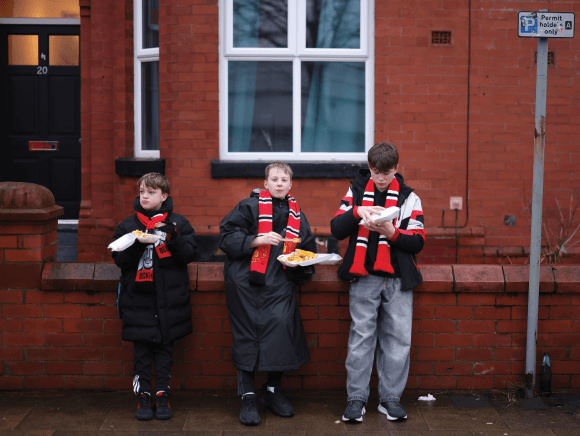
I really like this picture of the three United fans eating fish and chips. One is looking right at me and the other two are absolutely oblivious, just tucking in. I also like the clothes they’re wearing. They’ve all got a scarf, but none of them have a football shirt on. No colours. That’s quite Manchester, all in black. They don’t look like what people think of as modern-day football fans, they’re just the next generation of what I perceive as a normal fan, sort of living on.

Like this guy with his tattooed hand. He’s almost completely inked out his hand with that old logo. He could have gone for a little magpie or something. He was sitting in the front row and just had his hand resting over the blue Champions League advertising board. I thought, “That’ll do. That’s fantastic. I love that.”
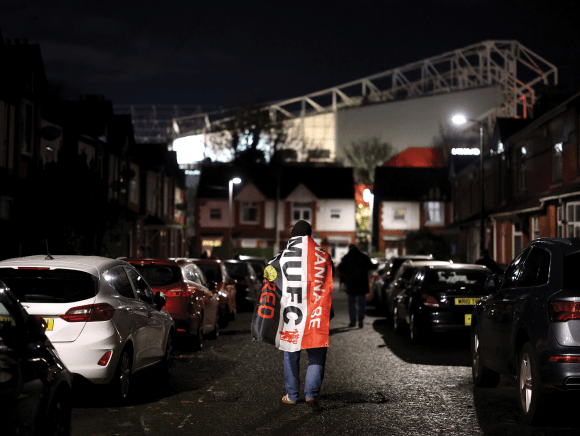
Also, the United fan on the way to Old Trafford. This is the road that tourists don’t use. Normally you walk down Matt Busby Way, but this is the lesser-seen angle. I like to show the less shiny side of football, the parts that still aren’t polished. The stands get higher and higher, but it’s still bang in the middle of the community.
That lady in red on her way to the game is what Liverpudlians are all about: loud, proud and unapologetic about it. Liverpool seems to have lots of older female supporters that go to the matches and many of them dress up. Going to the game is an occasion. They are strong and independent women; you know just by looking at them they are the head of the family and aren’t to be messed with.
For me, the culture of football is as interesting as the game itself. It fascinates me how football brings everybody together. You can be anywhere in England and you’ll see the same tribalism. You even see it in the clothes – people in the northeast wear the same sort of clothes, people in Liverpool have their own style. Football matches are a snapshot of life and that’s what I like about it.
It makes me think of the work of the painter L.S. Lowry. His paintings of football in the 1950s are the ultimate record of the working-class game from a bygone era. I think everyone of a certain age looks at those paintings and thinks “I’ve been there” on their walk to a football stadium at a point in time. Another artist but slightly more modern is Mackenzie Thorpe, who also captured that northern connection between football and the working classes. Both of them have influenced the way I look at football.
You go to Italy and they’re all eating ham. In Spain, they have tapas in a nice little bar. In England, you sit on some wall outside a terraced house and eat fish and chips. That’s what interests me. It’s so English. They probably order the same thing every single time. I definitely do.
When I shoot around a ground, I’m looking for interesting people, people that look like they belong in that setting, just normal people going about their normal matchday routine, lost in their own world. Ninety per cent of the people never even notice I’m taking a picture. They’re just head down, making their way to the ground. I never ask for anyone to pose for a shot, because that takes away the real-life moment you only get when people are unaware that you’re there.
I used to go and watch Stoke City at the old Victoria Ground with my dad, my grandad and my brother. We’d park a little bit away and walk to the ground, exactly like the people I’m talking about. We’d go to the same sweet shop, I’d buy some pear drops, and we’d walk down the terraced streets and you’d see the floodlights in the distance. There was something particularly special about night games at the Victoria Ground. We’d always stand on the same spot in the Boothen End, even though there was a pillar blocking the far goal. That was our spot for the first 15 years that I went to football matches, so I never saw a goal scored at the far end.
It’s that sense that nothing changes, but everything changes. Everything has changed around the game, but the pitch is in exactly the same spot. Going to the game, watching the football, coming home from the football, that’s still the same now as it was 100 years ago. It’s almost like a pilgrimage. In Liverpool, there are 65,000 people converging on a field in a housing estate. There’s something pretty unique about that.
Football ties communities together. A few teams have struggled with the transition to a new stadium. It takes a while for it to feel like home. I think you really do lose the sense of belonging and familiarity. I understand about starting new chapters and things move forward, but you do lose something.
In the inner-city grounds, more than the new grounds on the outskirts, you get a sense of the generations that have gone before. The 50-year-old bloke today is probably making the same walk to the ground that his grandad made, and now he’s taking his son or daughter.
I like the romance of football. There is something quite beautiful about people just doing something as normal as going to a match. I hope the photographs resonate with people and they think, “That’s the same as when I used to go.” I just try to show normal. But it’s not just the people, it’s the place that makes it stand out. Like the guy who has painted his house red and has a liver bird on his gate. You almost instantly know it’s Liverpool without knowing it’s Liverpool. Those houses are uniquely British, and then you have a football stadium plonked in the middle of them. It may be multi-million-pound footballers playing on the pitch, but around the corner it’s still just a normal bloke who does his normal job and lives in a normal house that just happens to be right next to the stadium where he goes to watch these superstars. The contrast is massive. But nobody seems to mind. It’s everybody’s escape, isn’t it?
With Newcastle, you come down the A1 and, as you come over the bridge, you see St James’ Park like a castle at the top of a hill, dominating the skyline. Everybody wears the shirt, everybody wears a scarf, whether you’re six or 65. Everybody’s proud to show where they’re from, and wants to show that black and white. There is a siege mentality up there – it’s you against the world. Newcastle feels cut off from everywhere so they’re really proud of where they come from and they want to share it.
I like taking shots of people having fish and chips because they’re so rooted in place, so quintessentially England. Have a couple of pints, some fish and chips and then walk to the match. It’s the ultimate working-class meal and there’s something beautifully English, beautifully simple, about standing outside with a bag of chips, half an hour to go before the match.
I really like this picture of the three United fans eating fish and chips. One is looking right at me and the other two are absolutely oblivious, just tucking in. I also like the clothes they’re wearing. They’ve all got a scarf, but none of them have a football shirt on. No colours. That’s quite Manchester, all in black. They don’t look like what people think of as modern-day football fans, they’re just the next generation of what I perceive as a normal fan, sort of living on.
Like this guy with his tattooed hand. He’s almost completely inked out his hand with that old logo. He could have gone for a little magpie or something. He was sitting in the front row and just had his hand resting over the blue Champions League advertising board. I thought, “That’ll do. That’s fantastic. I love that.”
Also, the United fan on the way to Old Trafford. This is the road that tourists don’t use. Normally you walk down Matt Busby Way, but this is the lesser-seen angle. I like to show the less shiny side of football, the parts that still aren’t polished. The stands get higher and higher, but it’s still bang in the middle of the community.