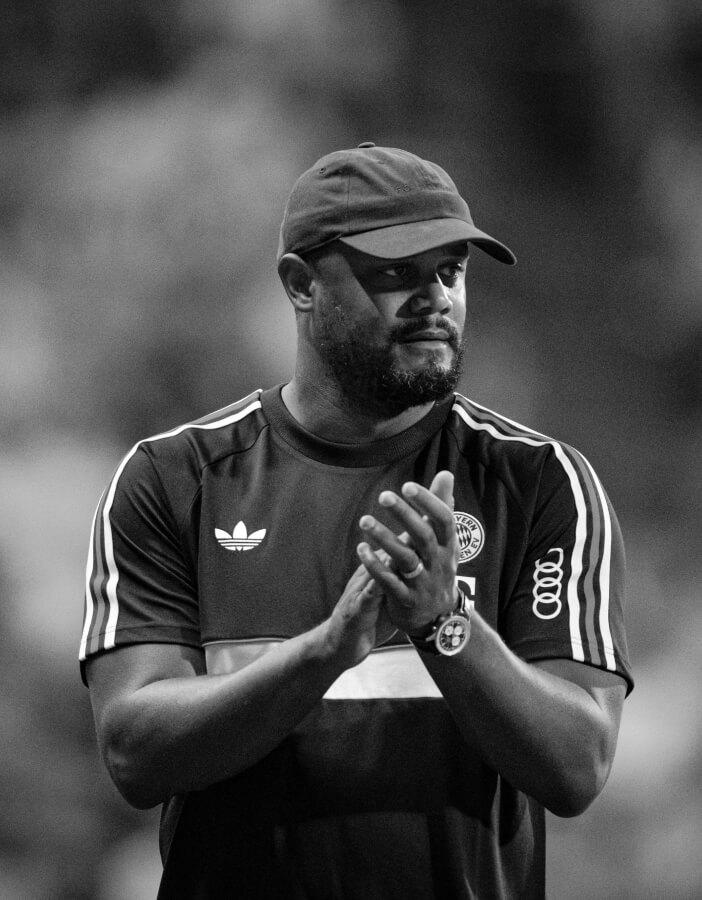
You get a lot of what you coach from who you are as a person, so I wouldn’t be able to coach in a style that isn’t me. One of the very simple things in life, for me, is that you don’t necessarily have to feel sorry or bad if you ever have a defeat or a bad moment in your life. But the only condition is you give everything you have. Because it’s the highest level, that means all the time.
And then, because it’s the highest level, you think nothing can be forgiven and you’re not allowed to make mistakes. But you are allowed to make mistakes. You learn and you get better because of the attitude you show. That doesn’t just apply to the top level, but it’s something that applies to me and I can understand the world in that way. I struggle if that’s not there.
You get better through resilience, time, making the most honest analysis of what you’ve done well and what you haven’t. I’m better than a couple of years ago, but I’d be very disappointed if, a couple of years from now, I’m not better than today.
Where I come from, there aren’t many people who have been very successful. It was a lot of people struggling for a very long time. What I took from that is that if you just keep going, there are plenty of good things that happen after the suffering.
I don’t think I’ve evolved more because I’ve won more games with Bayern. I think I probably learned the most at Burnley. I don’t think you become a better coach because you win more games, but because every single year you try and learn, you try and improve and you just continue. They’re all different challenges, and you learn from those experiences.
You get a lot of what you coach from who you are as a person, so I wouldn’t be able to coach in a style that isn’t me. One of the very simple things in life, for me, is that you don’t necessarily have to feel sorry or bad if you ever have a defeat or a bad moment in your life. But the only condition is you give everything you have. Because it’s the highest level, that means all the time.
And then, because it’s the highest level, you think nothing can be forgiven and you’re not allowed to make mistakes. But you are allowed to make mistakes. You learn and you get better because of the attitude you show. That doesn’t just apply to the top level, but it’s something that applies to me and I can understand the world in that way. I struggle if that’s not there.
You get better through resilience, time, making the most honest analysis of what you’ve done well and what you haven’t. I’m better than a couple of years ago, but I’d be very disappointed if, a couple of years from now, I’m not better than today.
Where I come from, there aren’t many people who have been very successful. It was a lot of people struggling for a very long time. What I took from that is that if you just keep going, there are plenty of good things that happen after the suffering.
I don’t think I’ve evolved more because I’ve won more games with Bayern. I think I probably learned the most at Burnley. I don’t think you become a better coach because you win more games, but because every single year you try and learn, you try and improve and you just continue. They’re all different challenges, and you learn from those experiences.
The challenges are everything, literally everything: whether you want to control the counter, whether you want to break down the defence to score a goal, whether you want to press and recover the ball or defend in a low block and still remain dangerous on the counter yourself, the set pieces... Every aspect is played at the highest level and, remember, it’s the players who decide these ties as well.
I was at the Anderlecht academy for 14 years from the age of six to 20, and all we talked about was scoring goals and winning in a certain way. It’s incredible, the standards we had in the youth teams to win against any team – Real Madrid, AC Milan. And not just to win. Even against the best team in the world, we were only satisfied if we played a certain way. We were indoctrinated and so confident. There was a bit of arrogance, but it was also a high standard from the very youngest age – to go anywhere and expect to beat the opposition in a certain way, and I think that’s really, really special. That’s what I grew up with. With these players – it’s not me scoring goals, it’s them – I can connect with that side of my personality.
I happen to be aggressive, and I enjoyed winning the ball back, but I’ve done other things as well, in how I grew up and how I played football in the streets. I enjoyed that side of it too. For example, the coach who taught me the most defensively was Roberto Mancini, who was an attacking No10. So, I want the team to be creative, I want the team to be smart. I like the fluidity, and if they can do that, then it’s something I really enjoy.
I actually enjoy blocking noise out. It’s become a real conviction of mine. I developed it during my career because I had so many injuries, and there were so many times when people said, “He’s finished,” and then you come back and all of a sudden you’re lifting trophies and having the best moments of your career. With time, you realise you’re totally in control of your own destiny and that noise can only affect you if you allow it to affect those foundations: your willingness to work and your willingness to trust yourself.
People say whatever they want but, in the bigger picture, does it really matter? In the end, you try, you fail – you will fail – but you’ll succeed as well. I’m probably better at falling a few times, getting back up, and showing grit and defending who I feel deserves to be defended. If something is unfair and I think it’s unfair, then it doesn’t matter what everybody else says. I will be on the side of what I think.
I’m myself and I will always be myself, and nothing less and nothing more than that.
You get a lot of what you coach from who you are as a person, so I wouldn’t be able to coach in a style that isn’t me. One of the very simple things in life, for me, is that you don’t necessarily have to feel sorry or bad if you ever have a defeat or a bad moment in your life. But the only condition is you give everything you have. Because it’s the highest level, that means all the time.
And then, because it’s the highest level, you think nothing can be forgiven and you’re not allowed to make mistakes. But you are allowed to make mistakes. You learn and you get better because of the attitude you show. That doesn’t just apply to the top level, but it’s something that applies to me and I can understand the world in that way. I struggle if that’s not there.
You get better through resilience, time, making the most honest analysis of what you’ve done well and what you haven’t. I’m better than a couple of years ago, but I’d be very disappointed if, a couple of years from now, I’m not better than today.
Where I come from, there aren’t many people who have been very successful. It was a lot of people struggling for a very long time. What I took from that is that if you just keep going, there are plenty of good things that happen after the suffering.
I don’t think I’ve evolved more because I’ve won more games with Bayern. I think I probably learned the most at Burnley. I don’t think you become a better coach because you win more games, but because every single year you try and learn, you try and improve and you just continue. They’re all different challenges, and you learn from those experiences.


You get a lot of what you coach from who you are as a person, so I wouldn’t be able to coach in a style that isn’t me. One of the very simple things in life, for me, is that you don’t necessarily have to feel sorry or bad if you ever have a defeat or a bad moment in your life. But the only condition is you give everything you have. Because it’s the highest level, that means all the time.
And then, because it’s the highest level, you think nothing can be forgiven and you’re not allowed to make mistakes. But you are allowed to make mistakes. You learn and you get better because of the attitude you show. That doesn’t just apply to the top level, but it’s something that applies to me and I can understand the world in that way. I struggle if that’s not there.
You get better through resilience, time, making the most honest analysis of what you’ve done well and what you haven’t. I’m better than a couple of years ago, but I’d be very disappointed if, a couple of years from now, I’m not better than today.
Where I come from, there aren’t many people who have been very successful. It was a lot of people struggling for a very long time. What I took from that is that if you just keep going, there are plenty of good things that happen after the suffering.
I don’t think I’ve evolved more because I’ve won more games with Bayern. I think I probably learned the most at Burnley. I don’t think you become a better coach because you win more games, but because every single year you try and learn, you try and improve and you just continue. They’re all different challenges, and you learn from those experiences.
You get a lot of what you coach from who you are as a person, so I wouldn’t be able to coach in a style that isn’t me. One of the very simple things in life, for me, is that you don’t necessarily have to feel sorry or bad if you ever have a defeat or a bad moment in your life. But the only condition is you give everything you have. Because it’s the highest level, that means all the time.
And then, because it’s the highest level, you think nothing can be forgiven and you’re not allowed to make mistakes. But you are allowed to make mistakes. You learn and you get better because of the attitude you show. That doesn’t just apply to the top level, but it’s something that applies to me and I can understand the world in that way. I struggle if that’s not there.
You get better through resilience, time, making the most honest analysis of what you’ve done well and what you haven’t. I’m better than a couple of years ago, but I’d be very disappointed if, a couple of years from now, I’m not better than today.
Where I come from, there aren’t many people who have been very successful. It was a lot of people struggling for a very long time. What I took from that is that if you just keep going, there are plenty of good things that happen after the suffering.
I don’t think I’ve evolved more because I’ve won more games with Bayern. I think I probably learned the most at Burnley. I don’t think you become a better coach because you win more games, but because every single year you try and learn, you try and improve and you just continue. They’re all different challenges, and you learn from those experiences.
The challenges are everything, literally everything: whether you want to control the counter, whether you want to break down the defence to score a goal, whether you want to press and recover the ball or defend in a low block and still remain dangerous on the counter yourself, the set pieces... Every aspect is played at the highest level and, remember, it’s the players who decide these ties as well.
I was at the Anderlecht academy for 14 years from the age of six to 20, and all we talked about was scoring goals and winning in a certain way. It’s incredible, the standards we had in the youth teams to win against any team – Real Madrid, AC Milan. And not just to win. Even against the best team in the world, we were only satisfied if we played a certain way. We were indoctrinated and so confident. There was a bit of arrogance, but it was also a high standard from the very youngest age – to go anywhere and expect to beat the opposition in a certain way, and I think that’s really, really special. That’s what I grew up with. With these players – it’s not me scoring goals, it’s them – I can connect with that side of my personality.
I happen to be aggressive, and I enjoyed winning the ball back, but I’ve done other things as well, in how I grew up and how I played football in the streets. I enjoyed that side of it too. For example, the coach who taught me the most defensively was Roberto Mancini, who was an attacking No10. So, I want the team to be creative, I want the team to be smart. I like the fluidity, and if they can do that, then it’s something I really enjoy.
I actually enjoy blocking noise out. It’s become a real conviction of mine. I developed it during my career because I had so many injuries, and there were so many times when people said, “He’s finished,” and then you come back and all of a sudden you’re lifting trophies and having the best moments of your career. With time, you realise you’re totally in control of your own destiny and that noise can only affect you if you allow it to affect those foundations: your willingness to work and your willingness to trust yourself.
People say whatever they want but, in the bigger picture, does it really matter? In the end, you try, you fail – you will fail – but you’ll succeed as well. I’m probably better at falling a few times, getting back up, and showing grit and defending who I feel deserves to be defended. If something is unfair and I think it’s unfair, then it doesn’t matter what everybody else says. I will be on the side of what I think.
I’m myself and I will always be myself, and nothing less and nothing more than that.
You get a lot of what you coach from who you are as a person, so I wouldn’t be able to coach in a style that isn’t me. One of the very simple things in life, for me, is that you don’t necessarily have to feel sorry or bad if you ever have a defeat or a bad moment in your life. But the only condition is you give everything you have. Because it’s the highest level, that means all the time.
And then, because it’s the highest level, you think nothing can be forgiven and you’re not allowed to make mistakes. But you are allowed to make mistakes. You learn and you get better because of the attitude you show. That doesn’t just apply to the top level, but it’s something that applies to me and I can understand the world in that way. I struggle if that’s not there.
You get better through resilience, time, making the most honest analysis of what you’ve done well and what you haven’t. I’m better than a couple of years ago, but I’d be very disappointed if, a couple of years from now, I’m not better than today.
Where I come from, there aren’t many people who have been very successful. It was a lot of people struggling for a very long time. What I took from that is that if you just keep going, there are plenty of good things that happen after the suffering.
I don’t think I’ve evolved more because I’ve won more games with Bayern. I think I probably learned the most at Burnley. I don’t think you become a better coach because you win more games, but because every single year you try and learn, you try and improve and you just continue. They’re all different challenges, and you learn from those experiences.