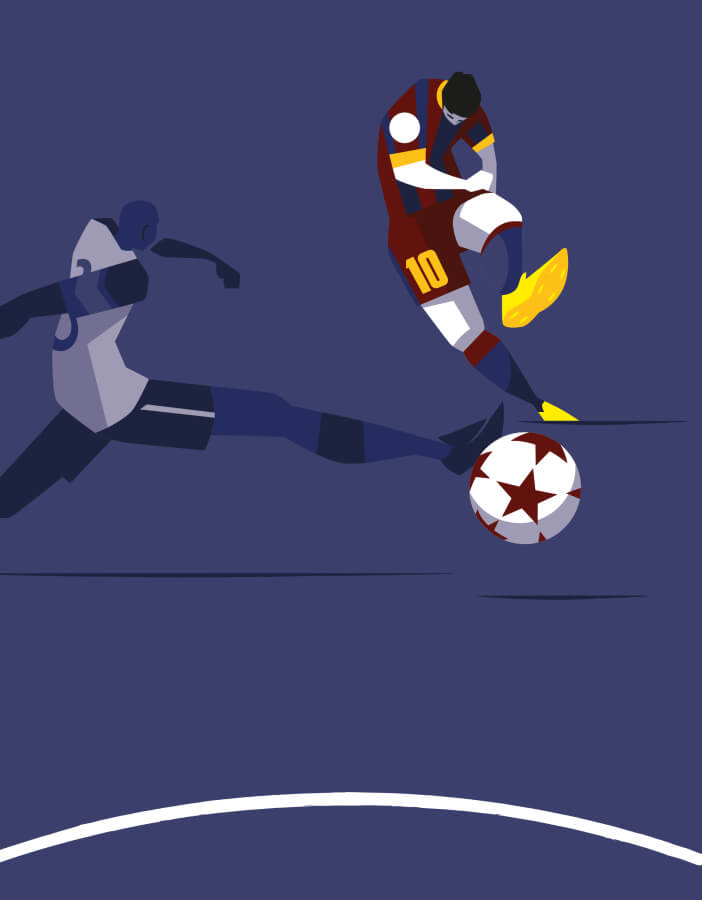
The context for Leo Messi’s goal was as spectacular as the shot itself. The 2011 final is remembered as a footballing masterclass which showcased some of the best tactics, technique and brio ever seen in a Champions League decider. Many have also concluded that there was only one team in it – an assessment supported by Sir Alex Ferguson’s words after Barcelona’s 3-1 victory, when he confessed, “No one’s given us a hiding like that!”
I know many Manchester United fans who felt that they had been taken apart, that they had been beaten by one of the greatest, if not the greatest, teams ever.
The truth is different. At pitch level, at least.
When we were filming the 2018 documentary Take the Ball Pass the Ball, I remember our surprise when Messi admitted that the best thing about his goal was how it “calmed our nerves”. Given that United’s players felt so overwhelmed, given that so many knowledgeable judges later decided that the game had been one-way traffic, it’s remarkable that the world’s greatest-ever player remembers things wholly differently. He didn’t dwell upon how daring or stunning his strike had been. He solely recalled a great sense of relief.
Take a moment, if you will, to go and check it out. Focus not only on the instant when United’s goalkeeper Edwin van der Sar is beaten by the surprise early strike from outside the box, but watch also the uncharacteristically wild celebrations that consumed Messi once the ball went in. Parity was broken and Barcelona went 2-1 up.
The backstory runs even deeper. In 2006, an 18-year-old Messi had been furious to be left out of Barcelona’s matchday squad for the Champions League final in Paris. Although he had just about returned to fitness, there were still concerns about playing at full intensity. When Barça duly won, he refused to celebrate, still boiling with anger that he hadn’t played. A couple of months later, the young Messi told me, “I’ve learned, from that; I’ll never do something like that again. And, God willing, I’ll win this trophy more times.”
When this little genius approached his first Champions League final against United, in Rome in 2009, the English media had just one story in mind – that Messi had never scored against an English club. This one-eyed preoccupation was as naive as it was to be shortsighted, with Messi scoring to make it 2-0 and Pep Guardiola’s team completing their treble. Not for the first time, the hero of this story had the last laugh.
Barcelona fell short in their trophy defence in 2009/10, however, and their semi-final loss to Inter Milan left them with a rueful sense of injustice that lingered until Wembley the following year. Was it partly because they played weakly at the San Siro against Inter, having been forced to make the long journey by bus instead of flying? Perhaps. The bus journey was a consequence of the Eyjafjallajökull volcano eruption in Iceland, resulting in European airspace being closed for eight days in April 2010. But, that aside, José Mourinho’s well-drilled team played their part, leaving Messi and the rest of Guardiola’s men obsessed with righting wrongs.
On that balmy, noisy night in 2011, Messi was a core part of the tactics as Barça approached the game with an ironclad strategy. David Villa and Pedro Rodríguez were to hug the touchlines, stay patient and drag United’s defenders wide. This was partly so that Sir Alex’s full-backs would be unable to move forward and help their overrun midfielders, who already had to cope with Andrés Iniesta, Xavi Hernández, Sergio Busquets, Dani Alves and Éric Abidal. Then it was down to Messi to drop back in order to ensure superiority of numbers in the creative zone.
It was impossible not to feel some sympathy for the Red Devils. Not only were they outnumbered, they were also trying to hold back a wave of virtuosity. Look again at Messi’s goal and see where he picks up possession. Time and again, he found valuable pockets of free space between United’s defensive lines. Over and over, United somehow managed to clear the chaos and repel boarders. Not on this occasion. Although the victory margin would eventually be two goals, with the way Barcelona were playing, and the degree to which Messi’s goal was a gut punch for the English side, going 2-1 up meant that the final was effectively over.
It’s pretty remarkable that Messi would only win one more Champions League title after this and that, in the end, although he possesses four winners’ medals, this glorious competition would become something of a thorn in his side in later years. Each of his two other final appearances were part of historic trebles, but it’s this one, at Wembley, which is widely regarded as his pièce de résistance. Only the churlish would argue with that.
The context for Leo Messi’s goal was as spectacular as the shot itself. The 2011 final is remembered as a footballing masterclass which showcased some of the best tactics, technique and brio ever seen in a Champions League decider. Many have also concluded that there was only one team in it – an assessment supported by Sir Alex Ferguson’s words after Barcelona’s 3-1 victory, when he confessed, “No one’s given us a hiding like that!”
I know many Manchester United fans who felt that they had been taken apart, that they had been beaten by one of the greatest, if not the greatest, teams ever.
The truth is different. At pitch level, at least.
When we were filming the 2018 documentary Take the Ball Pass the Ball, I remember our surprise when Messi admitted that the best thing about his goal was how it “calmed our nerves”. Given that United’s players felt so overwhelmed, given that so many knowledgeable judges later decided that the game had been one-way traffic, it’s remarkable that the world’s greatest-ever player remembers things wholly differently. He didn’t dwell upon how daring or stunning his strike had been. He solely recalled a great sense of relief.
Take a moment, if you will, to go and check it out. Focus not only on the instant when United’s goalkeeper Edwin van der Sar is beaten by the surprise early strike from outside the box, but watch also the uncharacteristically wild celebrations that consumed Messi once the ball went in. Parity was broken and Barcelona went 2-1 up.
The backstory runs even deeper. In 2006, an 18-year-old Messi had been furious to be left out of Barcelona’s matchday squad for the Champions League final in Paris. Although he had just about returned to fitness, there were still concerns about playing at full intensity. When Barça duly won, he refused to celebrate, still boiling with anger that he hadn’t played. A couple of months later, the young Messi told me, “I’ve learned, from that; I’ll never do something like that again. And, God willing, I’ll win this trophy more times.”
When this little genius approached his first Champions League final against United, in Rome in 2009, the English media had just one story in mind – that Messi had never scored against an English club. This one-eyed preoccupation was as naive as it was to be shortsighted, with Messi scoring to make it 2-0 and Pep Guardiola’s team completing their treble. Not for the first time, the hero of this story had the last laugh.
Barcelona fell short in their trophy defence in 2009/10, however, and their semi-final loss to Inter Milan left them with a rueful sense of injustice that lingered until Wembley the following year. Was it partly because they played weakly at the San Siro against Inter, having been forced to make the long journey by bus instead of flying? Perhaps. The bus journey was a consequence of the Eyjafjallajökull volcano eruption in Iceland, resulting in European airspace being closed for eight days in April 2010. But, that aside, José Mourinho’s well-drilled team played their part, leaving Messi and the rest of Guardiola’s men obsessed with righting wrongs.
On that balmy, noisy night in 2011, Messi was a core part of the tactics as Barça approached the game with an ironclad strategy. David Villa and Pedro Rodríguez were to hug the touchlines, stay patient and drag United’s defenders wide. This was partly so that Sir Alex’s full-backs would be unable to move forward and help their overrun midfielders, who already had to cope with Andrés Iniesta, Xavi Hernández, Sergio Busquets, Dani Alves and Éric Abidal. Then it was down to Messi to drop back in order to ensure superiority of numbers in the creative zone.
It was impossible not to feel some sympathy for the Red Devils. Not only were they outnumbered, they were also trying to hold back a wave of virtuosity. Look again at Messi’s goal and see where he picks up possession. Time and again, he found valuable pockets of free space between United’s defensive lines. Over and over, United somehow managed to clear the chaos and repel boarders. Not on this occasion. Although the victory margin would eventually be two goals, with the way Barcelona were playing, and the degree to which Messi’s goal was a gut punch for the English side, going 2-1 up meant that the final was effectively over.
It’s pretty remarkable that Messi would only win one more Champions League title after this and that, in the end, although he possesses four winners’ medals, this glorious competition would become something of a thorn in his side in later years. Each of his two other final appearances were part of historic trebles, but it’s this one, at Wembley, which is widely regarded as his pièce de résistance. Only the churlish would argue with that.
The context for Leo Messi’s goal was as spectacular as the shot itself. The 2011 final is remembered as a footballing masterclass which showcased some of the best tactics, technique and brio ever seen in a Champions League decider. Many have also concluded that there was only one team in it – an assessment supported by Sir Alex Ferguson’s words after Barcelona’s 3-1 victory, when he confessed, “No one’s given us a hiding like that!”
I know many Manchester United fans who felt that they had been taken apart, that they had been beaten by one of the greatest, if not the greatest, teams ever.
The truth is different. At pitch level, at least.
When we were filming the 2018 documentary Take the Ball Pass the Ball, I remember our surprise when Messi admitted that the best thing about his goal was how it “calmed our nerves”. Given that United’s players felt so overwhelmed, given that so many knowledgeable judges later decided that the game had been one-way traffic, it’s remarkable that the world’s greatest-ever player remembers things wholly differently. He didn’t dwell upon how daring or stunning his strike had been. He solely recalled a great sense of relief.
Take a moment, if you will, to go and check it out. Focus not only on the instant when United’s goalkeeper Edwin van der Sar is beaten by the surprise early strike from outside the box, but watch also the uncharacteristically wild celebrations that consumed Messi once the ball went in. Parity was broken and Barcelona went 2-1 up.
The backstory runs even deeper. In 2006, an 18-year-old Messi had been furious to be left out of Barcelona’s matchday squad for the Champions League final in Paris. Although he had just about returned to fitness, there were still concerns about playing at full intensity. When Barça duly won, he refused to celebrate, still boiling with anger that he hadn’t played. A couple of months later, the young Messi told me, “I’ve learned, from that; I’ll never do something like that again. And, God willing, I’ll win this trophy more times.”
When this little genius approached his first Champions League final against United, in Rome in 2009, the English media had just one story in mind – that Messi had never scored against an English club. This one-eyed preoccupation was as naive as it was to be shortsighted, with Messi scoring to make it 2-0 and Pep Guardiola’s team completing their treble. Not for the first time, the hero of this story had the last laugh.
Barcelona fell short in their trophy defence in 2009/10, however, and their semi-final loss to Inter Milan left them with a rueful sense of injustice that lingered until Wembley the following year. Was it partly because they played weakly at the San Siro against Inter, having been forced to make the long journey by bus instead of flying? Perhaps. The bus journey was a consequence of the Eyjafjallajökull volcano eruption in Iceland, resulting in European airspace being closed for eight days in April 2010. But, that aside, José Mourinho’s well-drilled team played their part, leaving Messi and the rest of Guardiola’s men obsessed with righting wrongs.
On that balmy, noisy night in 2011, Messi was a core part of the tactics as Barça approached the game with an ironclad strategy. David Villa and Pedro Rodríguez were to hug the touchlines, stay patient and drag United’s defenders wide. This was partly so that Sir Alex’s full-backs would be unable to move forward and help their overrun midfielders, who already had to cope with Andrés Iniesta, Xavi Hernández, Sergio Busquets, Dani Alves and Éric Abidal. Then it was down to Messi to drop back in order to ensure superiority of numbers in the creative zone.
It was impossible not to feel some sympathy for the Red Devils. Not only were they outnumbered, they were also trying to hold back a wave of virtuosity. Look again at Messi’s goal and see where he picks up possession. Time and again, he found valuable pockets of free space between United’s defensive lines. Over and over, United somehow managed to clear the chaos and repel boarders. Not on this occasion. Although the victory margin would eventually be two goals, with the way Barcelona were playing, and the degree to which Messi’s goal was a gut punch for the English side, going 2-1 up meant that the final was effectively over.
It’s pretty remarkable that Messi would only win one more Champions League title after this and that, in the end, although he possesses four winners’ medals, this glorious competition would become something of a thorn in his side in later years. Each of his two other final appearances were part of historic trebles, but it’s this one, at Wembley, which is widely regarded as his pièce de résistance. Only the churlish would argue with that.


The context for Leo Messi’s goal was as spectacular as the shot itself. The 2011 final is remembered as a footballing masterclass which showcased some of the best tactics, technique and brio ever seen in a Champions League decider. Many have also concluded that there was only one team in it – an assessment supported by Sir Alex Ferguson’s words after Barcelona’s 3-1 victory, when he confessed, “No one’s given us a hiding like that!”
I know many Manchester United fans who felt that they had been taken apart, that they had been beaten by one of the greatest, if not the greatest, teams ever.
The truth is different. At pitch level, at least.
When we were filming the 2018 documentary Take the Ball Pass the Ball, I remember our surprise when Messi admitted that the best thing about his goal was how it “calmed our nerves”. Given that United’s players felt so overwhelmed, given that so many knowledgeable judges later decided that the game had been one-way traffic, it’s remarkable that the world’s greatest-ever player remembers things wholly differently. He didn’t dwell upon how daring or stunning his strike had been. He solely recalled a great sense of relief.
Take a moment, if you will, to go and check it out. Focus not only on the instant when United’s goalkeeper Edwin van der Sar is beaten by the surprise early strike from outside the box, but watch also the uncharacteristically wild celebrations that consumed Messi once the ball went in. Parity was broken and Barcelona went 2-1 up.
The backstory runs even deeper. In 2006, an 18-year-old Messi had been furious to be left out of Barcelona’s matchday squad for the Champions League final in Paris. Although he had just about returned to fitness, there were still concerns about playing at full intensity. When Barça duly won, he refused to celebrate, still boiling with anger that he hadn’t played. A couple of months later, the young Messi told me, “I’ve learned, from that; I’ll never do something like that again. And, God willing, I’ll win this trophy more times.”
When this little genius approached his first Champions League final against United, in Rome in 2009, the English media had just one story in mind – that Messi had never scored against an English club. This one-eyed preoccupation was as naive as it was to be shortsighted, with Messi scoring to make it 2-0 and Pep Guardiola’s team completing their treble. Not for the first time, the hero of this story had the last laugh.
Barcelona fell short in their trophy defence in 2009/10, however, and their semi-final loss to Inter Milan left them with a rueful sense of injustice that lingered until Wembley the following year. Was it partly because they played weakly at the San Siro against Inter, having been forced to make the long journey by bus instead of flying? Perhaps. The bus journey was a consequence of the Eyjafjallajökull volcano eruption in Iceland, resulting in European airspace being closed for eight days in April 2010. But, that aside, José Mourinho’s well-drilled team played their part, leaving Messi and the rest of Guardiola’s men obsessed with righting wrongs.
On that balmy, noisy night in 2011, Messi was a core part of the tactics as Barça approached the game with an ironclad strategy. David Villa and Pedro Rodríguez were to hug the touchlines, stay patient and drag United’s defenders wide. This was partly so that Sir Alex’s full-backs would be unable to move forward and help their overrun midfielders, who already had to cope with Andrés Iniesta, Xavi Hernández, Sergio Busquets, Dani Alves and Éric Abidal. Then it was down to Messi to drop back in order to ensure superiority of numbers in the creative zone.
It was impossible not to feel some sympathy for the Red Devils. Not only were they outnumbered, they were also trying to hold back a wave of virtuosity. Look again at Messi’s goal and see where he picks up possession. Time and again, he found valuable pockets of free space between United’s defensive lines. Over and over, United somehow managed to clear the chaos and repel boarders. Not on this occasion. Although the victory margin would eventually be two goals, with the way Barcelona were playing, and the degree to which Messi’s goal was a gut punch for the English side, going 2-1 up meant that the final was effectively over.
It’s pretty remarkable that Messi would only win one more Champions League title after this and that, in the end, although he possesses four winners’ medals, this glorious competition would become something of a thorn in his side in later years. Each of his two other final appearances were part of historic trebles, but it’s this one, at Wembley, which is widely regarded as his pièce de résistance. Only the churlish would argue with that.
The context for Leo Messi’s goal was as spectacular as the shot itself. The 2011 final is remembered as a footballing masterclass which showcased some of the best tactics, technique and brio ever seen in a Champions League decider. Many have also concluded that there was only one team in it – an assessment supported by Sir Alex Ferguson’s words after Barcelona’s 3-1 victory, when he confessed, “No one’s given us a hiding like that!”
I know many Manchester United fans who felt that they had been taken apart, that they had been beaten by one of the greatest, if not the greatest, teams ever.
The truth is different. At pitch level, at least.
When we were filming the 2018 documentary Take the Ball Pass the Ball, I remember our surprise when Messi admitted that the best thing about his goal was how it “calmed our nerves”. Given that United’s players felt so overwhelmed, given that so many knowledgeable judges later decided that the game had been one-way traffic, it’s remarkable that the world’s greatest-ever player remembers things wholly differently. He didn’t dwell upon how daring or stunning his strike had been. He solely recalled a great sense of relief.
Take a moment, if you will, to go and check it out. Focus not only on the instant when United’s goalkeeper Edwin van der Sar is beaten by the surprise early strike from outside the box, but watch also the uncharacteristically wild celebrations that consumed Messi once the ball went in. Parity was broken and Barcelona went 2-1 up.
The backstory runs even deeper. In 2006, an 18-year-old Messi had been furious to be left out of Barcelona’s matchday squad for the Champions League final in Paris. Although he had just about returned to fitness, there were still concerns about playing at full intensity. When Barça duly won, he refused to celebrate, still boiling with anger that he hadn’t played. A couple of months later, the young Messi told me, “I’ve learned, from that; I’ll never do something like that again. And, God willing, I’ll win this trophy more times.”
When this little genius approached his first Champions League final against United, in Rome in 2009, the English media had just one story in mind – that Messi had never scored against an English club. This one-eyed preoccupation was as naive as it was to be shortsighted, with Messi scoring to make it 2-0 and Pep Guardiola’s team completing their treble. Not for the first time, the hero of this story had the last laugh.
Barcelona fell short in their trophy defence in 2009/10, however, and their semi-final loss to Inter Milan left them with a rueful sense of injustice that lingered until Wembley the following year. Was it partly because they played weakly at the San Siro against Inter, having been forced to make the long journey by bus instead of flying? Perhaps. The bus journey was a consequence of the Eyjafjallajökull volcano eruption in Iceland, resulting in European airspace being closed for eight days in April 2010. But, that aside, José Mourinho’s well-drilled team played their part, leaving Messi and the rest of Guardiola’s men obsessed with righting wrongs.
On that balmy, noisy night in 2011, Messi was a core part of the tactics as Barça approached the game with an ironclad strategy. David Villa and Pedro Rodríguez were to hug the touchlines, stay patient and drag United’s defenders wide. This was partly so that Sir Alex’s full-backs would be unable to move forward and help their overrun midfielders, who already had to cope with Andrés Iniesta, Xavi Hernández, Sergio Busquets, Dani Alves and Éric Abidal. Then it was down to Messi to drop back in order to ensure superiority of numbers in the creative zone.
It was impossible not to feel some sympathy for the Red Devils. Not only were they outnumbered, they were also trying to hold back a wave of virtuosity. Look again at Messi’s goal and see where he picks up possession. Time and again, he found valuable pockets of free space between United’s defensive lines. Over and over, United somehow managed to clear the chaos and repel boarders. Not on this occasion. Although the victory margin would eventually be two goals, with the way Barcelona were playing, and the degree to which Messi’s goal was a gut punch for the English side, going 2-1 up meant that the final was effectively over.
It’s pretty remarkable that Messi would only win one more Champions League title after this and that, in the end, although he possesses four winners’ medals, this glorious competition would become something of a thorn in his side in later years. Each of his two other final appearances were part of historic trebles, but it’s this one, at Wembley, which is widely regarded as his pièce de résistance. Only the churlish would argue with that.
The context for Leo Messi’s goal was as spectacular as the shot itself. The 2011 final is remembered as a footballing masterclass which showcased some of the best tactics, technique and brio ever seen in a Champions League decider. Many have also concluded that there was only one team in it – an assessment supported by Sir Alex Ferguson’s words after Barcelona’s 3-1 victory, when he confessed, “No one’s given us a hiding like that!”
I know many Manchester United fans who felt that they had been taken apart, that they had been beaten by one of the greatest, if not the greatest, teams ever.
The truth is different. At pitch level, at least.
When we were filming the 2018 documentary Take the Ball Pass the Ball, I remember our surprise when Messi admitted that the best thing about his goal was how it “calmed our nerves”. Given that United’s players felt so overwhelmed, given that so many knowledgeable judges later decided that the game had been one-way traffic, it’s remarkable that the world’s greatest-ever player remembers things wholly differently. He didn’t dwell upon how daring or stunning his strike had been. He solely recalled a great sense of relief.
Take a moment, if you will, to go and check it out. Focus not only on the instant when United’s goalkeeper Edwin van der Sar is beaten by the surprise early strike from outside the box, but watch also the uncharacteristically wild celebrations that consumed Messi once the ball went in. Parity was broken and Barcelona went 2-1 up.
The backstory runs even deeper. In 2006, an 18-year-old Messi had been furious to be left out of Barcelona’s matchday squad for the Champions League final in Paris. Although he had just about returned to fitness, there were still concerns about playing at full intensity. When Barça duly won, he refused to celebrate, still boiling with anger that he hadn’t played. A couple of months later, the young Messi told me, “I’ve learned, from that; I’ll never do something like that again. And, God willing, I’ll win this trophy more times.”
When this little genius approached his first Champions League final against United, in Rome in 2009, the English media had just one story in mind – that Messi had never scored against an English club. This one-eyed preoccupation was as naive as it was to be shortsighted, with Messi scoring to make it 2-0 and Pep Guardiola’s team completing their treble. Not for the first time, the hero of this story had the last laugh.
Barcelona fell short in their trophy defence in 2009/10, however, and their semi-final loss to Inter Milan left them with a rueful sense of injustice that lingered until Wembley the following year. Was it partly because they played weakly at the San Siro against Inter, having been forced to make the long journey by bus instead of flying? Perhaps. The bus journey was a consequence of the Eyjafjallajökull volcano eruption in Iceland, resulting in European airspace being closed for eight days in April 2010. But, that aside, José Mourinho’s well-drilled team played their part, leaving Messi and the rest of Guardiola’s men obsessed with righting wrongs.
On that balmy, noisy night in 2011, Messi was a core part of the tactics as Barça approached the game with an ironclad strategy. David Villa and Pedro Rodríguez were to hug the touchlines, stay patient and drag United’s defenders wide. This was partly so that Sir Alex’s full-backs would be unable to move forward and help their overrun midfielders, who already had to cope with Andrés Iniesta, Xavi Hernández, Sergio Busquets, Dani Alves and Éric Abidal. Then it was down to Messi to drop back in order to ensure superiority of numbers in the creative zone.
It was impossible not to feel some sympathy for the Red Devils. Not only were they outnumbered, they were also trying to hold back a wave of virtuosity. Look again at Messi’s goal and see where he picks up possession. Time and again, he found valuable pockets of free space between United’s defensive lines. Over and over, United somehow managed to clear the chaos and repel boarders. Not on this occasion. Although the victory margin would eventually be two goals, with the way Barcelona were playing, and the degree to which Messi’s goal was a gut punch for the English side, going 2-1 up meant that the final was effectively over.
It’s pretty remarkable that Messi would only win one more Champions League title after this and that, in the end, although he possesses four winners’ medals, this glorious competition would become something of a thorn in his side in later years. Each of his two other final appearances were part of historic trebles, but it’s this one, at Wembley, which is widely regarded as his pièce de résistance. Only the churlish would argue with that.