

Teenage kicks

Teenagers are no longer easing into the Champions League – they’re shaping it. From Senny Mayulu to Lamine Yamal, Max Dowman to Estêvão, Europe’s greatest stage has never been younger, bolder or more prepared for prodigious talent

WORDS Graham Hunter

Cover Stories
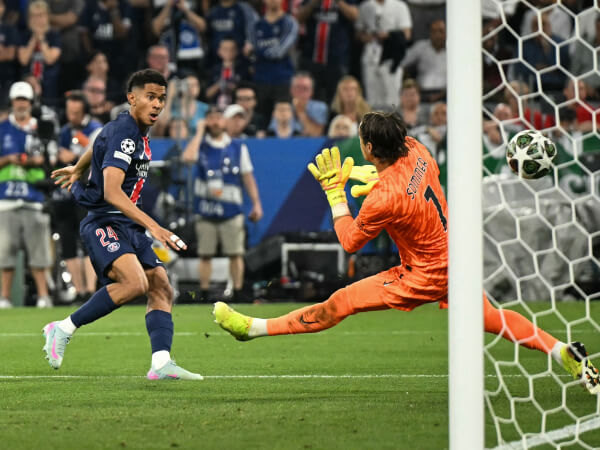
When Senny Mayulu skipped through the Inter Milan defence, playing a one-two with Bradley Barcola to score Paris Saint-Germain’s fifth goal in last season’s Champions League final, it felt daring and impish – the ribbon tied on a sumptuous performance by Luis Enrique’s team.

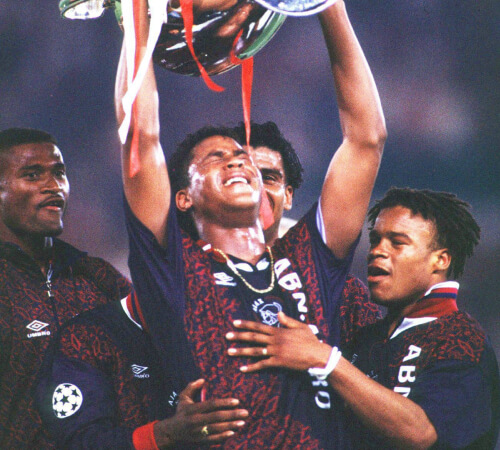
What escaped most people’s notice at the time, the joy of the moment obscuring the raw data, was that Mayulu had just become the youngest scorer in a Champions League final for 30 years. In fact, since Patrick Kluivert – aged 18 years, 327 days – prodded home the only goal for Ajax against
AC Milan in 1995, a mere 52 days younger than the jubilant Frenchman was in Munich.

It seemed then to be symbolic of the vibrant, insouciant manner of Paris’ philosophy and athleticism, not least since fellow then-19-year-old Désiré Doué had already scored twice. As soon as this season dawned, however, it became clear that Mayulu’s goal represented the crest of a wave. A wave of young players being ready, and of clubs trusting, risking and benefiting earlier and earlier from teenage talents.

We are witnesses to a revolution – or, at least, an undeniable trend. Evidence? Not only have six of the ten youngest players in this elite competition made their debut in the last six years, but the top three have all joined the list in the last five. And now Arsenal have provided us with the first-ever 15-year-old to grace the Champions League.

Max Dowman made history against Slavia Praha in November, coming on as a substitute aged 15 years, 308 days. There’s no doubting that he looks to be a prodigy. For many of us, it’s incomprehensible to be that good and that ready aged just 15 at a European giant such as Arsenal. However, like Mayulu, Dowman is far from an outlier. The Essex-born winger is simply at the forefront of a seismic change.

Back in 2000/01, Dowman’s current coach Mikel Arteta was one of seven players aged 18 or under to taste action in the world’s most demanding club competition. This season, that figure had reached 30 after only four matchdays. Of course, not every newcomer will flourish on the biggest stage, but consider this: all five of the youngest scorers in the Champions League era have hit the net in the last six years – and three of them in the last two. This phenomenon is picking up pace.

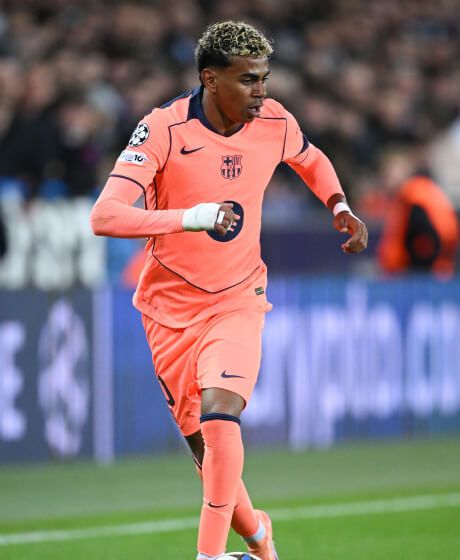
In fact, while the height of precocity remains Ansu Fati’s superb winner at the San Siro for Barcelona against Inter in 2019 (poor old Inter keep featuring!), Lamine Yamal’s maiden Champions League goal in September 2024 was just 28 days shy of breaking that record.

I think it’s a fair argument that it’s less surprising when clubs without ‘behemoth’ finances rely on young talent. There are plenty of case studies this season – such as Sporting CP winger Geovany Quenda (18), Atalanta defender Honest Ahanor (17) and Ajax midfielder Jorthy Mokio (17). Or take Kairat Almaty forward Dastan Satpayev, who helped steer the Kazakh club through Champions League qualifying at 16. These are proud but more financially restricted sides finding it shrewd to trust in youth.

“I may be shy and reserved off the field, but when we go out onto the pitch, my team-mates and I know that age doesn’t matter. We are all the same there – team-mates. I don’t exactly know what happens to me when I go out to play, but I take on a different personality. I go into warrior mode and that contributes a lot to my performance.”
Insight

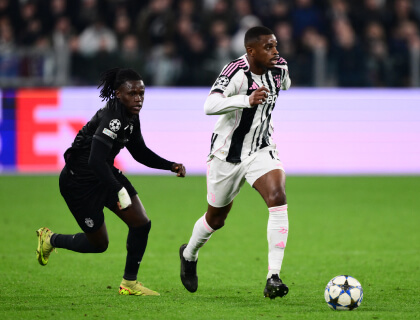
Seems smart… but hardly revolutionary. However, this trend has also bitten deep at the biggest clubs. At Barcelona, Yamal and Pau Cubarsí (both 18) have been regulars and regularly effective on floodlit European nights. Real Madrid’s effervescent playmaker Arda Güler, meanwhile, is closing in on 30 appearances in UEFA competitions at the age of 20, having started each of Los Blancos’ first four Champions League matches this season. And did you know that Kenan Yıldız, 20, recently became Juventus’ youngest-ever captain?

Just to set all these young achievers in a bit of context, this competition’s all-time leading scorer, Cristiano Ronaldo (140 goals), only hit the net for the first time in his 27th Champions League match, aged 22.

Anyone who claims to understand all the factors that have moved football’s tectonic plates towards such dramatic change is likely mistaken. This is deep rooted. It’s the product of overlapping sporting and sociological developments, from improvements in the science of tracking young players to changes in the competition itself – more matchdays and more substitutions. But, to a degree, it’s to be enjoyed as much as analysed.

Personally, I subscribe to the idea proposed by ancient Latin scholar Virgil (no, not Van Dijk): “They can because they think they can.”

There’s a brilliant Wayne Rooney anecdote from his Everton days, before he buried a hat-trick on his Champions League debut for Manchester United at the age of 18. The former England forward idolised the Everton first team when he started training with them aged 15, but it wasn’t long before he decided, “I’m better than all these players!”

Warren Zaïre-Emery found his feet quickly too, the 19-year-old Champions League winner with Paris having taken his first steps in the competition at 16: “When you go into the dressing room and see players you’ve watched on TV, and you used to jump up and down when you saw them do amazing things, you’re quite starstruck. But, within a week, you get used to it.”

And here’s Matthijs de Ligt, talking about Ajax’s run to the semi-finals in 2018/19, when the Manchester United defender was only 19: “You’re playing against big-name players, and you begin to realise that you used to look up to them, but now you and your team are competing at their level. It gives you confidence and makes it look like you’re developing faster. The fact is, however, that you already had those skills – it’s just now you’ve been given a stage on which to showcase them.”

They can because they think they can?

The best quote goes to Arda Güler, who’s been playing European football since he was 16: “I may be shy and reserved off the field, but when we go out onto the pitch, my team-mates and I know that age doesn’t matter. We are all the same there – team-mates. I don’t exactly know what happens to me when I go out to play, but I take on a different personality. I go into warrior mode and that contributes a lot to my performance.”

One of the experiences of my life came interviewing Johan Cruyff on stage at the Aspire Summit in Berlin back in 2015. The subject was “Is it still worth having an academy?” and the great man, obviously, argued (brilliantly) in favour.

Another speaker that day was the then Dortmund coach (now England boss) Thomas Tuchel, who began by recalling his push at Stuttgart and Mainz to give youth players the same facilities and treatment as the pros. “Now I’d do it all completely differently,” he said. “I’d make them wash their own kit, I’d turn the air-con off in the dressing room, I’d ensure the team bus broke down occasionally and I’d regularly play those guys out of position – because we are breeding young automatons. Kids who are technically adept but who need to be told what to do, who don’t have solutions.”

Exactly ten years on and Tuchel’s fears have been proven misplaced. The kids ARE alright, as the Who sang. But they are still kids.

I interviewed Lamine Yamal a year apart, aged 16 and 17. Football was the main topic, but so was his personal development. Watching the video of his first interview, he told us: “You can really notice a lot of changes – my hair, my body, my face, everything. Even the way I answered the questions. It was all new to me, but now I’m more used to it. You can see the difference; I look older too. I think I’ve changed a lot. Maybe not so much in terms of my personality, but on the outside, what’s visible, I think it’s changed a lot. I’m proud of how I was a year ago. One thing I couldn’t live without last year is sweets, but this year I can.”

A kid by age, physiology and a few tell-tale habits… but, like so many of his peers around Europe, prodigiously talented and, above all, unquestionably ready for elite football.

What escaped most people’s notice at the time, the joy of the moment obscuring the raw data, was that Mayulu had just become the youngest scorer in a Champions League final for 30 years. In fact, since Patrick Kluivert – aged 18 years, 327 days – prodded home the only goal for Ajax against
AC Milan in 1995, a mere 52 days younger than the jubilant Frenchman was in Munich.

It seemed then to be symbolic of the vibrant, insouciant manner of Paris’ philosophy and athleticism, not least since fellow then-19-year-old Désiré Doué had already scored twice. As soon as this season dawned, however, it became clear that Mayulu’s goal represented the crest of a wave. A wave of young players being ready, and of clubs trusting, risking and benefiting earlier and earlier from teenage talents.

We are witnesses to a revolution – or, at least, an undeniable trend. Evidence? Not only have six of the ten youngest players in this elite competition made their debut in the last six years, but the top three have all joined the list in the last five. And now Arsenal have provided us with the first-ever 15-year-old to grace the Champions League.

Max Dowman made history against Slavia Praha in November, coming on as a substitute aged 15 years, 308 days. There’s no doubting that he looks to be a prodigy. For many of us, it’s incomprehensible to be that good and that ready aged just 15 at a European giant such as Arsenal. However, like Mayulu, Dowman is far from an outlier. The Essex-born winger is simply at the forefront of a seismic change.

Back in 2000/01, Dowman’s current coach Mikel Arteta was one of seven players aged 18 or under to taste action in the world’s most demanding club competition. This season, that figure had reached 30 after only four matchdays. Of course, not every newcomer will flourish on the biggest stage, but consider this: all five of the youngest scorers in the Champions League era have hit the net in the last six years – and three of them in the last two. This phenomenon is picking up pace.

In fact, while the height of precocity remains Ansu Fati’s superb winner at the San Siro for Barcelona against Inter in 2019 (poor old Inter keep featuring!), Lamine Yamal’s maiden Champions League goal in September 2024 was just 28 days shy of breaking that record.

I think it’s a fair argument that it’s less surprising when clubs without ‘behemoth’ finances rely on young talent. There are plenty of case studies this season – such as Sporting CP winger Geovany Quenda (18), Atalanta defender Honest Ahanor (17) and Ajax midfielder Jorthy Mokio (17). Or take Kairat Almaty forward Dastan Satpayev, who helped steer the Kazakh club through Champions League qualifying at 16. These are proud but more financially restricted sides finding it shrewd to trust in youth.

Read the full story
Sign up now to get access to this and every premium feature on Champions Journal. You will also get access to member-only competitions and offers. And you get all of that completely free!
“I may be shy and reserved off the field, but when we go out onto the pitch, my team-mates and I know that age doesn’t matter. We are all the same there – team-mates. I don’t exactly know what happens to me when I go out to play, but I take on a different personality. I go into warrior mode and that contributes a lot to my performance.”
Insight

Seems smart… but hardly revolutionary. However, this trend has also bitten deep at the biggest clubs. At Barcelona, Yamal and Pau Cubarsí (both 18) have been regulars and regularly effective on floodlit European nights. Real Madrid’s effervescent playmaker Arda Güler, meanwhile, is closing in on 30 appearances in UEFA competitions at the age of 20, having started each of Los Blancos’ first four Champions League matches this season. And did you know that Kenan Yıldız, 20, recently became Juventus’ youngest-ever captain?

Just to set all these young achievers in a bit of context, this competition’s all-time leading scorer, Cristiano Ronaldo (140 goals), only hit the net for the first time in his 27th Champions League match, aged 22.

Anyone who claims to understand all the factors that have moved football’s tectonic plates towards such dramatic change is likely mistaken. This is deep rooted. It’s the product of overlapping sporting and sociological developments, from improvements in the science of tracking young players to changes in the competition itself – more matchdays and more substitutions. But, to a degree, it’s to be enjoyed as much as analysed.

Personally, I subscribe to the idea proposed by ancient Latin scholar Virgil (no, not Van Dijk): “They can because they think they can.”

There’s a brilliant Wayne Rooney anecdote from his Everton days, before he buried a hat-trick on his Champions League debut for Manchester United at the age of 18. The former England forward idolised the Everton first team when he started training with them aged 15, but it wasn’t long before he decided, “I’m better than all these players!”

Warren Zaïre-Emery found his feet quickly too, the 19-year-old Champions League winner with Paris having taken his first steps in the competition at 16: “When you go into the dressing room and see players you’ve watched on TV, and you used to jump up and down when you saw them do amazing things, you’re quite starstruck. But, within a week, you get used to it.”

And here’s Matthijs de Ligt, talking about Ajax’s run to the semi-finals in 2018/19, when the Manchester United defender was only 19: “You’re playing against big-name players, and you begin to realise that you used to look up to them, but now you and your team are competing at their level. It gives you confidence and makes it look like you’re developing faster. The fact is, however, that you already had those skills – it’s just now you’ve been given a stage on which to showcase them.”

They can because they think they can?

The best quote goes to Arda Güler, who’s been playing European football since he was 16: “I may be shy and reserved off the field, but when we go out onto the pitch, my team-mates and I know that age doesn’t matter. We are all the same there – team-mates. I don’t exactly know what happens to me when I go out to play, but I take on a different personality. I go into warrior mode and that contributes a lot to my performance.”

One of the experiences of my life came interviewing Johan Cruyff on stage at the Aspire Summit in Berlin back in 2015. The subject was “Is it still worth having an academy?” and the great man, obviously, argued (brilliantly) in favour.

Another speaker that day was the then Dortmund coach (now England boss) Thomas Tuchel, who began by recalling his push at Stuttgart and Mainz to give youth players the same facilities and treatment as the pros. “Now I’d do it all completely differently,” he said. “I’d make them wash their own kit, I’d turn the air-con off in the dressing room, I’d ensure the team bus broke down occasionally and I’d regularly play those guys out of position – because we are breeding young automatons. Kids who are technically adept but who need to be told what to do, who don’t have solutions.”

Exactly ten years on and Tuchel’s fears have been proven misplaced. The kids ARE alright, as the Who sang. But they are still kids.

I interviewed Lamine Yamal a year apart, aged 16 and 17. Football was the main topic, but so was his personal development. Watching the video of his first interview, he told us: “You can really notice a lot of changes – my hair, my body, my face, everything. Even the way I answered the questions. It was all new to me, but now I’m more used to it. You can see the difference; I look older too. I think I’ve changed a lot. Maybe not so much in terms of my personality, but on the outside, what’s visible, I think it’s changed a lot. I’m proud of how I was a year ago. One thing I couldn’t live without last year is sweets, but this year I can.”

A kid by age, physiology and a few tell-tale habits… but, like so many of his peers around Europe, prodigiously talented and, above all, unquestionably ready for elite football.

What escaped most people’s notice at the time, the joy of the moment obscuring the raw data, was that Mayulu had just become the youngest scorer in a Champions League final for 30 years. In fact, since Patrick Kluivert – aged 18 years, 327 days – prodded home the only goal for Ajax against
AC Milan in 1995, a mere 52 days younger than the jubilant Frenchman was in Munich.

It seemed then to be symbolic of the vibrant, insouciant manner of Paris’ philosophy and athleticism, not least since fellow then-19-year-old Désiré Doué had already scored twice. As soon as this season dawned, however, it became clear that Mayulu’s goal represented the crest of a wave. A wave of young players being ready, and of clubs trusting, risking and benefiting earlier and earlier from teenage talents.

We are witnesses to a revolution – or, at least, an undeniable trend. Evidence? Not only have six of the ten youngest players in this elite competition made their debut in the last six years, but the top three have all joined the list in the last five. And now Arsenal have provided us with the first-ever 15-year-old to grace the Champions League.

Max Dowman made history against Slavia Praha in November, coming on as a substitute aged 15 years, 308 days. There’s no doubting that he looks to be a prodigy. For many of us, it’s incomprehensible to be that good and that ready aged just 15 at a European giant such as Arsenal. However, like Mayulu, Dowman is far from an outlier. The Essex-born winger is simply at the forefront of a seismic change.

Back in 2000/01, Dowman’s current coach Mikel Arteta was one of seven players aged 18 or under to taste action in the world’s most demanding club competition. This season, that figure had reached 30 after only four matchdays. Of course, not every newcomer will flourish on the biggest stage, but consider this: all five of the youngest scorers in the Champions League era have hit the net in the last six years – and three of them in the last two. This phenomenon is picking up pace.

In fact, while the height of precocity remains Ansu Fati’s superb winner at the San Siro for Barcelona against Inter in 2019 (poor old Inter keep featuring!), Lamine Yamal’s maiden Champions League goal in September 2024 was just 28 days shy of breaking that record.

I think it’s a fair argument that it’s less surprising when clubs without ‘behemoth’ finances rely on young talent. There are plenty of case studies this season – such as Sporting CP winger Geovany Quenda (18), Atalanta defender Honest Ahanor (17) and Ajax midfielder Jorthy Mokio (17). Or take Kairat Almaty forward Dastan Satpayev, who helped steer the Kazakh club through Champions League qualifying at 16. These are proud but more financially restricted sides finding it shrewd to trust in youth.

“I may be shy and reserved off the field, but when we go out onto the pitch, my team-mates and I know that age doesn’t matter. We are all the same there – team-mates. I don’t exactly know what happens to me when I go out to play, but I take on a different personality. I go into warrior mode and that contributes a lot to my performance.”
Insight

Seems smart… but hardly revolutionary. However, this trend has also bitten deep at the biggest clubs. At Barcelona, Yamal and Pau Cubarsí (both 18) have been regulars and regularly effective on floodlit European nights. Real Madrid’s effervescent playmaker Arda Güler, meanwhile, is closing in on 30 appearances in UEFA competitions at the age of 20, having started each of Los Blancos’ first four Champions League matches this season. And did you know that Kenan Yıldız, 20, recently became Juventus’ youngest-ever captain?

Just to set all these young achievers in a bit of context, this competition’s all-time leading scorer, Cristiano Ronaldo (140 goals), only hit the net for the first time in his 27th Champions League match, aged 22.

Anyone who claims to understand all the factors that have moved football’s tectonic plates towards such dramatic change is likely mistaken. This is deep rooted. It’s the product of overlapping sporting and sociological developments, from improvements in the science of tracking young players to changes in the competition itself – more matchdays and more substitutions. But, to a degree, it’s to be enjoyed as much as analysed.

Personally, I subscribe to the idea proposed by ancient Latin scholar Virgil (no, not Van Dijk): “They can because they think they can.”

There’s a brilliant Wayne Rooney anecdote from his Everton days, before he buried a hat-trick on his Champions League debut for Manchester United at the age of 18. The former England forward idolised the Everton first team when he started training with them aged 15, but it wasn’t long before he decided, “I’m better than all these players!”

Warren Zaïre-Emery found his feet quickly too, the 19-year-old Champions League winner with Paris having taken his first steps in the competition at 16: “When you go into the dressing room and see players you’ve watched on TV, and you used to jump up and down when you saw them do amazing things, you’re quite starstruck. But, within a week, you get used to it.”

And here’s Matthijs de Ligt, talking about Ajax’s run to the semi-finals in 2018/19, when the Manchester United defender was only 19: “You’re playing against big-name players, and you begin to realise that you used to look up to them, but now you and your team are competing at their level. It gives you confidence and makes it look like you’re developing faster. The fact is, however, that you already had those skills – it’s just now you’ve been given a stage on which to showcase them.”

They can because they think they can?

The best quote goes to Arda Güler, who’s been playing European football since he was 16: “I may be shy and reserved off the field, but when we go out onto the pitch, my team-mates and I know that age doesn’t matter. We are all the same there – team-mates. I don’t exactly know what happens to me when I go out to play, but I take on a different personality. I go into warrior mode and that contributes a lot to my performance.”

One of the experiences of my life came interviewing Johan Cruyff on stage at the Aspire Summit in Berlin back in 2015. The subject was “Is it still worth having an academy?” and the great man, obviously, argued (brilliantly) in favour.

Another speaker that day was the then Dortmund coach (now England boss) Thomas Tuchel, who began by recalling his push at Stuttgart and Mainz to give youth players the same facilities and treatment as the pros. “Now I’d do it all completely differently,” he said. “I’d make them wash their own kit, I’d turn the air-con off in the dressing room, I’d ensure the team bus broke down occasionally and I’d regularly play those guys out of position – because we are breeding young automatons. Kids who are technically adept but who need to be told what to do, who don’t have solutions.”

Exactly ten years on and Tuchel’s fears have been proven misplaced. The kids ARE alright, as the Who sang. But they are still kids.

I interviewed Lamine Yamal a year apart, aged 16 and 17. Football was the main topic, but so was his personal development. Watching the video of his first interview, he told us: “You can really notice a lot of changes – my hair, my body, my face, everything. Even the way I answered the questions. It was all new to me, but now I’m more used to it. You can see the difference; I look older too. I think I’ve changed a lot. Maybe not so much in terms of my personality, but on the outside, what’s visible, I think it’s changed a lot. I’m proud of how I was a year ago. One thing I couldn’t live without last year is sweets, but this year I can.”

A kid by age, physiology and a few tell-tale habits… but, like so many of his peers around Europe, prodigiously talented and, above all, unquestionably ready for elite football.

Insight
'It felt like winning the lottery'

From keeping out goals to scoring them, over the decades some of the Champions League’s biggest names have announced their arrival with eye-catching feats before their 20th birthday

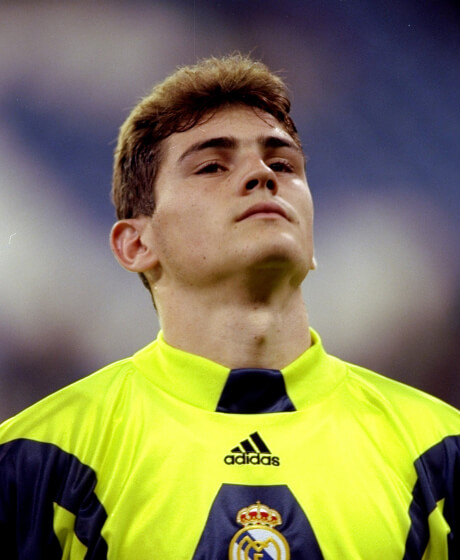
Imagine you’re 16 years old and sitting in a classroom. No doubt bored out of your mind. Then in comes the headmaster, a hint of panic and excitement in his voice as he tells you to drop everything and take a taxi to the airport – Real Madrid need you for a Champions League game in Norway. For many teenagers, it’s the stuff of daydream fantasy. For Iker Casillas, it was his introduction to the big time.

“It felt like winning the lottery,” he later recalled. “I left school, went home, changed my clothes, got in a taxi to Barajas and I met all the stars – everything you thought impossible when you were a kid.”  

The young goalkeeper remained on the bench as Madrid lost 2-0 away to Rosenborg, but he did not have to wait long for his chance, emerging as first choice at the age of 18 during the 1999/2000 campaign. “His maturity is peculiar,” said Manchester United boss Sir Alex Ferguson after one of Casillas’ 12 Champions League outings that season, which ended with Madrid beating Valencia 3-0 in the final, just four days after their fresh-faced custodian had turned 19.

If Casillas remains the youngest keeper to win the Champions League, the record for youngest final goalscorer is also getting on in years. Patrick Kluivert began the 1995 showpiece on the bench for Ajax, but his mother Lidwina had promised coach Louis van Gaal that her son would nab the winner against AC Milan – and so he did, Kluivert poking in the only goal of the game with five minutes remaining.

Remarkably, the powerful forward was one of three teenagers in that youthful Ajax side. Future midfield great Clarence Seedorf started the Vienna final aged 19, later being replaced by Nwankwo Kanu, still the youngest player to lift the trophy in the Champions League era (18 years, 296 days).  

A gamble? Far from it. “Milan were more experienced than us,” explained Van Gaal. “That’s why I put two 18-year-old boys on the field in the second half, and they won it for us.” Indeed, the Dutch giants have retained their faith in youth ever since, notably making Matthijs de Ligt the youngest-ever Champions League captain at the age of 19 in 2019.

While scoring the winner in a final is hard to beat for a teenage tyro, notching a hat-trick on your Champions League debut is nothing to sniff at either. Erling Haaland has been chopping up the record books in recent years, proving it was no fluke when he terrorised Genk as a 19-year-old in 2019, hitting three goals in his first Champions League appearance with Salzburg. As team-mate Maximilian Wöber correctly predicted, “He’s going to become one of the best strikers in the world.”

The hype will have felt familiar to Wayne Rooney, who was even younger at 18 when he marked his own Champions League bow for Manchester United with a hat-trick against Fenerbahçe in 2004. But while the English press went into a frenzy, Sir Alex struck a note of caution, urging fans “to allow the boy to develop naturally without too much public attention”.

It was shrewd advice, given the long list of teen prospects who have seized the limelight only to fall away. Early exposure can be a curse as much as a blessing – though, in Rooney’s case, Rio Ferdinand wasn’t too concerned. “I don’t think he knows what pressure is,” remarked the United defender, hinting at the fearlessness that can fuel outrageous feats from young stars.  

Examples abound, from a twinkle-toed prodigy named Lionel Messi opening his account against Panathinaikos at the age of 18 to Jude Bellingham commanding the midfield for Dortmund at 17. After all, while every coach must judge how their player will cope with the occasion, sometimes a talent is too overwhelming to keep wrapped in cotton wool.

Supreme ability and youthful exuberance are a potent combination – and perhaps no teenager better demonstrated that on a regular basis than Kylian Mbappé. The French phenomenon plundered a record 13 Champions League goals before his 20th birthday, kicking off with home-and-away efforts for Monaco against Manchester City in 2016/17. “I must confess I don’t know him,” City midfielder Kevin De Bruyne had admitted before that round of 16 tie. Like the rest of us, he knows now.

Insight
'It felt like winning the lottery'

From keeping out goals to scoring them, over the decades some of the Champions League’s biggest names have announced their arrival with eye-catching feats before their 20th birthday

Imagine you’re 16 years old and sitting in a classroom. No doubt bored out of your mind. Then in comes the headmaster, a hint of panic and excitement in his voice as he tells you to drop everything and take a taxi to the airport – Real Madrid need you for a Champions League game in Norway. For many teenagers, it’s the stuff of daydream fantasy. For Iker Casillas, it was his introduction to the big time.

“It felt like winning the lottery,” he later recalled. “I left school, went home, changed my clothes, got in a taxi to Barajas and I met all the stars – everything you thought impossible when you were a kid.”  

The young goalkeeper remained on the bench as Madrid lost 2-0 away to Rosenborg, but he did not have to wait long for his chance, emerging as first choice at the age of 18 during the 1999/2000 campaign. “His maturity is peculiar,” said Manchester United boss Sir Alex Ferguson after one of Casillas’ 12 Champions League outings that season, which ended with Madrid beating Valencia 3-0 in the final, just four days after their fresh-faced custodian had turned 19.

If Casillas remains the youngest keeper to win the Champions League, the record for youngest final goalscorer is also getting on in years. Patrick Kluivert began the 1995 showpiece on the bench for Ajax, but his mother Lidwina had promised coach Louis van Gaal that her son would nab the winner against AC Milan – and so he did, Kluivert poking in the only goal of the game with five minutes remaining.

Remarkably, the powerful forward was one of three teenagers in that youthful Ajax side. Future midfield great Clarence Seedorf started the Vienna final aged 19, later being replaced by Nwankwo Kanu, still the youngest player to lift the trophy in the Champions League era (18 years, 296 days).  

A gamble? Far from it. “Milan were more experienced than us,” explained Van Gaal. “That’s why I put two 18-year-old boys on the field in the second half, and they won it for us.” Indeed, the Dutch giants have retained their faith in youth ever since, notably making Matthijs de Ligt the youngest-ever Champions League captain at the age of 19 in 2019.

While scoring the winner in a final is hard to beat for a teenage tyro, notching a hat-trick on your Champions League debut is nothing to sniff at either. Erling Haaland has been chopping up the record books in recent years, proving it was no fluke when he terrorised Genk as a 19-year-old in 2019, hitting three goals in his first Champions League appearance with Salzburg. As team-mate Maximilian Wöber correctly predicted, “He’s going to become one of the best strikers in the world.”

The hype will have felt familiar to Wayne Rooney, who was even younger at 18 when he marked his own Champions League bow for Manchester United with a hat-trick against Fenerbahçe in 2004. But while the English press went into a frenzy, Sir Alex struck a note of caution, urging fans “to allow the boy to develop naturally without too much public attention”.

It was shrewd advice, given the long list of teen prospects who have seized the limelight only to fall away. Early exposure can be a curse as much as a blessing – though, in Rooney’s case, Rio Ferdinand wasn’t too concerned. “I don’t think he knows what pressure is,” remarked the United defender, hinting at the fearlessness that can fuel outrageous feats from young stars.  

Examples abound, from a twinkle-toed prodigy named Lionel Messi opening his account against Panathinaikos at the age of 18 to Jude Bellingham commanding the midfield for Dortmund at 17. After all, while every coach must judge how their player will cope with the occasion, sometimes a talent is too overwhelming to keep wrapped in cotton wool.

Supreme ability and youthful exuberance are a potent combination – and perhaps no teenager better demonstrated that on a regular basis than Kylian Mbappé. The French phenomenon plundered a record 13 Champions League goals before his 20th birthday, kicking off with home-and-away efforts for Monaco against Manchester City in 2016/17. “I must confess I don’t know him,” City midfielder Kevin De Bruyne had admitted before that round of 16 tie. Like the rest of us, he knows now.

Insight
'It felt like winning the lottery'

From keeping out goals to scoring them, over the decades some of the Champions League’s biggest names have announced their arrival with eye-catching feats before their 20th birthday

Imagine you’re 16 years old and sitting in a classroom. No doubt bored out of your mind. Then in comes the headmaster, a hint of panic and excitement in his voice as he tells you to drop everything and take a taxi to the airport – Real Madrid need you for a Champions League game in Norway. For many teenagers, it’s the stuff of daydream fantasy. For Iker Casillas, it was his introduction to the big time.

“It felt like winning the lottery,” he later recalled. “I left school, went home, changed my clothes, got in a taxi to Barajas and I met all the stars – everything you thought impossible when you were a kid.”  

The young goalkeeper remained on the bench as Madrid lost 2-0 away to Rosenborg, but he did not have to wait long for his chance, emerging as first choice at the age of 18 during the 1999/2000 campaign. “His maturity is peculiar,” said Manchester United boss Sir Alex Ferguson after one of Casillas’ 12 Champions League outings that season, which ended with Madrid beating Valencia 3-0 in the final, just four days after their fresh-faced custodian had turned 19.

If Casillas remains the youngest keeper to win the Champions League, the record for youngest final goalscorer is also getting on in years. Patrick Kluivert began the 1995 showpiece on the bench for Ajax, but his mother Lidwina had promised coach Louis van Gaal that her son would nab the winner against AC Milan – and so he did, Kluivert poking in the only goal of the game with five minutes remaining.

Remarkably, the powerful forward was one of three teenagers in that youthful Ajax side. Future midfield great Clarence Seedorf started the Vienna final aged 19, later being replaced by Nwankwo Kanu, still the youngest player to lift the trophy in the Champions League era (18 years, 296 days).  

A gamble? Far from it. “Milan were more experienced than us,” explained Van Gaal. “That’s why I put two 18-year-old boys on the field in the second half, and they won it for us.” Indeed, the Dutch giants have retained their faith in youth ever since, notably making Matthijs de Ligt the youngest-ever Champions League captain at the age of 19 in 2019.

While scoring the winner in a final is hard to beat for a teenage tyro, notching a hat-trick on your Champions League debut is nothing to sniff at either. Erling Haaland has been chopping up the record books in recent years, proving it was no fluke when he terrorised Genk as a 19-year-old in 2019, hitting three goals in his first Champions League appearance with Salzburg. As team-mate Maximilian Wöber correctly predicted, “He’s going to become one of the best strikers in the world.”

The hype will have felt familiar to Wayne Rooney, who was even younger at 18 when he marked his own Champions League bow for Manchester United with a hat-trick against Fenerbahçe in 2004. But while the English press went into a frenzy, Sir Alex struck a note of caution, urging fans “to allow the boy to develop naturally without too much public attention”.

It was shrewd advice, given the long list of teen prospects who have seized the limelight only to fall away. Early exposure can be a curse as much as a blessing – though, in Rooney’s case, Rio Ferdinand wasn’t too concerned. “I don’t think he knows what pressure is,” remarked the United defender, hinting at the fearlessness that can fuel outrageous feats from young stars.  

Examples abound, from a twinkle-toed prodigy named Lionel Messi opening his account against Panathinaikos at the age of 18 to Jude Bellingham commanding the midfield for Dortmund at 17. After all, while every coach must judge how their player will cope with the occasion, sometimes a talent is too overwhelming to keep wrapped in cotton wool.

Supreme ability and youthful exuberance are a potent combination – and perhaps no teenager better demonstrated that on a regular basis than Kylian Mbappé. The French phenomenon plundered a record 13 Champions League goals before his 20th birthday, kicking off with home-and-away efforts for Monaco against Manchester City in 2016/17. “I must confess I don’t know him,” City midfielder Kevin De Bruyne had admitted before that round of 16 tie. Like the rest of us, he knows now.

To access this article, as well as all CJ+ content and competitions, you will need a subscription to Champions Journal.
Already a subscriber? Sign in
close
END OF JANUARY SALE
christmas offer
Christmas CHEER
Up to 40% off
Start shopping
50% off!
Win two tickets to the UEFA Champions League final
And receive a free Champions Travel
eSIM when you enter
enter now
0
Days
0
Hrs
0
Mins
0
Secs
This element will display when the countdown is finished.