
Keeping it Real

As Real Betis celebrate their long-awaited return to the Champions League, Simon Hart soaks up their rich history at the oldest supporters’ club in Spain

Cities
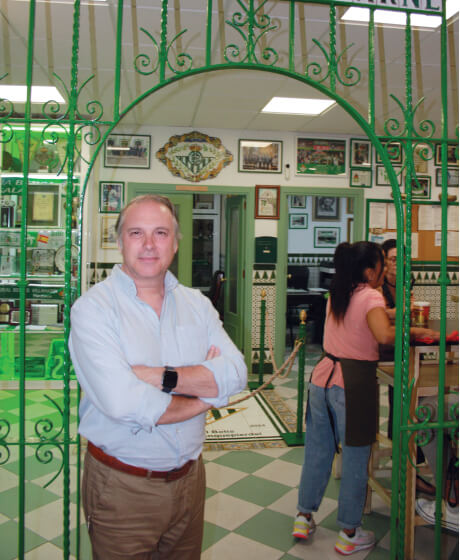
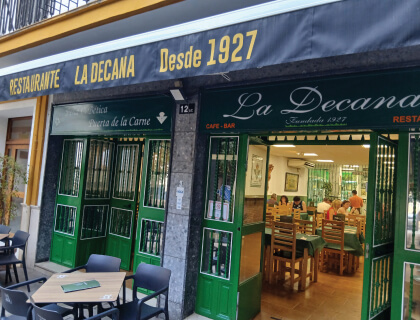
It is 11 o’clock on a summer night in Seville and I am sitting in La Decana, the restaurant adjoining the oldest supporters’ club in Spanish football. The club – or peña as such places are called here – goes by the name of the Puerta de la Carne, taken from the street on which it stands. It is 99 years old and belongs to fans of Real Betis.

My host, Antonio F Tristancho, is a director of the peña – and the man currently explaining to me the concept of manquepierda, a term key to understanding the essence of Seville’s green-and-white half. It is a motto that originated with a song that members of this very peña sang more than half a century ago during a particularly fallow period for their club in the 1940s and ’50s. Today it has been distilled to “Viva el Betis, manque pierda” – literally, long live Betis, even if they lose. It is one of the most famous slogans in Spanish football, something Antonio describes as a “cry of faith”.

“There are people who say it’s defeatist, but I don’t see it like that,” he goes on. “Defeats hurt us, of course. But the main thing is that the next day we’re still with our team.”

Betis are looking forward to their second-ever Champions League campaign this coming season – 21 years after the first – yet despite their admirable consistency under coach Manuel Pellegrini, who has overseen an unprecedented sequence of European qualification for six seasons running, béticos (as Betis fans are known) have seen too many ups and downs to get too giddy.

The history around me in La Decana (translation: The Doyenne) underlines the point. On the wall beside our table is a painting of the Betis team on the day they won the club’s only league title in Santander in 1935. Civil war broke out the following year and that team was soon no more. “It was full of Basque players who went into exile as they were Republican,” explains Antonio. “Betis’ stadium was turned into a military training camp and there are photos of Italian troops with cannons there.”

“Betis won their only league title in 1935. Civil war broke out the following year”
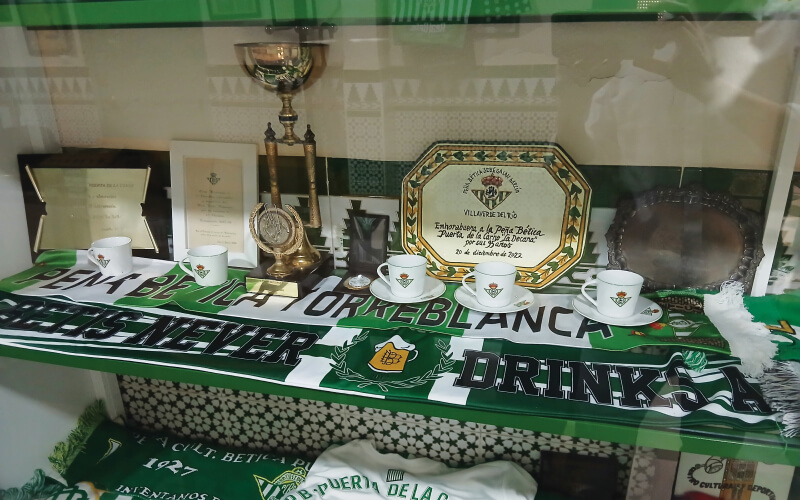
The peña is a treasure trove of Betis pics and merch, with delicious food next door

If that were not enough, he gives me the example of Betis’ first Copa del Rey-winning team from 1976/77, who ended up getting relegated the following season. “But we’ve survived,” he adds, “and that’s the motto of Betis again – manquepierda. In spite of everything, we’re here. And we’re in good health today.”

There feels no better place to be immersed in Betis history than this welcoming spot, located on the edge of Seville’s old town and planning its 100th birthday celebrations next autumn. The Andalusian ambience is enhanced by the green-and-white ceramic tiles on the walls and the green wrought-iron railings from floor to ceiling which separate the restaurant from the supporters’ club bar, library and meeting room. “This is a place where all are welcome to eat,” says Antonio, before adding just one exception: fans of teams in direct opposition to Betis on any given matchday.

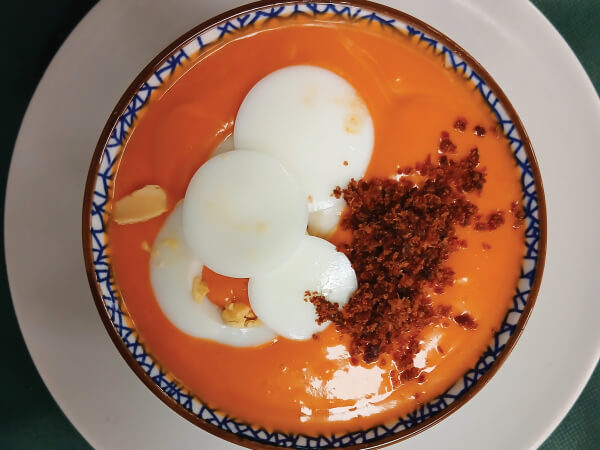
The peña dates back to 1927, though it has been based at this venue since the 1970s and I have already had the full tour from Antonio, before sitting down to a meal that includes Russian salad, a tomato and tuna salad, and a cool bowl of salmorejo – a creamy cousin of gazpacho containing tomato, breadcrumbs, olive oil and a touch of garlic, with diced ham and sliced egg on top.

According to the Federación de Peñas Béticas, the team have around 600 official supporters’ clubs all over Spain, including around 40 in Catalonia, owing to the high number of Andalusians who migrated to the northeast for work. With some 1,200 members, this is the largest of all. It is certainly the only one to have received the highest honour from the city of Seville, a gold medal awarded in recognition of its longevity.

There is much to see inside. Antonio takes me around the library, whose display cases feature the menu of the meal organised to celebrate promotion to the top flight in 1958 – bringing an end to the post-war slide that included seven years in the third tier, when manquepierda was never more needed.

In the meeting room next door is a big screen on which members can watch matches. The walls bear a selection of photographs of popular players from down the years, including several who are honorary members of this peña – such as 1980s favourite Rafael Gordillo and much-loved winger Joaquín, the club’s record appearance-maker.

There is even more memorabilia in the bar area, such as a framed piece of goal net from their 2022 Copa del Rey final triumph – and a boot that belonged to Gastón Casas, the Argentinian forward whose two goals at Real Jaén in June 2001 secured another promotion back to the top flight. “One of our members, Carlos Lechuga, gave it to us,” Antonio tells me. “He ran onto the pitch and grabbed his boot and kept it. We always said that when Gastón Casas came back to Seville he should visit us, and he did that recently and saw his boot again.”

It is little wonder Casas came back; the only surprise for me, given the warm hospitality and fine food I’ve enjoyed here, is that it took him so long. Ahead of one of those upcoming Champions League assignments, I’ll definitely be dropping back in for more.

My host, Antonio F Tristancho, is a director of the peña – and the man currently explaining to me the concept of manquepierda, a term key to understanding the essence of Seville’s green-and-white half. It is a motto that originated with a song that members of this very peña sang more than half a century ago during a particularly fallow period for their club in the 1940s and ’50s. Today it has been distilled to “Viva el Betis, manque pierda” – literally, long live Betis, even if they lose. It is one of the most famous slogans in Spanish football, something Antonio describes as a “cry of faith”.

“There are people who say it’s defeatist, but I don’t see it like that,” he goes on. “Defeats hurt us, of course. But the main thing is that the next day we’re still with our team.”

Betis are looking forward to their second-ever Champions League campaign this coming season – 21 years after the first – yet despite their admirable consistency under coach Manuel Pellegrini, who has overseen an unprecedented sequence of European qualification for six seasons running, béticos (as Betis fans are known) have seen too many ups and downs to get too giddy.

The history around me in La Decana (translation: The Doyenne) underlines the point. On the wall beside our table is a painting of the Betis team on the day they won the club’s only league title in Santander in 1935. Civil war broke out the following year and that team was soon no more. “It was full of Basque players who went into exile as they were Republican,” explains Antonio. “Betis’ stadium was turned into a military training camp and there are photos of Italian troops with cannons there.”

Read the full story
Sign up now to get access to this and every premium feature on Champions Journal. You will also get access to member-only competitions and offers. And you get all of that completely free!
“Betis won their only league title in 1935. Civil war broke out the following year”
The peña is a treasure trove of Betis pics and merch, with delicious food next door

If that were not enough, he gives me the example of Betis’ first Copa del Rey-winning team from 1976/77, who ended up getting relegated the following season. “But we’ve survived,” he adds, “and that’s the motto of Betis again – manquepierda. In spite of everything, we’re here. And we’re in good health today.”

There feels no better place to be immersed in Betis history than this welcoming spot, located on the edge of Seville’s old town and planning its 100th birthday celebrations next autumn. The Andalusian ambience is enhanced by the green-and-white ceramic tiles on the walls and the green wrought-iron railings from floor to ceiling which separate the restaurant from the supporters’ club bar, library and meeting room. “This is a place where all are welcome to eat,” says Antonio, before adding just one exception: fans of teams in direct opposition to Betis on any given matchday.

The peña dates back to 1927, though it has been based at this venue since the 1970s and I have already had the full tour from Antonio, before sitting down to a meal that includes Russian salad, a tomato and tuna salad, and a cool bowl of salmorejo – a creamy cousin of gazpacho containing tomato, breadcrumbs, olive oil and a touch of garlic, with diced ham and sliced egg on top.

According to the Federación de Peñas Béticas, the team have around 600 official supporters’ clubs all over Spain, including around 40 in Catalonia, owing to the high number of Andalusians who migrated to the northeast for work. With some 1,200 members, this is the largest of all. It is certainly the only one to have received the highest honour from the city of Seville, a gold medal awarded in recognition of its longevity.

There is much to see inside. Antonio takes me around the library, whose display cases feature the menu of the meal organised to celebrate promotion to the top flight in 1958 – bringing an end to the post-war slide that included seven years in the third tier, when manquepierda was never more needed.

In the meeting room next door is a big screen on which members can watch matches. The walls bear a selection of photographs of popular players from down the years, including several who are honorary members of this peña – such as 1980s favourite Rafael Gordillo and much-loved winger Joaquín, the club’s record appearance-maker.

There is even more memorabilia in the bar area, such as a framed piece of goal net from their 2022 Copa del Rey final triumph – and a boot that belonged to Gastón Casas, the Argentinian forward whose two goals at Real Jaén in June 2001 secured another promotion back to the top flight. “One of our members, Carlos Lechuga, gave it to us,” Antonio tells me. “He ran onto the pitch and grabbed his boot and kept it. We always said that when Gastón Casas came back to Seville he should visit us, and he did that recently and saw his boot again.”

It is little wonder Casas came back; the only surprise for me, given the warm hospitality and fine food I’ve enjoyed here, is that it took him so long. Ahead of one of those upcoming Champions League assignments, I’ll definitely be dropping back in for more.

My host, Antonio F Tristancho, is a director of the peña – and the man currently explaining to me the concept of manquepierda, a term key to understanding the essence of Seville’s green-and-white half. It is a motto that originated with a song that members of this very peña sang more than half a century ago during a particularly fallow period for their club in the 1940s and ’50s. Today it has been distilled to “Viva el Betis, manque pierda” – literally, long live Betis, even if they lose. It is one of the most famous slogans in Spanish football, something Antonio describes as a “cry of faith”.

“There are people who say it’s defeatist, but I don’t see it like that,” he goes on. “Defeats hurt us, of course. But the main thing is that the next day we’re still with our team.”

Betis are looking forward to their second-ever Champions League campaign this coming season – 21 years after the first – yet despite their admirable consistency under coach Manuel Pellegrini, who has overseen an unprecedented sequence of European qualification for six seasons running, béticos (as Betis fans are known) have seen too many ups and downs to get too giddy.

The history around me in La Decana (translation: The Doyenne) underlines the point. On the wall beside our table is a painting of the Betis team on the day they won the club’s only league title in Santander in 1935. Civil war broke out the following year and that team was soon no more. “It was full of Basque players who went into exile as they were Republican,” explains Antonio. “Betis’ stadium was turned into a military training camp and there are photos of Italian troops with cannons there.”

“Betis won their only league title in 1935. Civil war broke out the following year”
The peña is a treasure trove of Betis pics and merch, with delicious food next door

If that were not enough, he gives me the example of Betis’ first Copa del Rey-winning team from 1976/77, who ended up getting relegated the following season. “But we’ve survived,” he adds, “and that’s the motto of Betis again – manquepierda. In spite of everything, we’re here. And we’re in good health today.”

There feels no better place to be immersed in Betis history than this welcoming spot, located on the edge of Seville’s old town and planning its 100th birthday celebrations next autumn. The Andalusian ambience is enhanced by the green-and-white ceramic tiles on the walls and the green wrought-iron railings from floor to ceiling which separate the restaurant from the supporters’ club bar, library and meeting room. “This is a place where all are welcome to eat,” says Antonio, before adding just one exception: fans of teams in direct opposition to Betis on any given matchday.

The peña dates back to 1927, though it has been based at this venue since the 1970s and I have already had the full tour from Antonio, before sitting down to a meal that includes Russian salad, a tomato and tuna salad, and a cool bowl of salmorejo – a creamy cousin of gazpacho containing tomato, breadcrumbs, olive oil and a touch of garlic, with diced ham and sliced egg on top.

According to the Federación de Peñas Béticas, the team have around 600 official supporters’ clubs all over Spain, including around 40 in Catalonia, owing to the high number of Andalusians who migrated to the northeast for work. With some 1,200 members, this is the largest of all. It is certainly the only one to have received the highest honour from the city of Seville, a gold medal awarded in recognition of its longevity.

There is much to see inside. Antonio takes me around the library, whose display cases feature the menu of the meal organised to celebrate promotion to the top flight in 1958 – bringing an end to the post-war slide that included seven years in the third tier, when manquepierda was never more needed.

In the meeting room next door is a big screen on which members can watch matches. The walls bear a selection of photographs of popular players from down the years, including several who are honorary members of this peña – such as 1980s favourite Rafael Gordillo and much-loved winger Joaquín, the club’s record appearance-maker.

There is even more memorabilia in the bar area, such as a framed piece of goal net from their 2022 Copa del Rey final triumph – and a boot that belonged to Gastón Casas, the Argentinian forward whose two goals at Real Jaén in June 2001 secured another promotion back to the top flight. “One of our members, Carlos Lechuga, gave it to us,” Antonio tells me. “He ran onto the pitch and grabbed his boot and kept it. We always said that when Gastón Casas came back to Seville he should visit us, and he did that recently and saw his boot again.”

It is little wonder Casas came back; the only surprise for me, given the warm hospitality and fine food I’ve enjoyed here, is that it took him so long. Ahead of one of those upcoming Champions League assignments, I’ll definitely be dropping back in for more.

Food
Hey, Macarena

More than just the title of a song, Seville’s Macarena neighbourhood is a great destination for food and drink

For a taste of Seville’s bar culture on a matchday, the city’s famous Macarena district is well worth a stop. La Macarena is full of history, sitting inside a stretch of city wall built in Moorish times. Just inside those walls is the eponymous basilica whose Virgin Mary statue is the centrepiece of one of the city’s most famous Easter processions. And a short walk away is Casa Pepito, a tapas bar recommended by a local journalist friend who promised me “the best fried fish in the whole of Seville”.

On the day of my visit, this means pijota – or young hake – along with squid. I also try the anchovies in vinegar with red peppers and that common Spanish-bar staple of spinach with chickpeas. All around are locals having lunch, including one in a Betis shirt whose wearer points cheekily to the crest as he passes Pepe Cruz, the Sevilla-supporting owner who has run this place since 1979. “Here, we’re more rojiblanco [red and white],” Pepe tells me, and evidence comes in the form of pictures of Sevilla players featured among the multitude of framed photos of famous visitors adorning a wall – among them former defender Federico Fazio and winger Pablo Sarabia. (A photo of ex-Barcelona and Spain full-back Jordi Alba also catches the eye.)

Add in the images of religious statues and blue-and-white azulejo tiles and the local flavour could not be any stronger – and that’s before you get to the food. And for Champions Journal readers who do make it here, Pepe recommends not just the fried fish but the lamb’s liver or one of his stews, the latter better left for a day when it’s not 40°C outside.

Food
Hey, Macarena

More than just the title of a song, Seville’s Macarena neighbourhood is a great destination for food and drink

For a taste of Seville’s bar culture on a matchday, the city’s famous Macarena district is well worth a stop. La Macarena is full of history, sitting inside a stretch of city wall built in Moorish times. Just inside those walls is the eponymous basilica whose Virgin Mary statue is the centrepiece of one of the city’s most famous Easter processions. And a short walk away is Casa Pepito, a tapas bar recommended by a local journalist friend who promised me “the best fried fish in the whole of Seville”.

On the day of my visit, this means pijota – or young hake – along with squid. I also try the anchovies in vinegar with red peppers and that common Spanish-bar staple of spinach with chickpeas. All around are locals having lunch, including one in a Betis shirt whose wearer points cheekily to the crest as he passes Pepe Cruz, the Sevilla-supporting owner who has run this place since 1979. “Here, we’re more rojiblanco [red and white],” Pepe tells me, and evidence comes in the form of pictures of Sevilla players featured among the multitude of framed photos of famous visitors adorning a wall – among them former defender Federico Fazio and winger Pablo Sarabia. (A photo of ex-Barcelona and Spain full-back Jordi Alba also catches the eye.)

Add in the images of religious statues and blue-and-white azulejo tiles and the local flavour could not be any stronger – and that’s before you get to the food. And for Champions Journal readers who do make it here, Pepe recommends not just the fried fish but the lamb’s liver or one of his stews, the latter better left for a day when it’s not 40°C outside.

Food
Hey, Macarena

More than just the title of a song, Seville’s Macarena neighbourhood is a great destination for food and drink

For a taste of Seville’s bar culture on a matchday, the city’s famous Macarena district is well worth a stop. La Macarena is full of history, sitting inside a stretch of city wall built in Moorish times. Just inside those walls is the eponymous basilica whose Virgin Mary statue is the centrepiece of one of the city’s most famous Easter processions. And a short walk away is Casa Pepito, a tapas bar recommended by a local journalist friend who promised me “the best fried fish in the whole of Seville”.

On the day of my visit, this means pijota – or young hake – along with squid. I also try the anchovies in vinegar with red peppers and that common Spanish-bar staple of spinach with chickpeas. All around are locals having lunch, including one in a Betis shirt whose wearer points cheekily to the crest as he passes Pepe Cruz, the Sevilla-supporting owner who has run this place since 1979. “Here, we’re more rojiblanco [red and white],” Pepe tells me, and evidence comes in the form of pictures of Sevilla players featured among the multitude of framed photos of famous visitors adorning a wall – among them former defender Federico Fazio and winger Pablo Sarabia. (A photo of ex-Barcelona and Spain full-back Jordi Alba also catches the eye.)

Add in the images of religious statues and blue-and-white azulejo tiles and the local flavour could not be any stronger – and that’s before you get to the food. And for Champions Journal readers who do make it here, Pepe recommends not just the fried fish but the lamb’s liver or one of his stews, the latter better left for a day when it’s not 40°C outside.

To access this article, as well as all CJ+ content and competitions, you will need a subscription to Champions Journal.
Already a subscriber? Login
close
END OF JANUARY SALE
christmas offer
Christmas CHEER
Up to 40% off
Start shopping
50% off!
Win two tickets to the UEFA Champions League final
And receive a free Champions Travel
eSIM when you enter
enter now
0
Days
0
Hrs
0
Mins
0
Secs
This element will display when the countdown is finished.