Final countdown
The sights and sounds of a Champions League final may be familiar terrain to fans watching at home, but what happens in the hours before the cameras start rolling? Six finalists describe what it’s really like awaiting their star turn
INTERVIEWS Lizzie Coan, Simon Hart, Elvir Islamović, Andy James, Patrick Mark
History
Six Champions League finalists describe what it's like in the hours before kick-off in club football's biggest game
'Does anyone want a beer?'
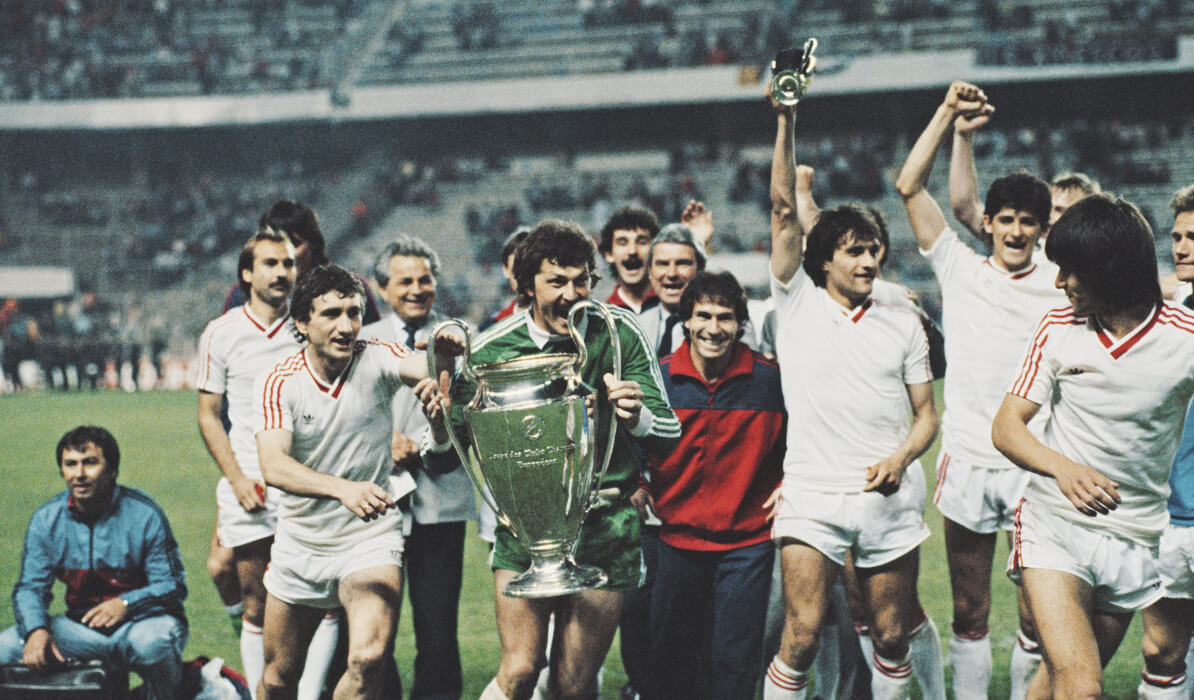
Forest’s idiosyncratic manager Brian Clough had Tony Woodcock and the rest of his squad relaxing before their breakthrough 1-0 triumph over Malmö
“We just took it as any normal game. That was put into us, that it’s just another game. I’m not trying to play it down – of course you know it’s a cup final, a big deal. One of the things that did get to us was all the different stories that were coming from friends: people doing a week’s car journey to get to the game, people camping, people getting flights and boats and everything. They were trying desperately to get there, even if they hadn’t got tickets. We were getting all that fed to us – not through the press but just through people we knew.
“On the way to the game, Clough came down the coach and said, ‘Look, does anyone want a beer?’ And we said no. Whether or not he was joking, we said no. Just at that moment, there were a lot of fans outside the bus, Malmö fans too. And one of them was sending a bit of abuse with his fingers. He’d got two fingers up on both arms, both hands up, and he’s looking at the coach and walking, and he walked straight into a lamp-post. That seemed to release the tension!
“We never got anywhere early for games. Clough would say, ‘Look, we know what we’re doing. We don’t have to go and sit around.’ For the semi-final in Cologne, we wanted to see the stadium before the game. And Clough goes, ‘It’s a stadium. You know what it’s going to be like? It’s going to be packed solid like every other one we play in. It’s a bit of green grass. You’ve seen it all before. We don’t need to go there.’ So we went for a walk in the park.
“We never arrived early for games. Clough would say, ‘We know what we’re doing. We don’t have to go and sit around’”
“It was different with Clough. It was: relax, have a few beers, let’s have a bit of a chat, a few jokes. Then off to bed and get ready for the game. Good players need managing and Clough was excellent at that sort of thing. He knew about his players; they probably call it psychology in this day and age. We were a good bunch of lads and we didn’t really get nervous.
“It was a very hot and sticky night because of this wind that comes down from the mountains into Munich. We weren’t nervous before the game, not that I can remember. I won’t say we were seasoned professionals, because there were people like Viv Anderson and myself who were the younger players in the team, but we had got used to it a little bit. We knew it was a big game, it would be televised, and there weren’t that many televised in those days. But I think we just wanted to get out there and play.
“What surprised us is that when we came out the tunnel, the whole of the right-hand side was just already packed with red and white. And when they saw us come out, it was like... Wow. It was a really good feeling. We were amazed about all the fans who came from England. It was unbelievable.”
‘You win the game in the tunnel'
With Camp Nou a sea of red and black, confidence coursed through Ruud Gullit’s veins ahead of the Rossoneri’s crushing 4-0 defeat of Steaua București
“Nicolae Ceaușescu was head of state in Romania, and I don’t think any of their fans were allowed to go to Barcelona. So all the tickets were Milan’s – 80,000 Milan fans in that stadium. It was unbelievable. When you arrive and see all those red and black flags you get that feeling, a tingling in your body to perform well.
“In the dressing room, everything’s routine. You go in, you put your bag there, you go out on the pitch – it’s automatic. You mentally prepare yourself. You see yourself playing already. I’m not so much aware of what’s going on around me, I’m just very mentally focused on what I have to do. If you see the photographs of Milan at that moment, I can see it in the eyes of all these players. We were unbelievably focused.
“In the dressing room, the players are left alone, because they are in their zone. Never nervous. But you need tension in order to perform. If you don’t have that, you can’t perform. It’s impossible.
“Superstitions are good. Superstitions get you in a certain routine and that routine reminds you of winning. That’s the reason people do that. It sets you in the mind of winning. There’s all kinds of routines: people touch things, people cross [themselves], some people touch the pitch, some people want to go with the left foot… Silvano Ramaccioni, our team manager, always put his right foot first when he stepped out of the bus. And on stairs he always had to put his right foot first on each step. I think he did that for 20 years.
“For me the game started in the corridor standing beside our opponents. That’s where the game was already won or not. You wait for that moment when you can finally get out with your team, you can finally go. You win the game in the tunnel. That’s where your opposition sees you, he feels it.
“Once against England when we passed them in the corridor we heard somebody shouting, I think it was Tony Adams: “Let’s kill the bastards!” And we were laughing. That killed them off in that moment. It gave us a boost. It was funny.
“It’s all about attitude, something to do with a person’s energy. That energy is what people feel. Sometimes the door opens and you don’t even turn around. I don’t even look. I can feel it. You need to use the good energy, the good vibe of being present, of being convinced of yourself and what you’re going to do.”

Tony Woodcock Nottingham Forest, 1979 (above); Ivan Rakitić Barcelona, 2015 (top right); Ruud Gullit AC Milan, 1989 (right)
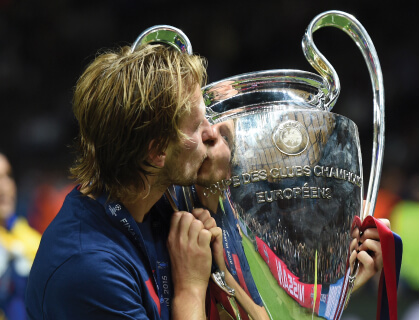

Tony Woodcock Nottingham Forest, 1979 (above); Ivan Rakitić Barcelona, 2015 (top right); Ruud Gullit AC Milan, 1989 (right)
"There weren’t that many games televised in those days. But we just wanted to get out there and play"
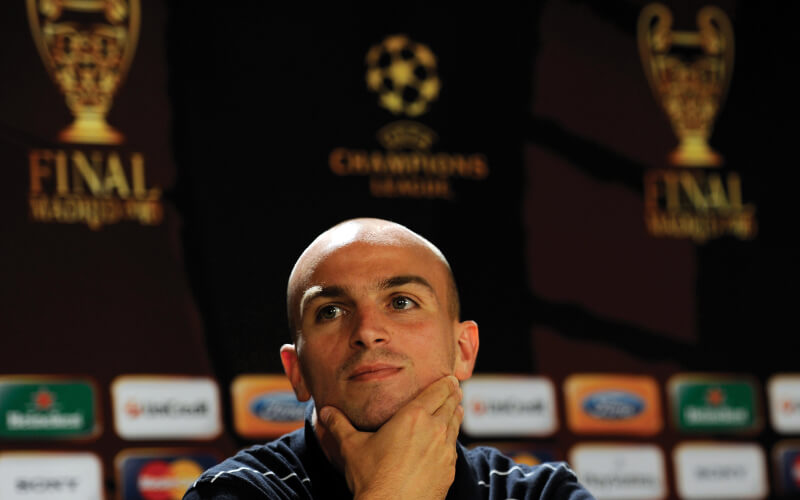
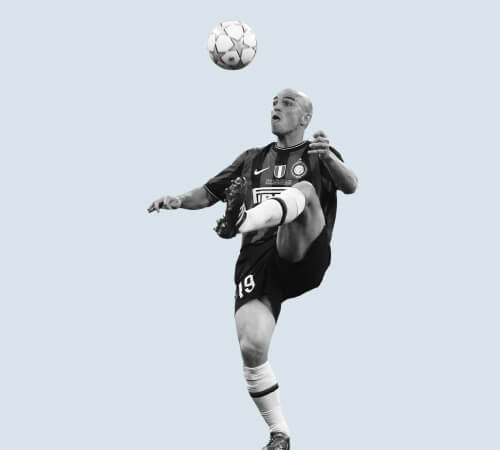
Esteban Cambiasso Inter, 2010
'We were all shaking'
Nerves were jangling for Marcel Desailly, who felt the full weight of the occasion in the lead-up to Marseille’s 1-0 victory against AC Milan
“You have to appreciate what a Champions League final meant for that Marseille side, having lost the final against Red Star Belgrade two years before. The level of stress was high. It was a very special moment – one to relish, first and foremost, but a very stressful one too.
“The morning of the final, we were all shaking. I remember vividly the moments of silence. When we did our short morning city walk after breakfast, everyone was quiet. Players like Rudi Völler and Basile Boli spoke to the entire squad as they were the experienced players, but it was so difficult to cope with pressure. We just couldn’t wait to be in the stadium, walk out on the pitch and perform right away.
“It was a very special moment. one to relish but very stressful too”
“I was 24 at the time, and managing the pre-match stress was difficult for me, including for the short afternoon nap on gameday. Even though we played cards, we couldn’t take our minds off things. Friends were calling us to explain how important that game was. And the more we were told about the magnitude of this game, the more it added to the pressure, which took the form of a national responsibility. It was tough to manage.
“All our conversations involved the event itself. We were no longer able to talk about light-hearted topics like family. Our attention was mainly on the game and the excitement in Marseille, and all the more so when we arrived at the venue. That’s when we understood what was going on. All the way to the stadium, there were Marseille fans around us, ready and flying flags, wearing shirts, and even children were driven by this Marseille madness we all know. It was a really emotional moment.
“As we arrived at the stadium, we were trying to clear our minds. The pre-match meeting with the manager took place in the changing room, at the very last minute, where he unveiled the starting line-up. Finding myself in the starting 11 made my heart pound.”
'We had nobody there to support us'
As Steaua’s players prepared for the biggest match of their lives, they could not have felt more alone
Forty years ago, Steaua Bucureşti became the first team from Eastern Europe to win the European Cup. They did so thanks to an extraordinary performance from their goalkeeper, Helmut Duckadam, who saved four successive spot kicks as Steaua prevailed 2-0 on penalties against Terry Venables’ Barcelona.
As Steaua centre-back Miodrag Belodedici remembers, Barcelona entered the final as strong favourites, yet as the clock ticked away and the game remained goalless, the prospects of an upset grew. “We knew if we got to penalties we had a very good goalkeeper. Helmut Duckadam was excellent at saving penalties in our league and in training too.
“At the start of the game they were on top of us but little by little they started to drop. And then Helmut, our goalkeeper, did what he had to do.” Here Belodedici takes us back to 7 May 1986 in Seville and relives the lead-up to one of the greatest final upsets in European Cup history.
“We were the first Romanian team to play in the final and there was a lot of pressure. Journalists had been telling us that Barcelona were a good team and we were playing them in Seville, so we were thinking primarily about not conceding a lot of goals.
“On the morning of the game, we went out for a walk and people saw us in our tracksuits and were raising their hands and showing us two, three, four fingers – how many goals we were going to be beaten by!
“We went out for a walk and people were raising their hands and showing us two, three, four fingers – how many goals we were going to be beaten by!”
“Steaua were the army club in communist Romania and before leaving Romania, army generals and the minister of defence had come to speak to us, telling us we had to fight and be strong and play well and win. I remember my pulse was racing. We knew if we won, we’d each be given a car. On the day of the game I was very nervous and it was impossible for me to sleep. Who can sleep a siesta on the day of a final?
“I was sharing a room with Gavril Balint and we were walking around the hotel, going down to the reception to kill time. We had books to read and we also had a game that we played with other team-mates – a form of rummy with tiles.
“We’d seen a video of how Barcelona played and in our team meeting, our coach Emerich Jenei spoke about how we had to defend to keep them out. One other thing I remember was our home colours were blue with red, a bit like Barcelona’s blaugrana, but they were the designated home team and so we had a new white kit flown over and had to practise in it.
“On the bus to the stadium, there were people again in the street making hand gestures to us – and the message was that we were going to lose. Then, when we got to the Sánchez-Pizjuán and went out to look at the pitch, the fans in the stadium were whistling us.
“We had nobody there to support us that day apart from a few people from the military who’d flown over with the team and also some staff from the Romanian embassy in Madrid. Otherwise it was all Barcelona fans. And that whistling got even louder later, we could barely hear each other speak once the game began.
“When I look back, I was much more nervous that day than five years later when I played in the final for Crvena Zvezda against Marseille. By then, I was more experienced. I knew how to prepare, how to breathe to calm my nerves. But with Steaua in Seville, there was a lot more emotion – excitement and some fear too.”
'It made me very emotional'
Catching sight of his family in the stands was a poignant jolt for Esteban Cambiasso before his Inter side defeated Bayern München 2-0
“You always feel the same when waking up before a game. It’s tougher to fall asleep because you start thinking about a lot of things, thinking about how you want to perform in this match you’ve always dreamt of playing in. Fears can pop up, such as not putting in the performance you’d hoped for.
“While you’re experiencing that day, you’re not thinking about everything it means and everything that can change in your career. You’re experiencing a matchday, thinking about everything you need to arrive in good shape for the game: the right nutrition, the correct rest, the desired concentration…
“You’re not thinking about everything it means and everything that can change in your career”
“When we arrived, we walked onto the pitch to see what it was like, whether the grass was long, wet or dry, to understand what kind of boots we would wear – longer or shorter studs – and to understand how fast the pitch would play. I remember at that moment seeing my whole family, who had travelled from Argentina: my parents; one of my brothers, who was the only one that could travel due to work issues; some friends, including friends I’d made when I played in Madrid; my wife, who’d arrived from Milan. Seeing my whole family there made me very emotional.
“Fortunately, I went back to the changing room, I calmed down, and then I was ready for the warm-up. That first shock of seeing the stadium and all my loved ones – who know what you’re going through with the tension of the match – definitely had an impact on me, but on my way back to the changing room, I reset and started again.”
'We played a lot of Ludo'
Surrounded by Barça players who had seen it all before, Ivan Rakitić kept calm ahead of the 3-1 win against Juventus by enjoying a board game
“I remember that the atmosphere among us as team-mates was quite relaxed. I slept very well that day, woke up feeling great and followed my usual daily routine. But, of course, it was not just any ordinary game – we were fully aware of the tough challenge that awaited. From the very first moment I woke up, though, there was a strong sense of confidence in our abilities.
“The day itself unfolded quite normally. I managed to relax a little during the day and then, when you’re on the coach from the hotel to the stadium, that’s when you start feeling it in your stomach and it all starts to become very real. But, overall, the whole day felt pretty normal. I felt great, calm and ready for what was awaiting me that evening.
“When you’re on the coach, that’s when you start feeling it in your stomach and it all starts to become very real”
“I could feel that [the more experienced players in the team] had a great deal of confidence and trust in me. They’d already experienced those situations before, so they naturally passed that calmness and sense of readiness on to me. They were all walking around with smiles on their faces, full of positive energy, and that atmosphere spread to the rest of us.
It makes preparing for the match much easier when you have people like that around you. The atmosphere within the squad was incredible, and everything seemed to be going our way at that time.
“[In the build up to kick-off], we did a lot of things, but generally we acted like it was just a regular game ahead of us and we didn’t want to change anything. We played a lot of Ludo on the iPad. The aim was simply to feel as normal as possible. We tried to recreate our usual atmosphere.
“The moment I was looking forward to most was hearing the official Champions League anthem, hearing it and finally getting the match underway. While standing in the tunnel, I almost felt like jumping over the other players just to get out on the pitch and get this whole thing started. All we were thinking was, ‘Let’s step onto the pitch, hear the anthem and let’s start the game.’ That’s what we were most excited about.”
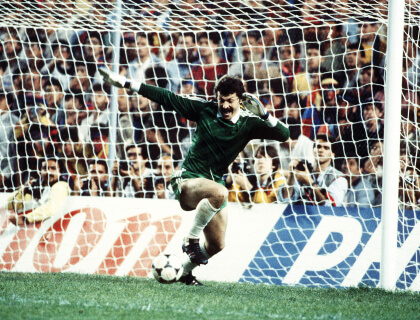

Helmut Duckadam Steaua Bucureşti, 1986 (left); Marcel Desailly Marseille, 1993 (top)
Helmut Duckadam Steaua Bucureşti, 1986 (left); Marcel Desailly Marseille, 1993 (top)
'Does anyone want a beer?'
Forest’s idiosyncratic manager Brian Clough had Tony Woodcock and the rest of his squad relaxing before their breakthrough 1-0 triumph over Malmö
“We just took it as any normal game. That was put into us, that it’s just another game. I’m not trying to play it down – of course you know it’s a cup final, a big deal. One of the things that did get to us was all the different stories that were coming from friends: people doing a week’s car journey to get to the game, people camping, people getting flights and boats and everything. They were trying desperately to get there, even if they hadn’t got tickets. We were getting all that fed to us – not through the press but just through people we knew.
“On the way to the game, Clough came down the coach and said, ‘Look, does anyone want a beer?’ And we said no. Whether or not he was joking, we said no. Just at that moment, there were a lot of fans outside the bus, Malmö fans too. And one of them was sending a bit of abuse with his fingers. He’d got two fingers up on both arms, both hands up, and he’s looking at the coach and walking, and he walked straight into a lamp-post. That seemed to release the tension!
“We never got anywhere early for games. Clough would say, ‘Look, we know what we’re doing. We don’t have to go and sit around.’ For the semi-final in Cologne, we wanted to see the stadium before the game. And Clough goes, ‘It’s a stadium. You know what it’s going to be like? It’s going to be packed solid like every other one we play in. It’s a bit of green grass. You’ve seen it all before. We don’t need to go there.’ So we went for a walk in the park.
“We never arrived early for games. Clough would say, ‘We know what we’re doing. We don’t have to go and sit around’”
“It was different with Clough. It was: relax, have a few beers, let’s have a bit of a chat, a few jokes. Then off to bed and get ready for the game. Good players need managing and Clough was excellent at that sort of thing. He knew about his players; they probably call it psychology in this day and age. We were a good bunch of lads and we didn’t really get nervous.
“It was a very hot and sticky night because of this wind that comes down from the mountains into Munich. We weren’t nervous before the game, not that I can remember. I won’t say we were seasoned professionals, because there were people like Viv Anderson and myself who were the younger players in the team, but we had got used to it a little bit. We knew it was a big game, it would be televised, and there weren’t that many televised in those days. But I think we just wanted to get out there and play.
“What surprised us is that when we came out the tunnel, the whole of the right-hand side was just already packed with red and white. And when they saw us come out, it was like... Wow. It was a really good feeling. We were amazed about all the fans who came from England. It was unbelievable.”
‘You win the game in the tunnel'
With Camp Nou a sea of red and black, confidence coursed through Ruud Gullit’s veins ahead of the Rossoneri’s crushing 4-0 defeat of Steaua București
“Nicolae Ceaușescu was head of state in Romania, and I don’t think any of their fans were allowed to go to Barcelona. So all the tickets were Milan’s – 80,000 Milan fans in that stadium. It was unbelievable. When you arrive and see all those red and black flags you get that feeling, a tingling in your body to perform well.
“In the dressing room, everything’s routine. You go in, you put your bag there, you go out on the pitch – it’s automatic. You mentally prepare yourself. You see yourself playing already. I’m not so much aware of what’s going on around me, I’m just very mentally focused on what I have to do. If you see the photographs of Milan at that moment, I can see it in the eyes of all these players. We were unbelievably focused.
“In the dressing room, the players are left alone, because they are in their zone. Never nervous. But you need tension in order to perform. If you don’t have that, you can’t perform. It’s impossible.
“Superstitions are good. Superstitions get you in a certain routine and that routine reminds you of winning. That’s the reason people do that. It sets you in the mind of winning. There’s all kinds of routines: people touch things, people cross [themselves], some people touch the pitch, some people want to go with the left foot… Silvano Ramaccioni, our team manager, always put his right foot first when he stepped out of the bus. And on stairs he always had to put his right foot first on each step. I think he did that for 20 years.
“For me the game started in the corridor standing beside our opponents. That’s where the game was already won or not. You wait for that moment when you can finally get out with your team, you can finally go. You win the game in the tunnel. That’s where your opposition sees you, he feels it.
“Once against England when we passed them in the corridor we heard somebody shouting, I think it was Tony Adams: “Let’s kill the bastards!” And we were laughing. That killed them off in that moment. It gave us a boost. It was funny.
“It’s all about attitude, something to do with a person’s energy. That energy is what people feel. Sometimes the door opens and you don’t even turn around. I don’t even look. I can feel it. You need to use the good energy, the good vibe of being present, of being convinced of yourself and what you’re going to do.”
Tony Woodcock Nottingham Forest, 1979 (above); Ivan Rakitić Barcelona, 2015 (top right); Ruud Gullit AC Milan, 1989 (right)
Tony Woodcock Nottingham Forest, 1979 (above); Ivan Rakitić Barcelona, 2015 (top right); Ruud Gullit AC Milan, 1989 (right)
Read the full story
Sign up now to get access to this and every premium feature on Champions Journal. You will also get access to member-only competitions and offers. And you get all of that completely free!
"There weren’t that many games televised in those days. But we just wanted to get out there and play"
Esteban Cambiasso Inter, 2010
'It made me very emotional'
Catching sight of his family in the stands was a poignant jolt for Esteban Cambiasso before his Inter side defeated Bayern München 2-0
“You always feel the same when waking up before a game. It’s tougher to fall asleep because you start thinking about a lot of things, thinking about how you want to perform in this match you’ve always dreamt of playing in. Fears can pop up, such as not putting in the performance you’d hoped for.
“While you’re experiencing that day, you’re not thinking about everything it means and everything that can change in your career. You’re experiencing a matchday, thinking about everything you need to arrive in good shape for the game: the right nutrition, the correct rest, the desired concentration…
“You’re not thinking about everything it means and everything that can change in your career”
“When we arrived, we walked onto the pitch to see what it was like, whether the grass was long, wet or dry, to understand what kind of boots we would wear – longer or shorter studs – and to understand how fast the pitch would play. I remember at that moment seeing my whole family, who had travelled from Argentina: my parents; one of my brothers, who was the only one that could travel due to work issues; some friends, including friends I’d made when I played in Madrid; my wife, who’d arrived from Milan. Seeing my whole family there made me very emotional.
“Fortunately, I went back to the changing room, I calmed down, and then I was ready for the warm-up. That first shock of seeing the stadium and all my loved ones – who know what you’re going through with the tension of the match – definitely had an impact on me, but on my way back to the changing room, I reset and started again.”
'We played a lot of Ludo'
Surrounded by Barça players who had seen it all before, Ivan Rakitić kept calm ahead of the 3-1 win against Juventus by enjoying a board game
“I remember that the atmosphere among us as team-mates was quite relaxed. I slept very well that day, woke up feeling great and followed my usual daily routine. But, of course, it was not just any ordinary game – we were fully aware of the tough challenge that awaited. From the very first moment I woke up, though, there was a strong sense of confidence in our abilities.
“The day itself unfolded quite normally. I managed to relax a little during the day and then, when you’re on the coach from the hotel to the stadium, that’s when you start feeling it in your stomach and it all starts to become very real. But, overall, the whole day felt pretty normal. I felt great, calm and ready for what was awaiting me that evening.
“When you’re on the coach, that’s when you start feeling it in your stomach and it all starts to become very real”
“I could feel that [the more experienced players in the team] had a great deal of confidence and trust in me. They’d already experienced those situations before, so they naturally passed that calmness and sense of readiness on to me. They were all walking around with smiles on their faces, full of positive energy, and that atmosphere spread to the rest of us.
It makes preparing for the match much easier when you have people like that around you. The atmosphere within the squad was incredible, and everything seemed to be going our way at that time.
“[In the build up to kick-off], we did a lot of things, but generally we acted like it was just a regular game ahead of us and we didn’t want to change anything. We played a lot of Ludo on the iPad. The aim was simply to feel as normal as possible. We tried to recreate our usual atmosphere.
“The moment I was looking forward to most was hearing the official Champions League anthem, hearing it and finally getting the match underway. While standing in the tunnel, I almost felt like jumping over the other players just to get out on the pitch and get this whole thing started. All we were thinking was, ‘Let’s step onto the pitch, hear the anthem and let’s start the game.’ That’s what we were most excited about.”
Helmut Duckadam Steaua Bucureşti, 1986 (left); Marcel Desailly Marseille, 1993 (top)
Helmut Duckadam Steaua Bucureşti, 1986 (left); Marcel Desailly Marseille, 1993 (top)
'Does anyone want a beer?'
Forest’s idiosyncratic manager Brian Clough had Tony Woodcock and the rest of his squad relaxing before their breakthrough 1-0 triumph over Malmö
“We just took it as any normal game. That was put into us, that it’s just another game. I’m not trying to play it down – of course you know it’s a cup final, a big deal. One of the things that did get to us was all the different stories that were coming from friends: people doing a week’s car journey to get to the game, people camping, people getting flights and boats and everything. They were trying desperately to get there, even if they hadn’t got tickets. We were getting all that fed to us – not through the press but just through people we knew.
“On the way to the game, Clough came down the coach and said, ‘Look, does anyone want a beer?’ And we said no. Whether or not he was joking, we said no. Just at that moment, there were a lot of fans outside the bus, Malmö fans too. And one of them was sending a bit of abuse with his fingers. He’d got two fingers up on both arms, both hands up, and he’s looking at the coach and walking, and he walked straight into a lamp-post. That seemed to release the tension!
“We never got anywhere early for games. Clough would say, ‘Look, we know what we’re doing. We don’t have to go and sit around.’ For the semi-final in Cologne, we wanted to see the stadium before the game. And Clough goes, ‘It’s a stadium. You know what it’s going to be like? It’s going to be packed solid like every other one we play in. It’s a bit of green grass. You’ve seen it all before. We don’t need to go there.’ So we went for a walk in the park.
“We never arrived early for games. Clough would say, ‘We know what we’re doing. We don’t have to go and sit around’”
“It was different with Clough. It was: relax, have a few beers, let’s have a bit of a chat, a few jokes. Then off to bed and get ready for the game. Good players need managing and Clough was excellent at that sort of thing. He knew about his players; they probably call it psychology in this day and age. We were a good bunch of lads and we didn’t really get nervous.
“It was a very hot and sticky night because of this wind that comes down from the mountains into Munich. We weren’t nervous before the game, not that I can remember. I won’t say we were seasoned professionals, because there were people like Viv Anderson and myself who were the younger players in the team, but we had got used to it a little bit. We knew it was a big game, it would be televised, and there weren’t that many televised in those days. But I think we just wanted to get out there and play.
“What surprised us is that when we came out the tunnel, the whole of the right-hand side was just already packed with red and white. And when they saw us come out, it was like... Wow. It was a really good feeling. We were amazed about all the fans who came from England. It was unbelievable.”
‘You win the game in the tunnel'
With Camp Nou a sea of red and black, confidence coursed through Ruud Gullit’s veins ahead of the Rossoneri’s crushing 4-0 defeat of Steaua București
“Nicolae Ceaușescu was head of state in Romania, and I don’t think any of their fans were allowed to go to Barcelona. So all the tickets were Milan’s – 80,000 Milan fans in that stadium. It was unbelievable. When you arrive and see all those red and black flags you get that feeling, a tingling in your body to perform well.
“In the dressing room, everything’s routine. You go in, you put your bag there, you go out on the pitch – it’s automatic. You mentally prepare yourself. You see yourself playing already. I’m not so much aware of what’s going on around me, I’m just very mentally focused on what I have to do. If you see the photographs of Milan at that moment, I can see it in the eyes of all these players. We were unbelievably focused.
“In the dressing room, the players are left alone, because they are in their zone. Never nervous. But you need tension in order to perform. If you don’t have that, you can’t perform. It’s impossible.
“Superstitions are good. Superstitions get you in a certain routine and that routine reminds you of winning. That’s the reason people do that. It sets you in the mind of winning. There’s all kinds of routines: people touch things, people cross [themselves], some people touch the pitch, some people want to go with the left foot… Silvano Ramaccioni, our team manager, always put his right foot first when he stepped out of the bus. And on stairs he always had to put his right foot first on each step. I think he did that for 20 years.
“For me the game started in the corridor standing beside our opponents. That’s where the game was already won or not. You wait for that moment when you can finally get out with your team, you can finally go. You win the game in the tunnel. That’s where your opposition sees you, he feels it.
“Once against England when we passed them in the corridor we heard somebody shouting, I think it was Tony Adams: “Let’s kill the bastards!” And we were laughing. That killed them off in that moment. It gave us a boost. It was funny.
“It’s all about attitude, something to do with a person’s energy. That energy is what people feel. Sometimes the door opens and you don’t even turn around. I don’t even look. I can feel it. You need to use the good energy, the good vibe of being present, of being convinced of yourself and what you’re going to do.”
Tony Woodcock Nottingham Forest, 1979 (above); Ivan Rakitić Barcelona, 2015 (top right); Ruud Gullit AC Milan, 1989 (right)
Tony Woodcock Nottingham Forest, 1979 (above); Ivan Rakitić Barcelona, 2015 (top right); Ruud Gullit AC Milan, 1989 (right)
"There weren’t that many games televised in those days. But we just wanted to get out there and play"
Esteban Cambiasso Inter, 2010
'It made me very emotional'
Catching sight of his family in the stands was a poignant jolt for Esteban Cambiasso before his Inter side defeated Bayern München 2-0
“You always feel the same when waking up before a game. It’s tougher to fall asleep because you start thinking about a lot of things, thinking about how you want to perform in this match you’ve always dreamt of playing in. Fears can pop up, such as not putting in the performance you’d hoped for.
“While you’re experiencing that day, you’re not thinking about everything it means and everything that can change in your career. You’re experiencing a matchday, thinking about everything you need to arrive in good shape for the game: the right nutrition, the correct rest, the desired concentration…
“You’re not thinking about everything it means and everything that can change in your career”
“When we arrived, we walked onto the pitch to see what it was like, whether the grass was long, wet or dry, to understand what kind of boots we would wear – longer or shorter studs – and to understand how fast the pitch would play. I remember at that moment seeing my whole family, who had travelled from Argentina: my parents; one of my brothers, who was the only one that could travel due to work issues; some friends, including friends I’d made when I played in Madrid; my wife, who’d arrived from Milan. Seeing my whole family there made me very emotional.
“Fortunately, I went back to the changing room, I calmed down, and then I was ready for the warm-up. That first shock of seeing the stadium and all my loved ones – who know what you’re going through with the tension of the match – definitely had an impact on me, but on my way back to the changing room, I reset and started again.”
'We played a lot of Ludo'
Surrounded by Barça players who had seen it all before, Ivan Rakitić kept calm ahead of the 3-1 win against Juventus by enjoying a board game
“I remember that the atmosphere among us as team-mates was quite relaxed. I slept very well that day, woke up feeling great and followed my usual daily routine. But, of course, it was not just any ordinary game – we were fully aware of the tough challenge that awaited. From the very first moment I woke up, though, there was a strong sense of confidence in our abilities.
“The day itself unfolded quite normally. I managed to relax a little during the day and then, when you’re on the coach from the hotel to the stadium, that’s when you start feeling it in your stomach and it all starts to become very real. But, overall, the whole day felt pretty normal. I felt great, calm and ready for what was awaiting me that evening.
“When you’re on the coach, that’s when you start feeling it in your stomach and it all starts to become very real”
“I could feel that [the more experienced players in the team] had a great deal of confidence and trust in me. They’d already experienced those situations before, so they naturally passed that calmness and sense of readiness on to me. They were all walking around with smiles on their faces, full of positive energy, and that atmosphere spread to the rest of us.
It makes preparing for the match much easier when you have people like that around you. The atmosphere within the squad was incredible, and everything seemed to be going our way at that time.
“[In the build up to kick-off], we did a lot of things, but generally we acted like it was just a regular game ahead of us and we didn’t want to change anything. We played a lot of Ludo on the iPad. The aim was simply to feel as normal as possible. We tried to recreate our usual atmosphere.
“The moment I was looking forward to most was hearing the official Champions League anthem, hearing it and finally getting the match underway. While standing in the tunnel, I almost felt like jumping over the other players just to get out on the pitch and get this whole thing started. All we were thinking was, ‘Let’s step onto the pitch, hear the anthem and let’s start the game.’ That’s what we were most excited about.”
Helmut Duckadam Steaua Bucureşti, 1986 (left); Marcel Desailly Marseille, 1993 (top)
Helmut Duckadam Steaua Bucureşti, 1986 (left); Marcel Desailly Marseille, 1993 (top)