Long goodbye
The balance, poise and vision that allowed Antoine Griezmann to flick the ball into the path of Julián Alvarez to run on and score against Spurs epitomises what will be missed about the Frenchman when he leaves for the United States at the end of the season. Here, Graham Hunter savours the genius and celebrates the rare talent of the Atlético de Madrid star on his final lap of honour
PHOTOGRAPHY Florencia Tan Jun
Cover Stories
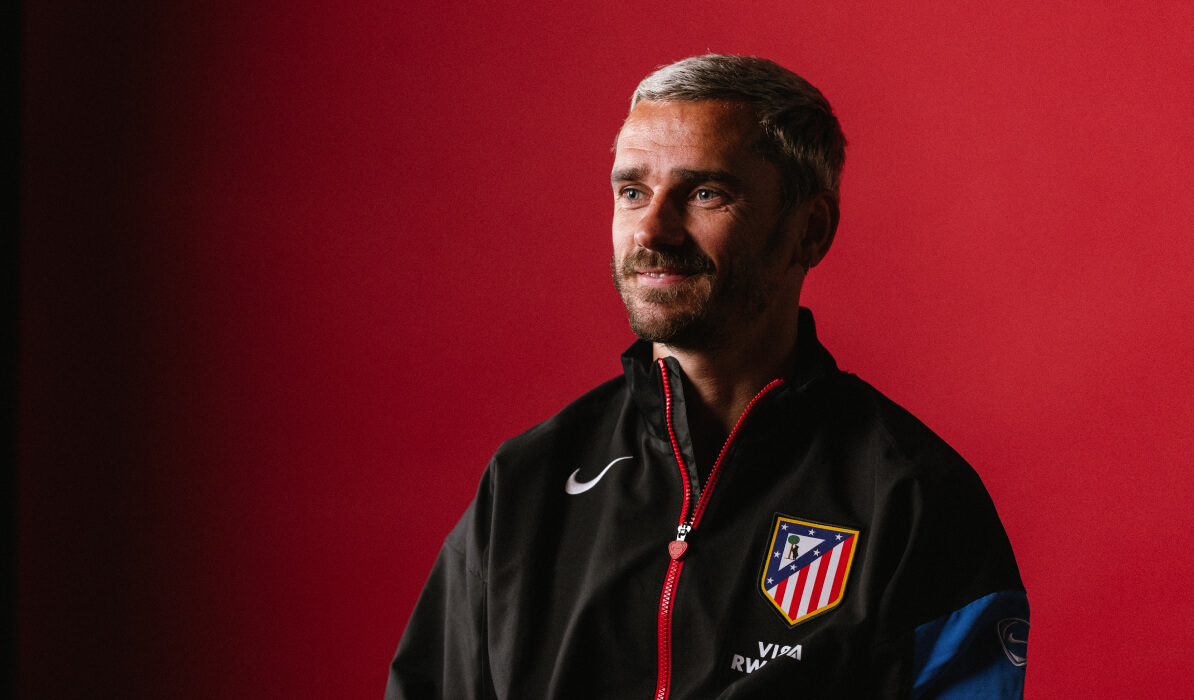
Interviewing an all-time great footballer, encouraging him or her to express their personality, is an enjoyable privilege, so there’s no call for sympathy here. But the context for this final big conversation with Antoine Griezmann, before he leaves Spanish football forever, was unfortunate.
His au revoir domestic cup final, the Copa del Rey decider against Real Sociedad, had just been lost in a penalty shoot-out. It was in this very same manner that his only previous Champions League final had slipped through his, and Atlético de Madrid’s, hands. Worse, this time around, Griezmann had been substituted off by his coach Diego Simeone long before the denouement and watched the spot kicks from the touchline. Helpless.
With their Champions League semi-final against Arsenal on the immediate horizon, the mood at the club was sombre for what had been lost and tense because of what remained within reach. There was a chance to end Atleti’s half-century Champions League hoodoo, given that their three finals in 1974, 2014 and 2016 had all been snatched away in the cruellest of circumstances. Atleti’s Majadahonda training ground, we were warned, might feel a little bit gloomy.
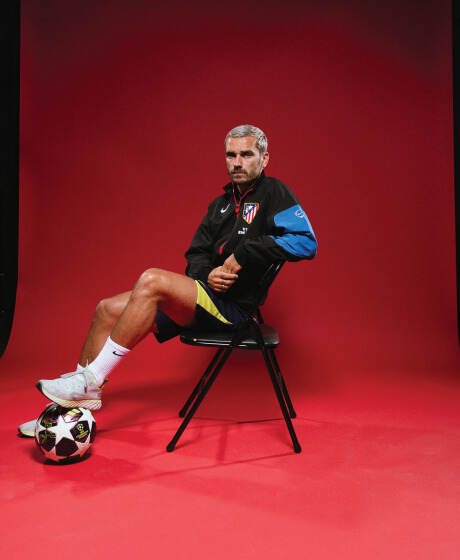
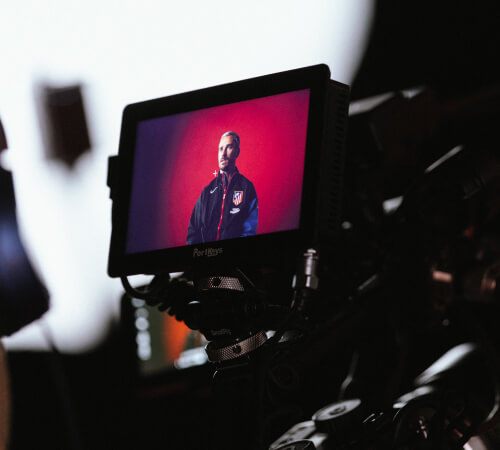
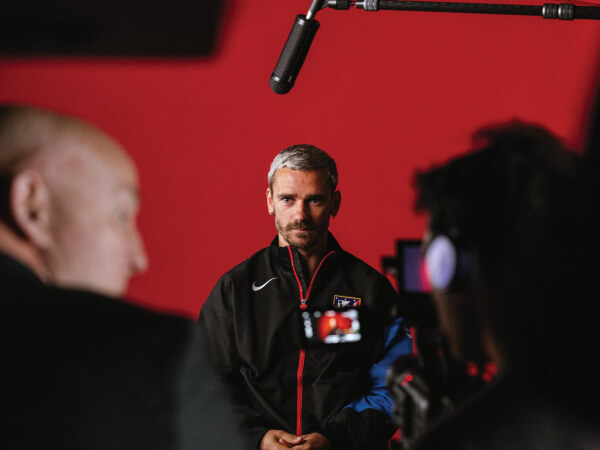
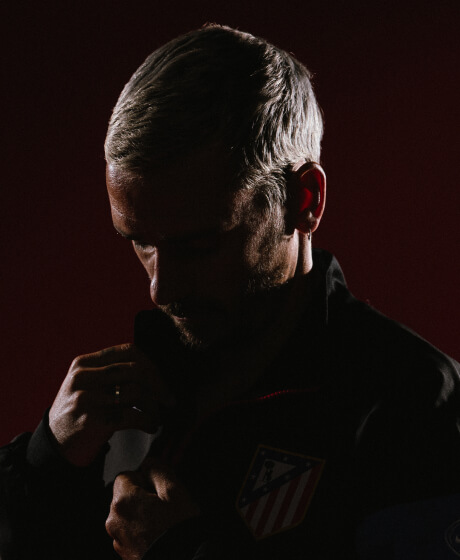
At the top end of Colchonero HQ, there is a media room with enough space to construct a temporary set. Producer, cameraman and photographer have been at it since 7am, creating a filming space which will make this last interview shine. My job? To help this live-wire, intelligent, emotional Frenchman set aside his still-raw disappointment and encourage him to open up. To sign off in style.
We’ve met five or six times before, at both Atleti and Barcelona. Antoine is articulate, a kind character, but someone who wears his heart on his sleeve. If he’s disappointed, his body language, facial expressions and choice of words will all reflect that. So, I simply choose to tell him the truth.
As he strolls out of the sunshine and into the darkness of the cool, makeshift studio, there’s a handshake, he is introduced to everybody and while we are mic-ing him up, I tell him: “Antoine, this is a special moment because everybody in this studio passionately loves football. For us, not just Atleti fans, when you leave La Liga, it will be a little like some of the lights going out on stage.”
I don’t care if it sounds schmaltzy now, just as I didn’t care then. It was a firmly held, unromantic truth: in football terms, Antoine Griezmann is a genius. Entertainer, inventor, record-breaker – a footballer cut from cloth so expensive that Savile Row tailors couldn’t afford it.
It transpires that Griezmann, like an Oscar winner, wants to use his moment on the mic to thank everyone else. Lots of “Je t’aime!” I point out that the overwhelming view of Atleti fans is that, each weekend, they weren’t simply going to support their team, they craved a fix of Griezmann magic to lift their spirits and fire their passion.
“The fans travel thousands of miles to see us each weekend and end up getting home in the early hours of the morning,” he replies. “People never moan, they always back their team to the death and all of this has made me comprehend the effort everyone puts in. But when you’re a youngster, you’ve initially no idea of all that. I came here aged 23 and I wasn’t aware of the significance of what fans sacrifice. Parents spending all their money to take kids to come and watch us.
“Back then, I’d simply play my game and carry on to the next thing. As the years go by, especially after becoming a father, you realise the real expense and effort to come and watch us. It’s why, at the end of every game, we do a lap of the whole stadium, topping off what we’ve done in the match. Our way of thanking the fans for their effort. Ultimately, we couldn’t be the same without them.
“It’s been a real pleasure for me – I have a load of fun, a blast! Whenever I’m playing well, it’s down to the bond I have with these people. The description for all this would be something way beyond love. Love for the club’s colours, the club’s badge and love for football. Love for hard work and for suffering.
“This club has turned me into a man. It’s taught me how to manage feeling down and how to work with a lot of humility. I try to instil all this in my children in their day-to-day lives. Every single day, the people who work for the club – be it in the first team, with the academy or anything to do with the Atleti – our people work with so much humility and passion.”
It transpires that Griezmann has actively been curating his goodbye. He’s acutely conscious of what it is that he’s sacrificing, and what he’ll miss most after his move to Orlando City and Major League Soccer. At the time of speaking, there was still so much on the line that he was using firm self-discipline to take things hour by hour, day by day. But, in the sanctity of our dark, quiet confessional space, he’s willing to assess the things he knows will leave the biggest gap in the months to come.
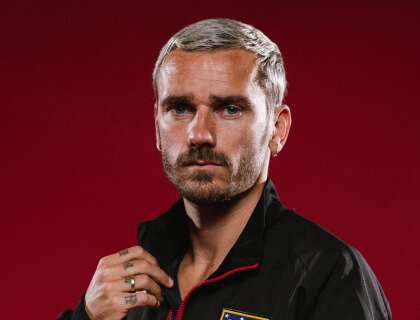
“I’ll keep watching Atleti and hopefully one of my kids might even play in the Champions League one day”
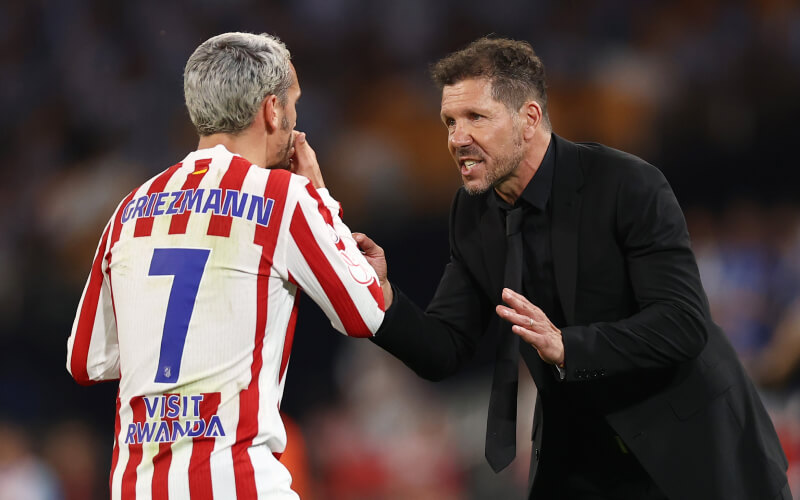
“Beyond my career, I know that in Diego Simeone I’ll have more than a former coach – I’ll have a friend and we’ll always be really close”
Typically, the Champions League is one. Unsurprisingly, Diego Simeone is another. Both inevitable. “I’m someone who naturally enjoys things anyway. And I know that if I start thinking, ‘These are my last days doing x or y,’ then maybe I’d become a bit mournful, and I wouldn’t enjoy our day-to-day life quite as much. So, every training session, every moment, I enjoy it a lot without thinking too far ahead, because otherwise I’d feel down.”
Will the absence of the Champions League in the USA be tough? “You can’t replace it. Maybe by going to watch basketball, baseball or NFL games there. But the Champions League can’t really be replaced. Along with the EURO and the World Cup, it’s the best competition. Still, I’ll keep watching Atleti, following them, and hopefully one of my kids might even play in the Champions League one day. I’ve already played so many matches, thrilled to so many magical Champions League nights, that I feel this is the right moment. I’ll enjoy watching it on TV or from the stands as an Atleti fan.”
When we chat, the Arsenal tie still lies a few days ahead. Beyond whether or not Atleti could reach the Budapest final, the elephant in the room is unfinished business. Seven years earlier, I’d asked Griezmann about his 48th-minute penalty which thumped back off the bar against Real Madrid in the 2016 final. Back then, he gave me a disapproving look, sighed a little but then met the enquiry head-on. Here’s the exact exchange:
GH: Do you often recall your penalty?
AG: Yes, a lot.
GH: Too much?
AG: I don’t know whether I think about it too much, but I think about it a lot!
GH: Does it hurt?
AG: A lot!
GH: What does it say about your mental response that, in the shoot-out, you then showed a really cool head, stepped up and scored? It was like you were out on a Sunday stroll. As if you’d forgotten what had happened just over an hour before.
AG: I was really angry with myself for having missed the first penalty. After scoring in the shoot-out, you can see me saying to myself, ‘If only I’d done that earlier on!’ I believe my missed penalty was what lost us the final. We were playing really well and, had I put it away, I’m sure we would have gone on to get a second goal straight away.
Back in the room now, it’s time to address the elephant. Reading this, you already know whether Griezmann and those devoted Atleti fans have earned another shot at the Cup with the Big Ears or if his itch will remain permanently unscratched. For the record, in that week before the first leg against Arsenal, he told me: “Getting to Budapest, if we could win, would heal a very deep wound. It’s not something I think about every day, but whenever friends or team-mates talk about the Champions League, that moment – the San Siro penalty – always comes up. And, of course, it’s still painful. The only way to get over that would be to win it this year.”
Come what may, this beautiful competition has given Griezmann more lemonade than lemons, including this season. His 200th Atleti goal came against Eintracht Frankfurt last September and the game at home to Tottenham Hotspur brought what Spanish commentators call caviar via that outrageous flick to tee up a Julián Alvarez goal.
“Before my 200th goal, there had already been two or three matches where I’d missed chances. In that match too. Then, on the third clear chance, Julián [Alvarez] was one-on-one with a defender. Simply because of my nerves, and the pressure of the moment, I needed two or three movements to get past the defender, but Julián had the patience and calmness to wait until I was completely free, so I just had to tap it in. It was pure joy. As soon as I got home, I watched it over and over again. It’s one of those very special moments.”
Not a bad way to return the favour, I point out, when we take a look at a video of his scandalous own-half, left-footed volley to send Alvarez sprinting three-quarters of the pitch, leaving Djed Spence and Pedro Porro trailing in his wake, to put Atleti 5-1 up against Spurs in the round of 16.
“I think I prefer a nice assist rather than being just one-on-one with the goalkeeper,” Griezmann grins. “But if Julián is slow, or doesn’t control my flick well, then there’s nothing. I’m more of a one-touch or two-touch player, not very flashy, but I try to create time for my team-mates and surprise the opponent. That’s what happened against Tottenham.”
Griezman’s years as a thriving footballer with Real Sociedad, Barcelona, France and Atleti have allowed him to become a dedicated, successful racehorse owner. With what he estimates will be slightly more time on his hands in the imminent future, that’ll only increase once he’s in the States.
When Griezmann talks about his beloved hobby, there are inevitable echoes of how his Atleti trainer, Simeone, has drawn the utmost out of Griezmann. Once, on arrival from Real Sociedad in 2014, a wild, wilful, talented but stubborn and raw mustang; now, an all-conquering, thoroughbred stallion.
For the comparative context, Griezmann says about his horses: “I’m an owner who gives a lot of freedom to the trainer. Whether it’s trotting or galloping, I show full confidence in him, but then when it comes to the races, it’s important to see whether my horses have rested and travelled well. I want to know everything and be up to speed on everything. My favourite horse is a bit crazy, which makes things difficult for the guy who trains him every day. He’s a horse that always tries to play, always tries to nibble his arm, his clothes, and wants to be near you.”
There’s a parallel theme emerging here. I wish Simeone had been present, hovering at the back of our Griezmann interview, so that I could have checked whether his mustang-turned-thoroughbred footballer had put him through something similar. Griezmann craves seeing his racing colours romp home to win the Epsom Derby, the Prix de l’Arc de Triomphe and the Kentucky Derby one day.
Right now, it’s time for the actor to leave the stage, for Griezmann to leave us to break down the studio. Training beckons and so does the winding down of his work under Simeone. El Cholo is a tough cookie to work for – demanding, successful, unrelenting, not prone to public displays of affection. But, and note this well, two phrases marked the announcement that Atleti had allowed Griezmann to leave for Orlando ahead of his contract ending. The 56-year-old Argentinian, gnarled veteran of a thousand battles, simply said: “Society could do with a lot more Antoine Griezmanns.” And: “He’s a genius.”
I put these words to the Frenchman, unsure whether he’ll be coy, play them down or engage with this rarest of Simeone eulogies. He says: “Ultimately, Diego’s given me everything and I’ve given him everything. Overall, we’re really similar – we don’t speak a lot, we’re pretty reserved.
“We only chat about football, not other things, because that’s where our expertise lies. It’s what moves us. Our children and our partners get on well, but just as Diego’s already said, we’ve never crossed the line on the pitch or on a professional level because I know very well he’s still my coach. If one day he doesn’t pick me, or he has to say something tough to me, he’s my boss, so I’ve got to accept it and keep on working. I’ve enjoyed having him as my boss. I know that, beyond my career, in him I’ll have more than a former coach – I’ll have a friend and we’ll always be really close.”
There goes Griezmann, exit stage right. A couple of lights grow dimmer and football in Europe loses something stellar.
His au revoir domestic cup final, the Copa del Rey decider against Real Sociedad, had just been lost in a penalty shoot-out. It was in this very same manner that his only previous Champions League final had slipped through his, and Atlético de Madrid’s, hands. Worse, this time around, Griezmann had been substituted off by his coach Diego Simeone long before the denouement and watched the spot kicks from the touchline. Helpless.
With their Champions League semi-final against Arsenal on the immediate horizon, the mood at the club was sombre for what had been lost and tense because of what remained within reach. There was a chance to end Atleti’s half-century Champions League hoodoo, given that their three finals in 1974, 2014 and 2016 had all been snatched away in the cruellest of circumstances. Atleti’s Majadahonda training ground, we were warned, might feel a little bit gloomy.
At the top end of Colchonero HQ, there is a media room with enough space to construct a temporary set. Producer, cameraman and photographer have been at it since 7am, creating a filming space which will make this last interview shine. My job? To help this live-wire, intelligent, emotional Frenchman set aside his still-raw disappointment and encourage him to open up. To sign off in style.
We’ve met five or six times before, at both Atleti and Barcelona. Antoine is articulate, a kind character, but someone who wears his heart on his sleeve. If he’s disappointed, his body language, facial expressions and choice of words will all reflect that. So, I simply choose to tell him the truth.
As he strolls out of the sunshine and into the darkness of the cool, makeshift studio, there’s a handshake, he is introduced to everybody and while we are mic-ing him up, I tell him: “Antoine, this is a special moment because everybody in this studio passionately loves football. For us, not just Atleti fans, when you leave La Liga, it will be a little like some of the lights going out on stage.”
I don’t care if it sounds schmaltzy now, just as I didn’t care then. It was a firmly held, unromantic truth: in football terms, Antoine Griezmann is a genius. Entertainer, inventor, record-breaker – a footballer cut from cloth so expensive that Savile Row tailors couldn’t afford it.
It transpires that Griezmann, like an Oscar winner, wants to use his moment on the mic to thank everyone else. Lots of “Je t’aime!” I point out that the overwhelming view of Atleti fans is that, each weekend, they weren’t simply going to support their team, they craved a fix of Griezmann magic to lift their spirits and fire their passion.
“The fans travel thousands of miles to see us each weekend and end up getting home in the early hours of the morning,” he replies. “People never moan, they always back their team to the death and all of this has made me comprehend the effort everyone puts in. But when you’re a youngster, you’ve initially no idea of all that. I came here aged 23 and I wasn’t aware of the significance of what fans sacrifice. Parents spending all their money to take kids to come and watch us.
“Back then, I’d simply play my game and carry on to the next thing. As the years go by, especially after becoming a father, you realise the real expense and effort to come and watch us. It’s why, at the end of every game, we do a lap of the whole stadium, topping off what we’ve done in the match. Our way of thanking the fans for their effort. Ultimately, we couldn’t be the same without them.
“It’s been a real pleasure for me – I have a load of fun, a blast! Whenever I’m playing well, it’s down to the bond I have with these people. The description for all this would be something way beyond love. Love for the club’s colours, the club’s badge and love for football. Love for hard work and for suffering.
“This club has turned me into a man. It’s taught me how to manage feeling down and how to work with a lot of humility. I try to instil all this in my children in their day-to-day lives. Every single day, the people who work for the club – be it in the first team, with the academy or anything to do with the Atleti – our people work with so much humility and passion.”
It transpires that Griezmann has actively been curating his goodbye. He’s acutely conscious of what it is that he’s sacrificing, and what he’ll miss most after his move to Orlando City and Major League Soccer. At the time of speaking, there was still so much on the line that he was using firm self-discipline to take things hour by hour, day by day. But, in the sanctity of our dark, quiet confessional space, he’s willing to assess the things he knows will leave the biggest gap in the months to come.
Read the full story
Sign up now to get access to this and every premium feature on Champions Journal. You will also get access to member-only competitions and offers. And you get all of that completely free!
“I’ll keep watching Atleti and hopefully one of my kids might even play in the Champions League one day”
“Beyond my career, I know that in Diego Simeone I’ll have more than a former coach – I’ll have a friend and we’ll always be really close”
Come what may, this beautiful competition has given Griezmann more lemonade than lemons, including this season. His 200th Atleti goal came against Eintracht Frankfurt last September and the game at home to Tottenham Hotspur brought what Spanish commentators call caviar via that outrageous flick to tee up a Julián Alvarez goal.
“Before my 200th goal, there had already been two or three matches where I’d missed chances. In that match too. Then, on the third clear chance, Julián [Alvarez] was one-on-one with a defender. Simply because of my nerves, and the pressure of the moment, I needed two or three movements to get past the defender, but Julián had the patience and calmness to wait until I was completely free, so I just had to tap it in. It was pure joy. As soon as I got home, I watched it over and over again. It’s one of those very special moments.”
Not a bad way to return the favour, I point out, when we take a look at a video of his scandalous own-half, left-footed volley to send Alvarez sprinting three-quarters of the pitch, leaving Djed Spence and Pedro Porro trailing in his wake, to put Atleti 5-1 up against Spurs in the round of 16.
“I think I prefer a nice assist rather than being just one-on-one with the goalkeeper,” Griezmann grins. “But if Julián is slow, or doesn’t control my flick well, then there’s nothing. I’m more of a one-touch or two-touch player, not very flashy, but I try to create time for my team-mates and surprise the opponent. That’s what happened against Tottenham.”
Griezman’s years as a thriving footballer with Real Sociedad, Barcelona, France and Atleti have allowed him to become a dedicated, successful racehorse owner. With what he estimates will be slightly more time on his hands in the imminent future, that’ll only increase once he’s in the States.
When Griezmann talks about his beloved hobby, there are inevitable echoes of how his Atleti trainer, Simeone, has drawn the utmost out of Griezmann. Once, on arrival from Real Sociedad in 2014, a wild, wilful, talented but stubborn and raw mustang; now, an all-conquering, thoroughbred stallion.
For the comparative context, Griezmann says about his horses: “I’m an owner who gives a lot of freedom to the trainer. Whether it’s trotting or galloping, I show full confidence in him, but then when it comes to the races, it’s important to see whether my horses have rested and travelled well. I want to know everything and be up to speed on everything. My favourite horse is a bit crazy, which makes things difficult for the guy who trains him every day. He’s a horse that always tries to play, always tries to nibble his arm, his clothes, and wants to be near you.”
There’s a parallel theme emerging here. I wish Simeone had been present, hovering at the back of our Griezmann interview, so that I could have checked whether his mustang-turned-thoroughbred footballer had put him through something similar. Griezmann craves seeing his racing colours romp home to win the Epsom Derby, the Prix de l’Arc de Triomphe and the Kentucky Derby one day.
Right now, it’s time for the actor to leave the stage, for Griezmann to leave us to break down the studio. Training beckons and so does the winding down of his work under Simeone. El Cholo is a tough cookie to work for – demanding, successful, unrelenting, not prone to public displays of affection. But, and note this well, two phrases marked the announcement that Atleti had allowed Griezmann to leave for Orlando ahead of his contract ending. The 56-year-old Argentinian, gnarled veteran of a thousand battles, simply said: “Society could do with a lot more Antoine Griezmanns.” And: “He’s a genius.”
I put these words to the Frenchman, unsure whether he’ll be coy, play them down or engage with this rarest of Simeone eulogies. He says: “Ultimately, Diego’s given me everything and I’ve given him everything. Overall, we’re really similar – we don’t speak a lot, we’re pretty reserved.
“We only chat about football, not other things, because that’s where our expertise lies. It’s what moves us. Our children and our partners get on well, but just as Diego’s already said, we’ve never crossed the line on the pitch or on a professional level because I know very well he’s still my coach. If one day he doesn’t pick me, or he has to say something tough to me, he’s my boss, so I’ve got to accept it and keep on working. I’ve enjoyed having him as my boss. I know that, beyond my career, in him I’ll have more than a former coach – I’ll have a friend and we’ll always be really close.”
There goes Griezmann, exit stage right. A couple of lights grow dimmer and football in Europe loses something stellar.
His au revoir domestic cup final, the Copa del Rey decider against Real Sociedad, had just been lost in a penalty shoot-out. It was in this very same manner that his only previous Champions League final had slipped through his, and Atlético de Madrid’s, hands. Worse, this time around, Griezmann had been substituted off by his coach Diego Simeone long before the denouement and watched the spot kicks from the touchline. Helpless.
With their Champions League semi-final against Arsenal on the immediate horizon, the mood at the club was sombre for what had been lost and tense because of what remained within reach. There was a chance to end Atleti’s half-century Champions League hoodoo, given that their three finals in 1974, 2014 and 2016 had all been snatched away in the cruellest of circumstances. Atleti’s Majadahonda training ground, we were warned, might feel a little bit gloomy.
At the top end of Colchonero HQ, there is a media room with enough space to construct a temporary set. Producer, cameraman and photographer have been at it since 7am, creating a filming space which will make this last interview shine. My job? To help this live-wire, intelligent, emotional Frenchman set aside his still-raw disappointment and encourage him to open up. To sign off in style.
We’ve met five or six times before, at both Atleti and Barcelona. Antoine is articulate, a kind character, but someone who wears his heart on his sleeve. If he’s disappointed, his body language, facial expressions and choice of words will all reflect that. So, I simply choose to tell him the truth.
As he strolls out of the sunshine and into the darkness of the cool, makeshift studio, there’s a handshake, he is introduced to everybody and while we are mic-ing him up, I tell him: “Antoine, this is a special moment because everybody in this studio passionately loves football. For us, not just Atleti fans, when you leave La Liga, it will be a little like some of the lights going out on stage.”
I don’t care if it sounds schmaltzy now, just as I didn’t care then. It was a firmly held, unromantic truth: in football terms, Antoine Griezmann is a genius. Entertainer, inventor, record-breaker – a footballer cut from cloth so expensive that Savile Row tailors couldn’t afford it.
It transpires that Griezmann, like an Oscar winner, wants to use his moment on the mic to thank everyone else. Lots of “Je t’aime!” I point out that the overwhelming view of Atleti fans is that, each weekend, they weren’t simply going to support their team, they craved a fix of Griezmann magic to lift their spirits and fire their passion.
“The fans travel thousands of miles to see us each weekend and end up getting home in the early hours of the morning,” he replies. “People never moan, they always back their team to the death and all of this has made me comprehend the effort everyone puts in. But when you’re a youngster, you’ve initially no idea of all that. I came here aged 23 and I wasn’t aware of the significance of what fans sacrifice. Parents spending all their money to take kids to come and watch us.
“Back then, I’d simply play my game and carry on to the next thing. As the years go by, especially after becoming a father, you realise the real expense and effort to come and watch us. It’s why, at the end of every game, we do a lap of the whole stadium, topping off what we’ve done in the match. Our way of thanking the fans for their effort. Ultimately, we couldn’t be the same without them.
“It’s been a real pleasure for me – I have a load of fun, a blast! Whenever I’m playing well, it’s down to the bond I have with these people. The description for all this would be something way beyond love. Love for the club’s colours, the club’s badge and love for football. Love for hard work and for suffering.
“This club has turned me into a man. It’s taught me how to manage feeling down and how to work with a lot of humility. I try to instil all this in my children in their day-to-day lives. Every single day, the people who work for the club – be it in the first team, with the academy or anything to do with the Atleti – our people work with so much humility and passion.”
It transpires that Griezmann has actively been curating his goodbye. He’s acutely conscious of what it is that he’s sacrificing, and what he’ll miss most after his move to Orlando City and Major League Soccer. At the time of speaking, there was still so much on the line that he was using firm self-discipline to take things hour by hour, day by day. But, in the sanctity of our dark, quiet confessional space, he’s willing to assess the things he knows will leave the biggest gap in the months to come.
“I’ll keep watching Atleti and hopefully one of my kids might even play in the Champions League one day”
“Beyond my career, I know that in Diego Simeone I’ll have more than a former coach – I’ll have a friend and we’ll always be really close”
Come what may, this beautiful competition has given Griezmann more lemonade than lemons, including this season. His 200th Atleti goal came against Eintracht Frankfurt last September and the game at home to Tottenham Hotspur brought what Spanish commentators call caviar via that outrageous flick to tee up a Julián Alvarez goal.
“Before my 200th goal, there had already been two or three matches where I’d missed chances. In that match too. Then, on the third clear chance, Julián [Alvarez] was one-on-one with a defender. Simply because of my nerves, and the pressure of the moment, I needed two or three movements to get past the defender, but Julián had the patience and calmness to wait until I was completely free, so I just had to tap it in. It was pure joy. As soon as I got home, I watched it over and over again. It’s one of those very special moments.”
Not a bad way to return the favour, I point out, when we take a look at a video of his scandalous own-half, left-footed volley to send Alvarez sprinting three-quarters of the pitch, leaving Djed Spence and Pedro Porro trailing in his wake, to put Atleti 5-1 up against Spurs in the round of 16.
“I think I prefer a nice assist rather than being just one-on-one with the goalkeeper,” Griezmann grins. “But if Julián is slow, or doesn’t control my flick well, then there’s nothing. I’m more of a one-touch or two-touch player, not very flashy, but I try to create time for my team-mates and surprise the opponent. That’s what happened against Tottenham.”
Griezman’s years as a thriving footballer with Real Sociedad, Barcelona, France and Atleti have allowed him to become a dedicated, successful racehorse owner. With what he estimates will be slightly more time on his hands in the imminent future, that’ll only increase once he’s in the States.
When Griezmann talks about his beloved hobby, there are inevitable echoes of how his Atleti trainer, Simeone, has drawn the utmost out of Griezmann. Once, on arrival from Real Sociedad in 2014, a wild, wilful, talented but stubborn and raw mustang; now, an all-conquering, thoroughbred stallion.
For the comparative context, Griezmann says about his horses: “I’m an owner who gives a lot of freedom to the trainer. Whether it’s trotting or galloping, I show full confidence in him, but then when it comes to the races, it’s important to see whether my horses have rested and travelled well. I want to know everything and be up to speed on everything. My favourite horse is a bit crazy, which makes things difficult for the guy who trains him every day. He’s a horse that always tries to play, always tries to nibble his arm, his clothes, and wants to be near you.”
There’s a parallel theme emerging here. I wish Simeone had been present, hovering at the back of our Griezmann interview, so that I could have checked whether his mustang-turned-thoroughbred footballer had put him through something similar. Griezmann craves seeing his racing colours romp home to win the Epsom Derby, the Prix de l’Arc de Triomphe and the Kentucky Derby one day.
Right now, it’s time for the actor to leave the stage, for Griezmann to leave us to break down the studio. Training beckons and so does the winding down of his work under Simeone. El Cholo is a tough cookie to work for – demanding, successful, unrelenting, not prone to public displays of affection. But, and note this well, two phrases marked the announcement that Atleti had allowed Griezmann to leave for Orlando ahead of his contract ending. The 56-year-old Argentinian, gnarled veteran of a thousand battles, simply said: “Society could do with a lot more Antoine Griezmanns.” And: “He’s a genius.”
I put these words to the Frenchman, unsure whether he’ll be coy, play them down or engage with this rarest of Simeone eulogies. He says: “Ultimately, Diego’s given me everything and I’ve given him everything. Overall, we’re really similar – we don’t speak a lot, we’re pretty reserved.
“We only chat about football, not other things, because that’s where our expertise lies. It’s what moves us. Our children and our partners get on well, but just as Diego’s already said, we’ve never crossed the line on the pitch or on a professional level because I know very well he’s still my coach. If one day he doesn’t pick me, or he has to say something tough to me, he’s my boss, so I’ve got to accept it and keep on working. I’ve enjoyed having him as my boss. I know that, beyond my career, in him I’ll have more than a former coach – I’ll have a friend and we’ll always be really close.”
There goes Griezmann, exit stage right. A couple of lights grow dimmer and football in Europe loses something stellar.