“Trotting!”
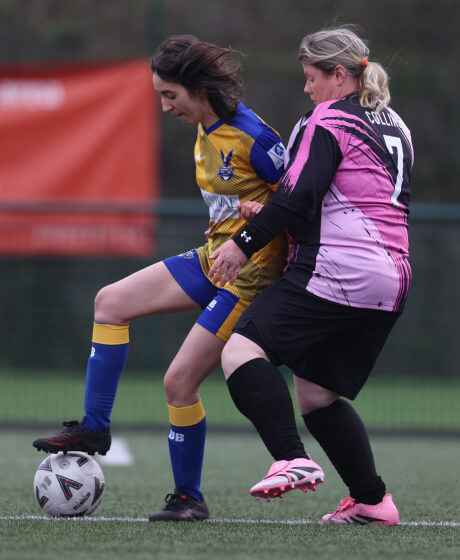
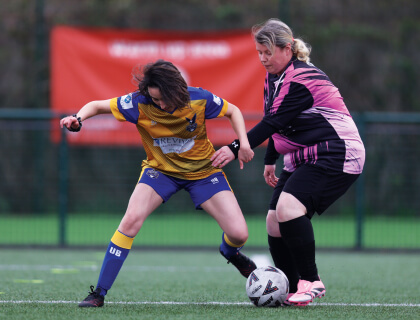
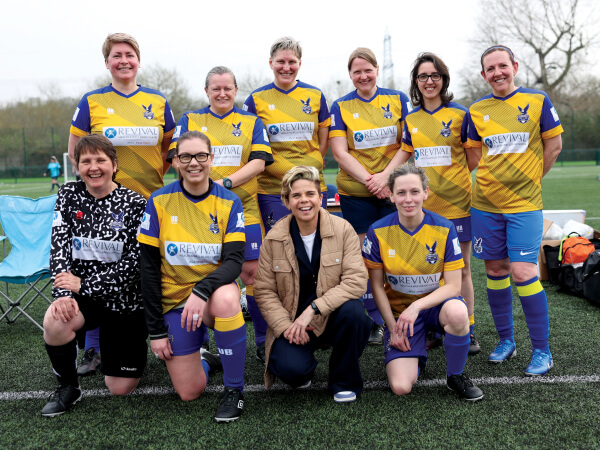
It’s a beautiful early summer Monday evening in rural West Midlands, and I’m one of 14 women between the ages of 38 and 83 taking part in an hour-long session. There’s laughter, groans and the more-than-occasional warning call of “trotting”. You’d be forgiven for thinking this was some kind of equestrian training, but there isn’t a horse in sight. We’re on a 3G pitch, taking part in a sport that is growing in reach and popularity. Welcome to the world of walking football.
As the name suggests, the emphasis is on walking, hence the frequent cry of “trotting” whenever a player accelerates into an almost-jog. Having to walk on a football pitch is a strange sensation, especially for me. I was 21 when I stopped playing 11-a-side football, where speed was my biggest asset. For 19 years, my interaction with the beautiful game was strictly a watching brief, but somehow I found my way back to the pitch, in a format of the sport that would have seemed completely alien to my younger, faster self. If you’d told me 12 months ago not only that I’d be playing walking football but I’d find salvation in it, I wouldn’t have believed you.
Rewinding to June last year isn’t something that sits comfortably, but it’s where my journey of walking football discovery began. Six months earlier, my dad had been diagnosed with incurable stage 4 cancer, with no prior warning. On that early summer day, he was admitted to A&E with suspected pneumonia and sepsis. Seven hours later, my mum had a stroke. I can’t even begin to explain the absolute anguish of having the two most important people in my life in critical condition. Six weeks later, with Mum on the slow road to recovery, my dad lost his short, brave battle to stay with us, to make it to my 40th birthday.
By chance, a woman I used to play football with was working at the funeral home. Then, on the day of the service, several other former team-mates showed up to pay their respects to a man who had seen no gender in football, long before the popularity and success of the Lionesses elevated the women’s game. They were also there to support my mum, one of those trailblazing women who got the ball rolling when the ban on women’s football was lifted in the early 1970s. The game is in my blood, even if, for a long time, I’d forgotten.
Now in our 40s, 50s and 60s, reminiscing about our playing days, the subject of walking football was broached.
A couple of the women had been playing to a high standard for several years, and had international caps to prove it. Buoyed by the camaraderie of former team-mates, two weeks later we all turned up to give walking football a go in giddy, slightly manic expectation. We were also in various states of preparedness: our former right-back managed to dig out a pair of boots that had literally been chewed by the dog, while I hadn’t considered the fact that, 20 years on, I couldn’t see my hand in front of my face without my glasses. More worrying, perhaps, I hadn’t kicked a ball in anger, or joy, or surprise, or actually with any emotion, in two decades. I desperately hoped the old saying about riding a bike applied to football.
We were briefed on the rules – essentially no running and minimal contact – and let loose. And for the next hour, it was like those 19 fallow years hadn’t happened. Not only did I still know what to do, I realised just how much I loved having a ball at my feet, how much I’d missed that feeling. In the intervening years, I’d channelled my love of the game into watching, but it took me less than five minutes to remember that nothing compares to playing – even when you’re not allowed to run.

But the absence of running doesn’t make this format any less enjoyable or technical. The weight of a pass, a player’s movement and their reading of the game have to be even more finely tuned. Not being able to sprint after the ball requires greater accuracy, and limited contact fosters accessibility – in what other sport can a 38- and 83-year-old compete with and against one another? Indeed, whether you’ve played football before, never kicked a ball in your life or haven’t done so for a couple of decades, walking football offers a space and a community for everyone, while the growing number of leagues and tournaments allow for a more competitive edge. Even players who performed on the biggest stages, European Cup winners Alan Kennedy and Phil Neal among them, have been empowered by walking football to continue pulling on their boots well in to their 70s.
The physical benefits of the sport for cardiovascular and musculoskeletal health, in particular, have been commended, and charities including Age UK and Parkinson’s UK endorse the format. Many professional football clubs include walking football in their community programmes, recognising the health gains, especially in later life. But it’s so much more than that for me. It’s about rekindling a passion for playing a sport that I thought I’d lost. It’s about reconnecting with people and memories. It’s about having a time and space to switch off from the difficulties of the past 12 months.
It’s also about feeling that connection to my dad, who would have loved the fact that football found me again when I needed it most, that I’m getting called out for trotting when I used to sprint up and down the wing, and that his £5 bonus for every goal I scored when I was 20 would now be £50 with inflation. But, as my team-mates will attest, his money would be safe. “Out of darkness cometh light” reads the motto of Dad’s beloved Wolverhampton Wanderers. That walking football has been my light in the darkest days of the past year feels like a fitting tribute to parents who nurtured my love of the game and walked beside me every step – and yes, occasional trot – of the way.
“Trotting!”
It’s a beautiful early summer Monday evening in rural West Midlands, and I’m one of 14 women between the ages of 38 and 83 taking part in an hour-long session. There’s laughter, groans and the more-than-occasional warning call of “trotting”. You’d be forgiven for thinking this was some kind of equestrian training, but there isn’t a horse in sight. We’re on a 3G pitch, taking part in a sport that is growing in reach and popularity. Welcome to the world of walking football.
As the name suggests, the emphasis is on walking, hence the frequent cry of “trotting” whenever a player accelerates into an almost-jog. Having to walk on a football pitch is a strange sensation, especially for me. I was 21 when I stopped playing 11-a-side football, where speed was my biggest asset. For 19 years, my interaction with the beautiful game was strictly a watching brief, but somehow I found my way back to the pitch, in a format of the sport that would have seemed completely alien to my younger, faster self. If you’d told me 12 months ago not only that I’d be playing walking football but I’d find salvation in it, I wouldn’t have believed you.
Rewinding to June last year isn’t something that sits comfortably, but it’s where my journey of walking football discovery began. Six months earlier, my dad had been diagnosed with incurable stage 4 cancer, with no prior warning. On that early summer day, he was admitted to A&E with suspected pneumonia and sepsis. Seven hours later, my mum had a stroke. I can’t even begin to explain the absolute anguish of having the two most important people in my life in critical condition. Six weeks later, with Mum on the slow road to recovery, my dad lost his short, brave battle to stay with us, to make it to my 40th birthday.


By chance, a woman I used to play football with was working at the funeral home. Then, on the day of the service, several other former team-mates showed up to pay their respects to a man who had seen no gender in football, long before the popularity and success of the Lionesses elevated the women’s game. They were also there to support my mum, one of those trailblazing women who got the ball rolling when the ban on women’s football was lifted in the early 1970s. The game is in my blood, even if, for a long time, I’d forgotten.
Now in our 40s, 50s and 60s, reminiscing about our playing days, the subject of walking football was broached.
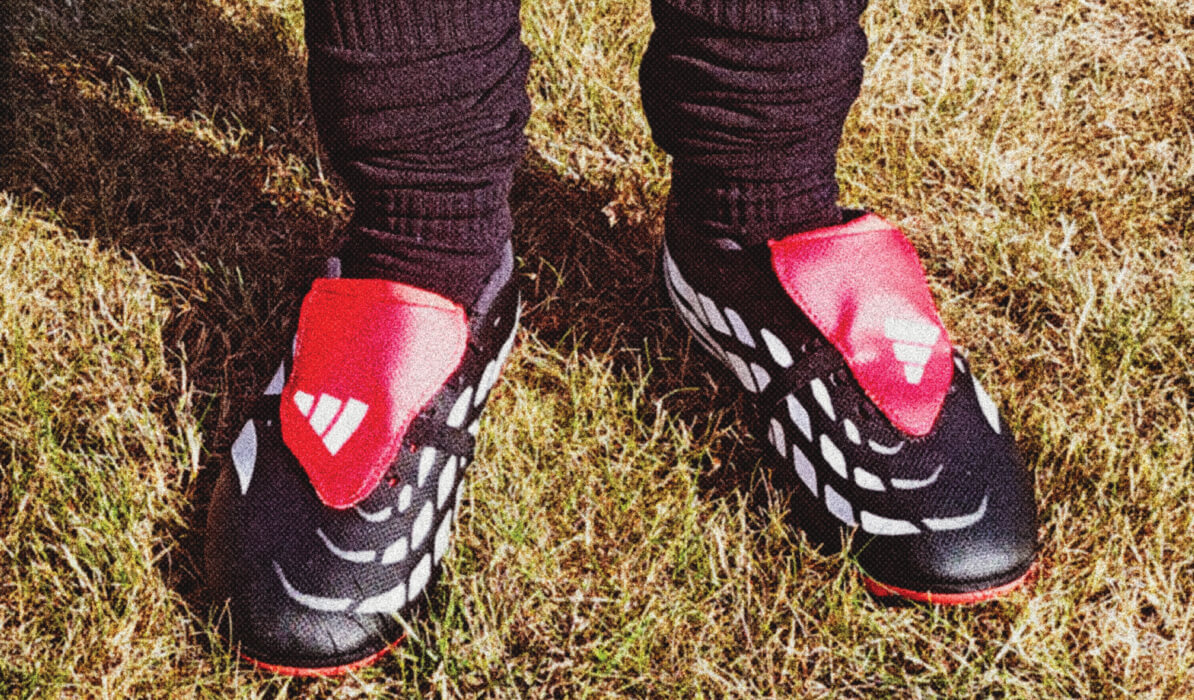
A couple of the women had been playing to a high standard for several years, and had international caps to prove it. Buoyed by the camaraderie of former team-mates, two weeks later we all turned up to give walking football a go in giddy, slightly manic expectation. We were also in various states of preparedness: our former right-back managed to dig out a pair of boots that had literally been chewed by the dog, while I hadn’t considered the fact that, 20 years on, I couldn’t see my hand in front of my face without my glasses. More worrying, perhaps, I hadn’t kicked a ball in anger, or joy, or surprise, or actually with any emotion, in two decades. I desperately hoped the old saying about riding a bike applied to football.
We were briefed on the rules – essentially no running and minimal contact – and let loose. And for the next hour, it was like those 19 fallow years hadn’t happened. Not only did I still know what to do, I realised just how much I loved having a ball at my feet, how much I’d missed that feeling. In the intervening years, I’d channelled my love of the game into watching, but it took me less than five minutes to remember that nothing compares to playing – even when you’re not allowed to run.
But the absence of running doesn’t make this format any less enjoyable or technical. The weight of a pass, a player’s movement and their reading of the game have to be even more finely tuned. Not being able to sprint after the ball requires greater accuracy, and limited contact fosters accessibility – in what other sport can a 38- and 83-year-old compete with and against one another? Indeed, whether you’ve played football before, never kicked a ball in your life or haven’t done so for a couple of decades, walking football offers a space and a community for everyone, while the growing number of leagues and tournaments allow for a more competitive edge. Even players who performed on the biggest stages, European Cup winners Alan Kennedy and Phil Neal among them, have been empowered by walking football to continue pulling on their boots well in to their 70s.
The physical benefits of the sport for cardiovascular and musculoskeletal health, in particular, have been commended, and charities including Age UK and Parkinson’s UK endorse the format. Many professional football clubs include walking football in their community programmes, recognising the health gains, especially in later life. But it’s so much more than that for me. It’s about rekindling a passion for playing a sport that I thought I’d lost. It’s about reconnecting with people and memories. It’s about having a time and space to switch off from the difficulties of the past 12 months.
It’s also about feeling that connection to my dad, who would have loved the fact that football found me again when I needed it most, that I’m getting called out for trotting when I used to sprint up and down the wing, and that his £5 bonus for every goal I scored when I was 20 would now be £50 with inflation. But, as my team-mates will attest, his money would be safe. “Out of darkness cometh light” reads the motto of Dad’s beloved Wolverhampton Wanderers. That walking football has been my light in the darkest days of the past year feels like a fitting tribute to parents who nurtured my love of the game and walked beside me every step – and yes, occasional trot – of the way.
“Trotting!”
It’s a beautiful early summer Monday evening in rural West Midlands, and I’m one of 14 women between the ages of 38 and 83 taking part in an hour-long session. There’s laughter, groans and the more-than-occasional warning call of “trotting”. You’d be forgiven for thinking this was some kind of equestrian training, but there isn’t a horse in sight. We’re on a 3G pitch, taking part in a sport that is growing in reach and popularity. Welcome to the world of walking football.
As the name suggests, the emphasis is on walking, hence the frequent cry of “trotting” whenever a player accelerates into an almost-jog. Having to walk on a football pitch is a strange sensation, especially for me. I was 21 when I stopped playing 11-a-side football, where speed was my biggest asset. For 19 years, my interaction with the beautiful game was strictly a watching brief, but somehow I found my way back to the pitch, in a format of the sport that would have seemed completely alien to my younger, faster self. If you’d told me 12 months ago not only that I’d be playing walking football but I’d find salvation in it, I wouldn’t have believed you.
Rewinding to June last year isn’t something that sits comfortably, but it’s where my journey of walking football discovery began. Six months earlier, my dad had been diagnosed with incurable stage 4 cancer, with no prior warning. On that early summer day, he was admitted to A&E with suspected pneumonia and sepsis. Seven hours later, my mum had a stroke. I can’t even begin to explain the absolute anguish of having the two most important people in my life in critical condition. Six weeks later, with Mum on the slow road to recovery, my dad lost his short, brave battle to stay with us, to make it to my 40th birthday.
By chance, a woman I used to play football with was working at the funeral home. Then, on the day of the service, several other former team-mates showed up to pay their respects to a man who had seen no gender in football, long before the popularity and success of the Lionesses elevated the women’s game. They were also there to support my mum, one of those trailblazing women who got the ball rolling when the ban on women’s football was lifted in the early 1970s. The game is in my blood, even if, for a long time, I’d forgotten.
Now in our 40s, 50s and 60s, reminiscing about our playing days, the subject of walking football was broached.
A couple of the women had been playing to a high standard for several years, and had international caps to prove it. Buoyed by the camaraderie of former team-mates, two weeks later we all turned up to give walking football a go in giddy, slightly manic expectation. We were also in various states of preparedness: our former right-back managed to dig out a pair of boots that had literally been chewed by the dog, while I hadn’t considered the fact that, 20 years on, I couldn’t see my hand in front of my face without my glasses. More worrying, perhaps, I hadn’t kicked a ball in anger, or joy, or surprise, or actually with any emotion, in two decades. I desperately hoped the old saying about riding a bike applied to football.
We were briefed on the rules – essentially no running and minimal contact – and let loose. And for the next hour, it was like those 19 fallow years hadn’t happened. Not only did I still know what to do, I realised just how much I loved having a ball at my feet, how much I’d missed that feeling. In the intervening years, I’d channelled my love of the game into watching, but it took me less than five minutes to remember that nothing compares to playing – even when you’re not allowed to run.
But the absence of running doesn’t make this format any less enjoyable or technical. The weight of a pass, a player’s movement and their reading of the game have to be even more finely tuned. Not being able to sprint after the ball requires greater accuracy, and limited contact fosters accessibility – in what other sport can a 38- and 83-year-old compete with and against one another? Indeed, whether you’ve played football before, never kicked a ball in your life or haven’t done so for a couple of decades, walking football offers a space and a community for everyone, while the growing number of leagues and tournaments allow for a more competitive edge. Even players who performed on the biggest stages, European Cup winners Alan Kennedy and Phil Neal among them, have been empowered by walking football to continue pulling on their boots well in to their 70s.
The physical benefits of the sport for cardiovascular and musculoskeletal health, in particular, have been commended, and charities including Age UK and Parkinson’s UK endorse the format. Many professional football clubs include walking football in their community programmes, recognising the health gains, especially in later life. But it’s so much more than that for me. It’s about rekindling a passion for playing a sport that I thought I’d lost. It’s about reconnecting with people and memories. It’s about having a time and space to switch off from the difficulties of the past 12 months.
It’s also about feeling that connection to my dad, who would have loved the fact that football found me again when I needed it most, that I’m getting called out for trotting when I used to sprint up and down the wing, and that his £5 bonus for every goal I scored when I was 20 would now be £50 with inflation. But, as my team-mates will attest, his money would be safe. “Out of darkness cometh light” reads the motto of Dad’s beloved Wolverhampton Wanderers. That walking football has been my light in the darkest days of the past year feels like a fitting tribute to parents who nurtured my love of the game and walked beside me every step – and yes, occasional trot – of the way.