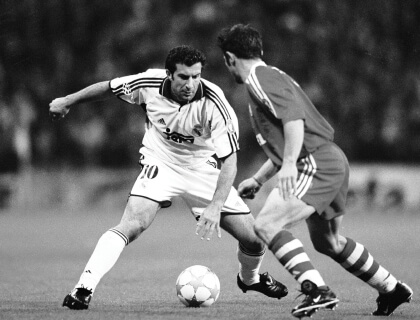
A semi-final between Real Madrid and Bayern München doesn’t need gimmicks. On 1 May 2001, the holders, starring Luís Figo, Raúl González and Roberto Carlos, battled the single-minded Bavarian behemoth led by the indomitable Stefan Effenberg. A delirious, expectant Bernabéu hosted the first leg. What more could you ask for?
But there was a novelty for the eagle-eyed watching at the Spanish arena and on television. Shortly before kick-off, the players emerged from the tunnel carrying mysterious orbs resembling the competition logo. They were about to play with the distinctive “starball” in the flesh (well, vulcanised rubber). The enduring insignia of Europe’s premier competition – a football made of stars – created by London-based company Design Bridge at UEFA’s request for the 1992/93 season, had sprung into life. As a memorabilia collector, specifically of shirts and balls, I was intrigued. I had a smattering of World Cup and European Championship OMBs (official match balls), but this was a whole new ball game.
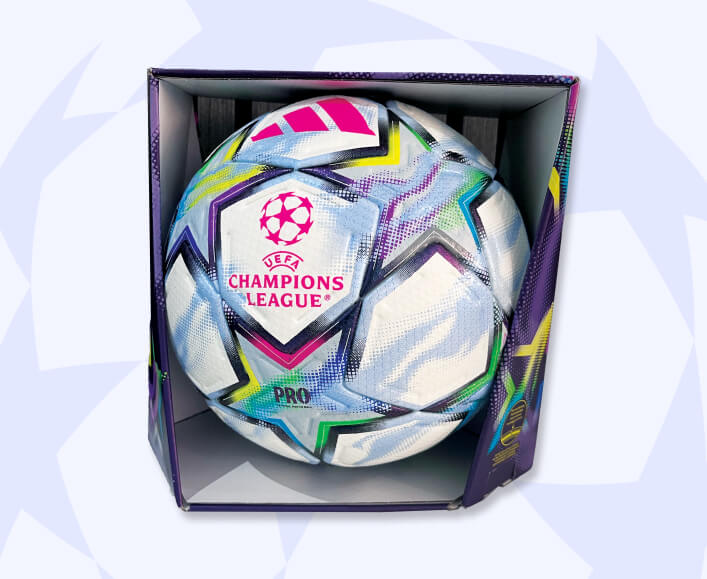
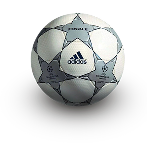
This latest offering was called the adidas Finale, complete with silver stars shining brightly on a white background. An ingenious collaboration between UEFA and adidas, the unmistakeable Champions League emblem had advanced from patches on players’ shirt sleeves to the focal point of their attention. It was introduced and used for the first time in both legs of the Real vs Bayern semi, which the German side won 3-1 on aggregate, Bayern’s Giovane Élber netting the first-ever starball goal. And it took centre stage again at the final in Milan, where the Bundesliga outfit defeated Valencia on penalties. The next season, Zinédine Zidane volleyed a new, sleeker version with black stars into a Hampden Park net against Bayer Leverkusen in the showpiece. Images of Zizou’s outrageous winning goal immediately zoomed around the globe.
Up until this point, teams had been using their regular balls for home matches, but it was inevitable that the Champions League would eventually have a bespoke model, and the initiative was an instant hit. A fellow collector I know from the internet, Carlos Ponce (known as Ykyeco online), is an OMB authority and recalls: “When I first saw the 2001 design, it made such a statement. It was obviously a ball for special games. It stirred memories of the NASL 1975 adidas Telstar too. The Telstar, the Tango and the Finale are the most recognisable balls in football – basic, simple, elegant.”
Of course, in 2001, images or information were hard to find. In today’s world of social media, nothing new goes unannounced; indeed, the 2014 World Cup ball, the Brazuca, even had its own Twitter profile. But at the turn of the millennium, we had to wait for the highlights programmes or newspaper reports to see the Finale.
I was living in Naples at the time and bought the Gazzetta dello Sport the next morning, which offered only a few small photos, all blurred due to a bad print run. Basically, I had to wait patiently until the second leg in Munich to get a proper look. Most observers tuned in to discover if Real could mount another famous comeback, but I felt Bayern were already through to the final because they could afford a draw and had an away goal. I was more fascinated by the ball and, as I had hoped, it was truly a work of art, so I ordered one immediately.
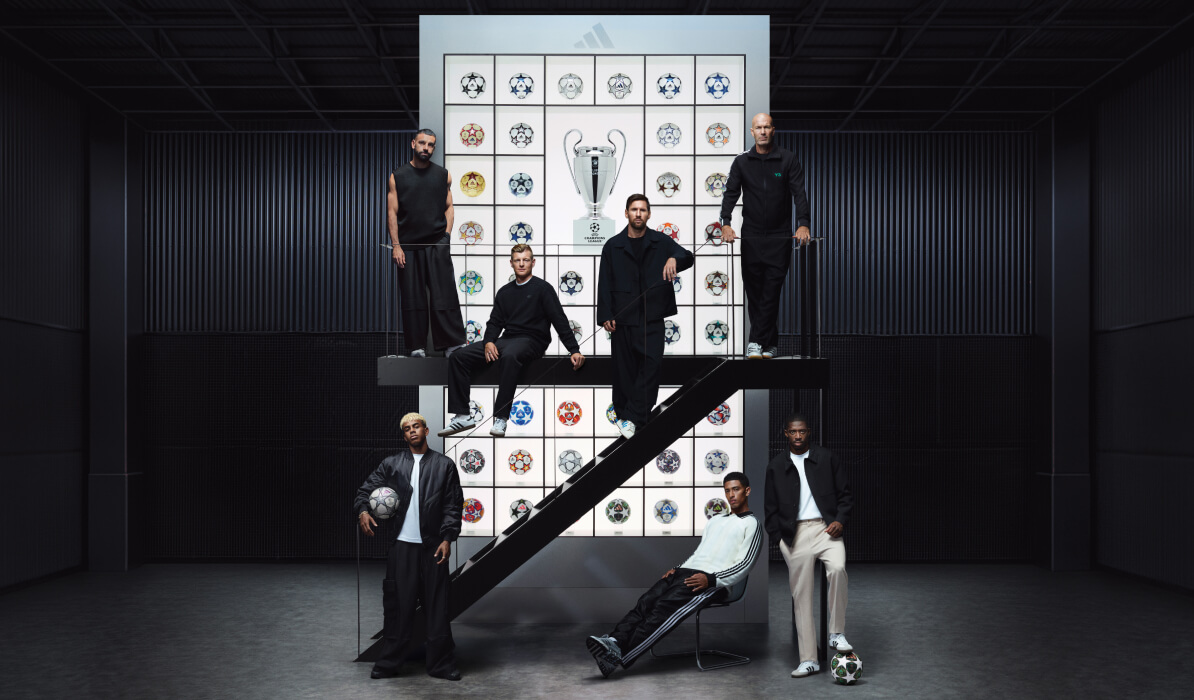
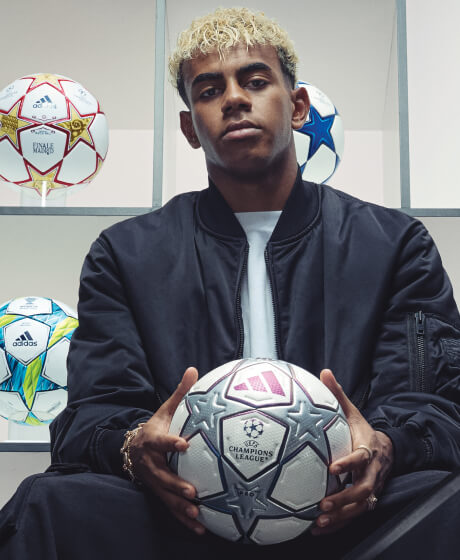
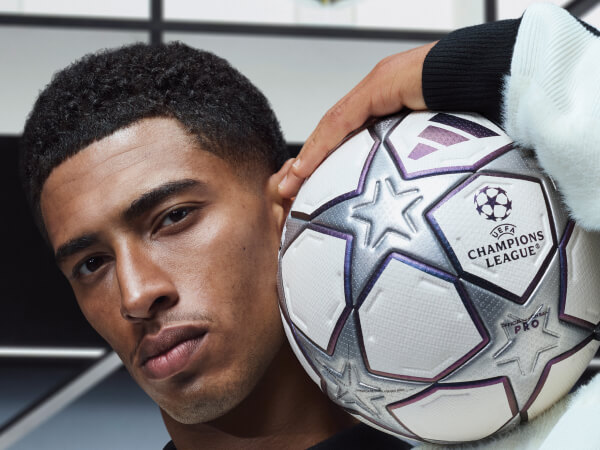
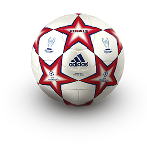
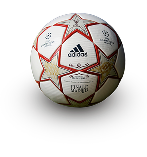
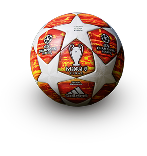
Yes, it is mildly alarming that this all took place a quarter of a century ago, but the plus side of so much time passing is that adidas have released an updated tribute to the first Finale to mark the 25th anniversary, which all the teams played with in their final two league phase games. Throughout the 2000s, the design was updated every season for the knockout rounds and final. Naturally, the structure and materials also evolved. In 2006, out went the traditional pentagon and hexagon construction of 32 panels and in came 14 curved sections.