“So? How was it?”
My wife looks at me from the other side of the table. I’ve just come home from my first-ever European away game, and I try – honestly – to explain.
How was it?
Images of Lisbon flash through my mind. Cinnamon, salt, rain, coloured tiles, salt cod, old men in red and white ties on their way to a noisy stadium.
I’ll slow down: it’s mid-December, and I have been sent by Champions Journal to watch my beloved Napoli in their league phase match-up against Benfica. I’m meeting Luis, Benfica disciple and Lisbon local, who, for the next 24 hours, will become my tutor in Benfiquista culture, in the geography and history of Lisbon, in Portuguese cuisine and, above all, in local football.
Luis is roughly my age, but he and I have never met before; I’m a little nervous about spending so much time with a stranger. I needn’t have worried – within minutes, we’re chatting away at a small table in the beautiful Largo do Carmo plaza, two new friends drinking coffee before a football match. We talk about Italy’s World Cup chances, Norwegian youth development, whether Juventus were right to sign Cristiano Ronaldo back in the day.
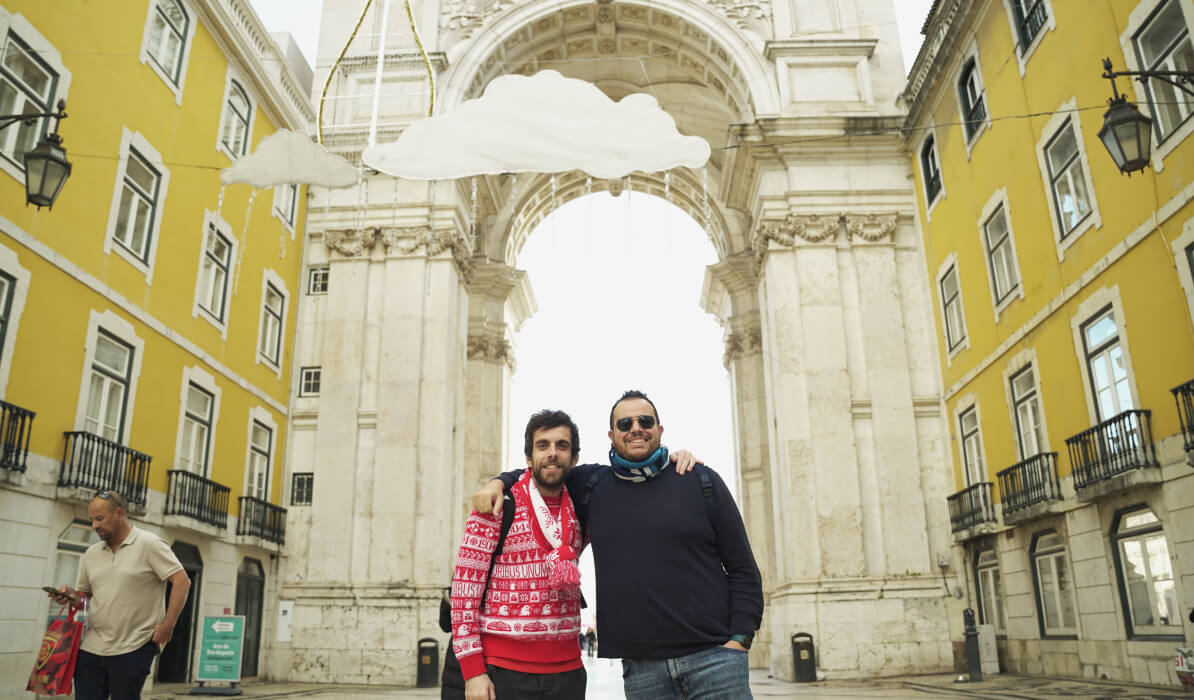
After our coffee, Luis takes me to the waterfront, full of facts about his home city on the way. He points out two columns on the edge of Praça do Comércio, built after a devastating flood in the 1700s to ask the sea not to return.
For some pre-game food, Luis and I head to a particular food truck near the stadium to experience the bifana – a famous Portuguese pork sandwich. The truck is parked overlooking Estádio da Luz, which, with a while to go before kick-off, sits expectantly like a silent cathedral, awaiting its faithful.
There, perched on a plastic chair with a blue scarf around my neck, I meet one of said faithful – an old man with enormous sideburns, smoking a huge cigar. He accuses me – a Neapolitan and Napoli fan – of having “betrayed football”, of having gone from fighting the just crusade for joga bonito alongside Maurizio Sarri and Luciano Spalletti to worshipping the personality cult of Antonio Conte, who only wants to “ganhar, ganhar, ganhar” (win, win, win), no matter how.
I reply that a thirsty man doesn’t judge the innkeeper who fills his glass. I say it in broken Spanish – Manu Chao lyrics mixed with lisped Italian – but the old man understands, nods, returns to his cigar. The small miracles of international football.
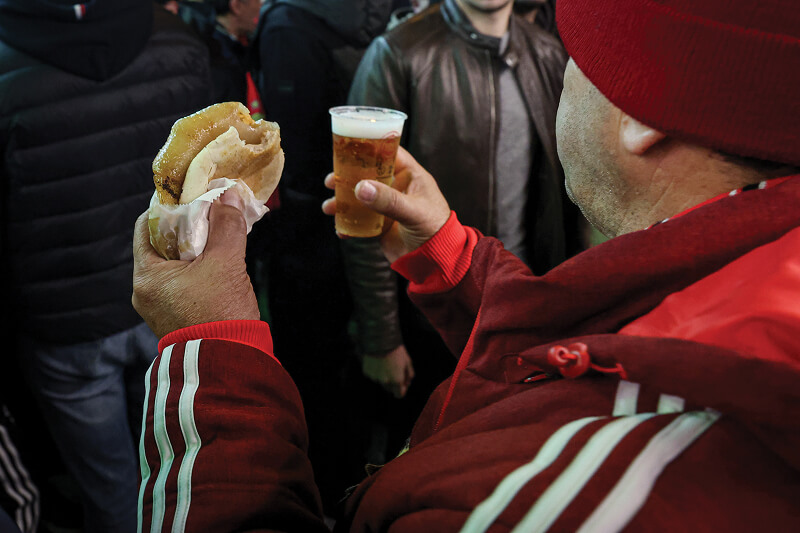
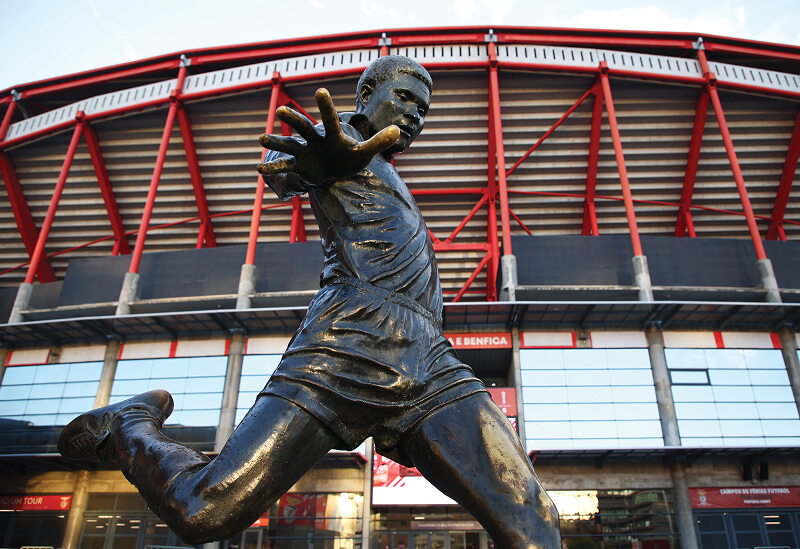
The next hours pass like a blur. I take part in the Benfica fan tradition of touching the statue of Eusébio’s leg for luck, walk around the stadium reading the signs of a team with a glorious past and thunderous present, drink one last beer surrounded by locals who occasionally point at me and say, “There’s the Italian!” and then enter the stadium.
In hindsight, it almost feels right that such a formative journey should be counterbalanced by one of Napoli’s worst performances of the season.
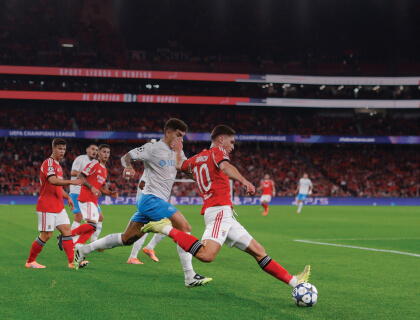
Benfica’s first goal arrives with the kind of simplicity that makes you feel worse than a spectacular strike would. A cross from the edge of the area, Scott McTominay fails to clear, and suddenly Richard Ríos is through, beating the offside trap. His finish looks almost casual, a touch with the outside of his foot that makes the ball bounce past the goalkeeper. The stadium erupts.

The second comes in the second half, and it kills whatever remained of my hope. A counterattack, swift and merciless, ends with Leandro Barreiro’s back-heel – cheeky, audacious, devastating. Sixty thousand fans roar around me, and I know, right there, that it’s over.
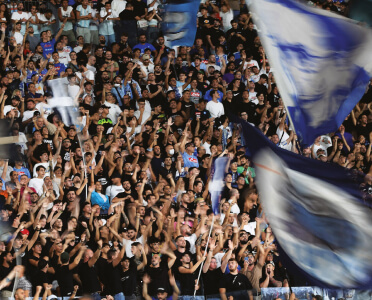
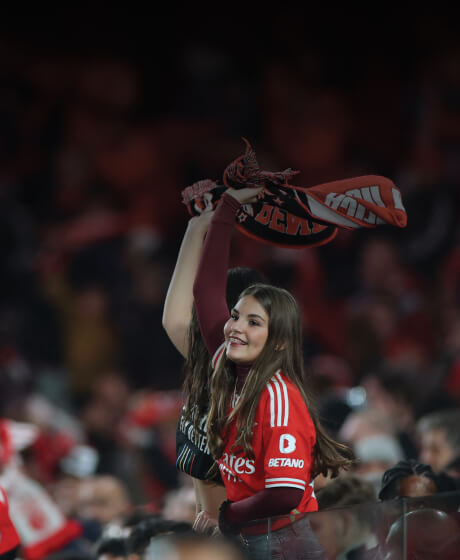
I watch it all from the home stands, a tiny and pale blue dot in an ocean of red and white, and I feel the weight of all those people celebrating every sporting blow dealt to me. The roar when Benfica score is physical – it hits you in the chest, makes your ears ring, reminds you that you are very small and very far from home.
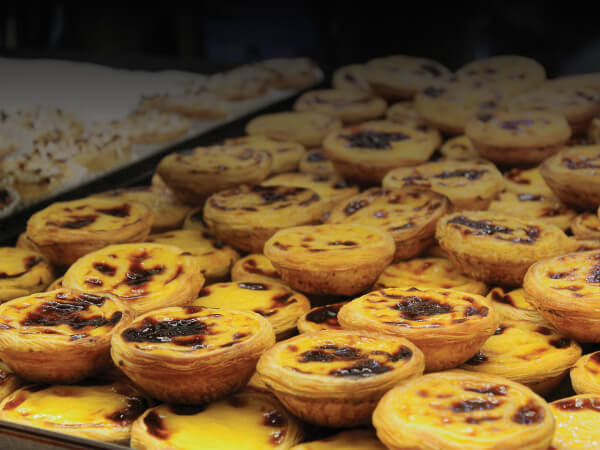
Back at the hotel, sulking, I briefly consider getting on the first flight home. I don’t want pastéis de nata, I don’t want bifanas. I don’t want any more of this city that just watched my team die.
When I wake up, I realise I won’t let sporting disappointment dim the beautiful surroundings. After one last breakfast, I have a bright idea: to enjoy the city like a true Neapolitan – by renting a scooter.
I speed through landmarks: São Jorge Castle and its bell-tower overlooking the city; the Santa Maria Maior district with its silent niches; cafe A Brasileira, with a statue of poet Fernando Pessoa outside, welcoming passers-by; Rossio Square and its wave-patterned, mosaic pavement.
My wife is still looking at me. I look back at her, still not sure how to begin.
“How much time do you have?”
“So? How was it?”
My wife looks at me from the other side of the table. I’ve just come home from my first-ever European away game, and I try – honestly – to explain.
How was it?
Images of Lisbon flash through my mind. Cinnamon, salt, rain, coloured tiles, salt cod, old men in red and white ties on their way to a noisy stadium.
I’ll slow down: it’s mid-December, and I have been sent by Champions Journal to watch my beloved Napoli in their league phase match-up against Benfica. I’m meeting Luis, Benfica disciple and Lisbon local, who, for the next 24 hours, will become my tutor in Benfiquista culture, in the geography and history of Lisbon, in Portuguese cuisine and, above all, in local football.
Luis is roughly my age, but he and I have never met before; I’m a little nervous about spending so much time with a stranger. I needn’t have worried – within minutes, we’re chatting away at a small table in the beautiful Largo do Carmo plaza, two new friends drinking coffee before a football match. We talk about Italy’s World Cup chances, Norwegian youth development, whether Juventus were right to sign Cristiano Ronaldo back in the day.
After our coffee, Luis takes me to the waterfront, full of facts about his home city on the way. He points out two columns on the edge of Praça do Comércio, built after a devastating flood in the 1700s to ask the sea not to return.


For some pre-game food, Luis and I head to a particular food truck near the stadium to experience the bifana – a famous Portuguese pork sandwich. The truck is parked overlooking Estádio da Luz, which, with a while to go before kick-off, sits expectantly like a silent cathedral, awaiting its faithful.
There, perched on a plastic chair with a blue scarf around my neck, I meet one of said faithful – an old man with enormous sideburns, smoking a huge cigar. He accuses me – a Neapolitan and Napoli fan – of having “betrayed football”, of having gone from fighting the just crusade for joga bonito alongside Maurizio Sarri and Luciano Spalletti to worshipping the personality cult of Antonio Conte, who only wants to “ganhar, ganhar, ganhar” (win, win, win), no matter how.
I reply that a thirsty man doesn’t judge the innkeeper who fills his glass. I say it in broken Spanish – Manu Chao lyrics mixed with lisped Italian – but the old man understands, nods, returns to his cigar. The small miracles of international football.
The next hours pass like a blur. I take part in the Benfica fan tradition of touching the statue of Eusébio’s leg for luck, walk around the stadium reading the signs of a team with a glorious past and thunderous present, drink one last beer surrounded by locals who occasionally point at me and say, “There’s the Italian!” and then enter the stadium.
In hindsight, it almost feels right that such a formative journey should be counterbalanced by one of Napoli’s worst performances of the season.
Benfica’s first goal arrives with the kind of simplicity that makes you feel worse than a spectacular strike would. A cross from the edge of the area, Scott McTominay fails to clear, and suddenly Richard Ríos is through, beating the offside trap. His finish looks almost casual, a touch with the outside of his foot that makes the ball bounce past the goalkeeper. The stadium erupts.
The second comes in the second half, and it kills whatever remained of my hope. A counterattack, swift and merciless, ends with Leandro Barreiro’s back-heel – cheeky, audacious, devastating. Sixty thousand fans roar around me, and I know, right there, that it’s over.
I watch it all from the home stands, a tiny and pale blue dot in an ocean of red and white, and I feel the weight of all those people celebrating every sporting blow dealt to me. The roar when Benfica score is physical – it hits you in the chest, makes your ears ring, reminds you that you are very small and very far from home.
Back at the hotel, sulking, I briefly consider getting on the first flight home. I don’t want pastéis de nata, I don’t want bifanas. I don’t want any more of this city that just watched my team die.
When I wake up, I realise I won’t let sporting disappointment dim the beautiful surroundings. After one last breakfast, I have a bright idea: to enjoy the city like a true Neapolitan – by renting a scooter.
I speed through landmarks: São Jorge Castle and its bell-tower overlooking the city; the Santa Maria Maior district with its silent niches; cafe A Brasileira, with a statue of poet Fernando Pessoa outside, welcoming passers-by; Rossio Square and its wave-patterned, mosaic pavement.
My wife is still looking at me. I look back at her, still not sure how to begin.
“How much time do you have?”
“So? How was it?”
My wife looks at me from the other side of the table. I’ve just come home from my first-ever European away game, and I try – honestly – to explain.
How was it?
Images of Lisbon flash through my mind. Cinnamon, salt, rain, coloured tiles, salt cod, old men in red and white ties on their way to a noisy stadium.
I’ll slow down: it’s mid-December, and I have been sent by Champions Journal to watch my beloved Napoli in their league phase match-up against Benfica. I’m meeting Luis, Benfica disciple and Lisbon local, who, for the next 24 hours, will become my tutor in Benfiquista culture, in the geography and history of Lisbon, in Portuguese cuisine and, above all, in local football.
Luis is roughly my age, but he and I have never met before; I’m a little nervous about spending so much time with a stranger. I needn’t have worried – within minutes, we’re chatting away at a small table in the beautiful Largo do Carmo plaza, two new friends drinking coffee before a football match. We talk about Italy’s World Cup chances, Norwegian youth development, whether Juventus were right to sign Cristiano Ronaldo back in the day.
After our coffee, Luis takes me to the waterfront, full of facts about his home city on the way. He points out two columns on the edge of Praça do Comércio, built after a devastating flood in the 1700s to ask the sea not to return.
For some pre-game food, Luis and I head to a particular food truck near the stadium to experience the bifana – a famous Portuguese pork sandwich. The truck is parked overlooking Estádio da Luz, which, with a while to go before kick-off, sits expectantly like a silent cathedral, awaiting its faithful.
There, perched on a plastic chair with a blue scarf around my neck, I meet one of said faithful – an old man with enormous sideburns, smoking a huge cigar. He accuses me – a Neapolitan and Napoli fan – of having “betrayed football”, of having gone from fighting the just crusade for joga bonito alongside Maurizio Sarri and Luciano Spalletti to worshipping the personality cult of Antonio Conte, who only wants to “ganhar, ganhar, ganhar” (win, win, win), no matter how.
I reply that a thirsty man doesn’t judge the innkeeper who fills his glass. I say it in broken Spanish – Manu Chao lyrics mixed with lisped Italian – but the old man understands, nods, returns to his cigar. The small miracles of international football.
The next hours pass like a blur. I take part in the Benfica fan tradition of touching the statue of Eusébio’s leg for luck, walk around the stadium reading the signs of a team with a glorious past and thunderous present, drink one last beer surrounded by locals who occasionally point at me and say, “There’s the Italian!” and then enter the stadium.
In hindsight, it almost feels right that such a formative journey should be counterbalanced by one of Napoli’s worst performances of the season.
Benfica’s first goal arrives with the kind of simplicity that makes you feel worse than a spectacular strike would. A cross from the edge of the area, Scott McTominay fails to clear, and suddenly Richard Ríos is through, beating the offside trap. His finish looks almost casual, a touch with the outside of his foot that makes the ball bounce past the goalkeeper. The stadium erupts.
The second comes in the second half, and it kills whatever remained of my hope. A counterattack, swift and merciless, ends with Leandro Barreiro’s back-heel – cheeky, audacious, devastating. Sixty thousand fans roar around me, and I know, right there, that it’s over.
I watch it all from the home stands, a tiny and pale blue dot in an ocean of red and white, and I feel the weight of all those people celebrating every sporting blow dealt to me. The roar when Benfica score is physical – it hits you in the chest, makes your ears ring, reminds you that you are very small and very far from home.
Back at the hotel, sulking, I briefly consider getting on the first flight home. I don’t want pastéis de nata, I don’t want bifanas. I don’t want any more of this city that just watched my team die.
When I wake up, I realise I won’t let sporting disappointment dim the beautiful surroundings. After one last breakfast, I have a bright idea: to enjoy the city like a true Neapolitan – by renting a scooter.
I speed through landmarks: São Jorge Castle and its bell-tower overlooking the city; the Santa Maria Maior district with its silent niches; cafe A Brasileira, with a statue of poet Fernando Pessoa outside, welcoming passers-by; Rossio Square and its wave-patterned, mosaic pavement.
My wife is still looking at me. I look back at her, still not sure how to begin.
“How much time do you have?”